
By Dave Robbins
Traduzione in italiano a cura di Patrizia Burlini

© Dave Robbins
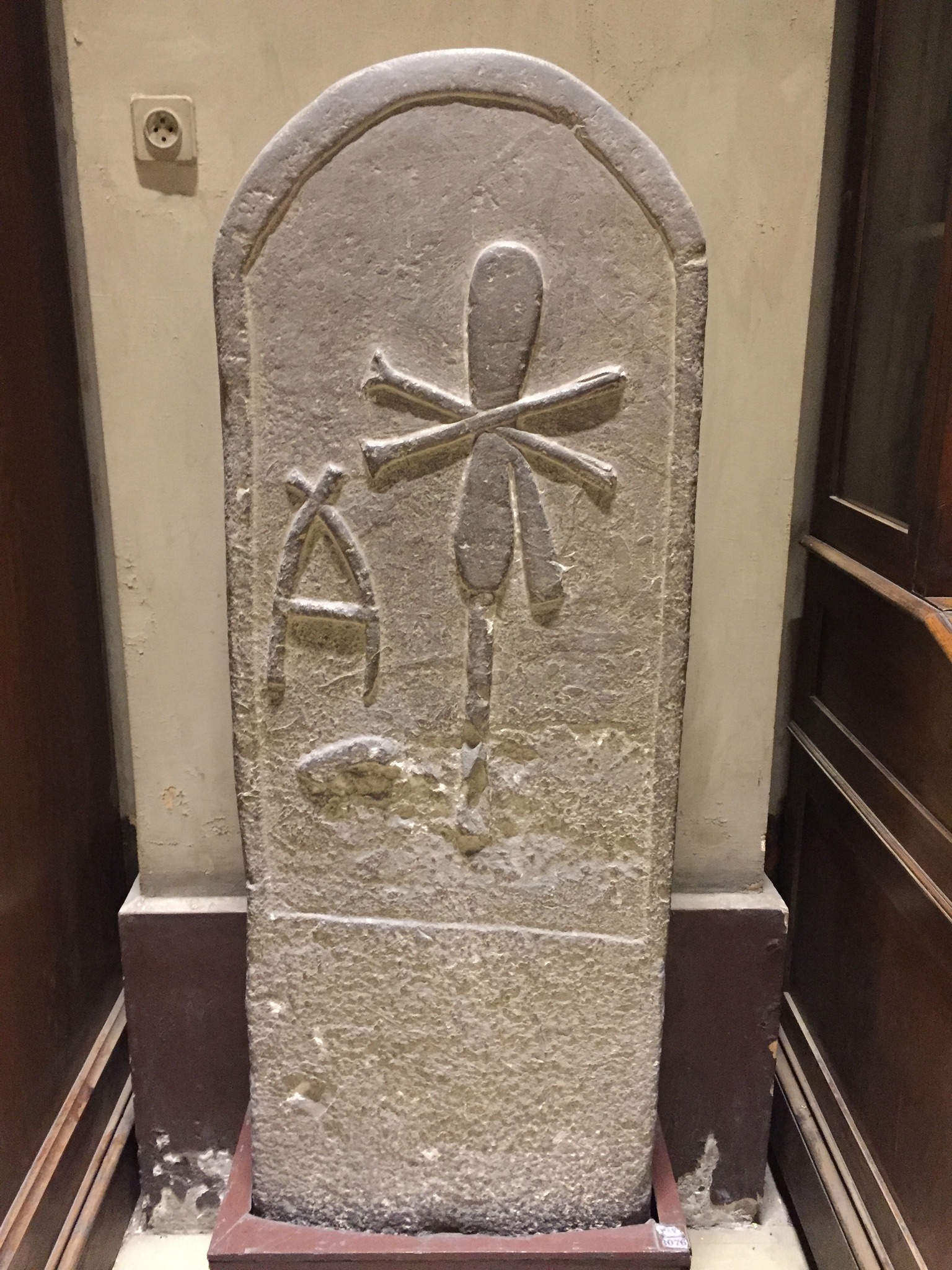
Each of these stelae are about 49 centuries old. Yet, through the efforts of Champollion and Young, we are able to actually know who it was for whom they were carved. They were the the husband and wife named Djet (𓆓) and Merneith (𓌸𓋎) who each served as king and Queen regent for what is thought to be 10 years each. The actual name for a stela in ancient Egypt was ‘wedj’ which was spelled in a variety of ways but, probably, most commonly as:𓎘 𓅱 𓉸
Ognuna di queste stele ha circa 49 secoli. Tuttavia, grazie agli sforzi di Champollion e Young, siamo in grado di sapere per chi furono scolpite. Si tratta dei coniugi Djet (𓆓) e Merneith (𓌸𓋎), che hanno ricoperto il ruolo di sovrano e regina reggente per 10 anni ciascuno. Il nome effettivo di una stele nell’antico Egitto era “wedj”, che veniva scritto in vari modi ma, probabilmente, più comunemente come: 𓎘 𓅱 𓉸
The stela for Djet was also found by Emile Amelineau in 1896. You may remember that he also found the Bier of Osiris (in my previous post) two years later. Despite his finds, Amelineau does not enjoy a very good reputation as his practices were highly criticized, deservedly so, by the great Flinders Petrie who did most of the follow-up work in what is now known as Tomb Z at Umm el-Qa’ab.
Anche la stele di Djet fu trovata da Emile Amelineau nel 1896. Forse ricorderete che egli trovò anche il Letto di Osiride (nel mio post precedente) due anni dopo. Nonostante i suoi ritrovamenti, Amelineau non gode di un’ottima reputazione, in quanto le sue pratiche furono molto criticate, a ragione, dal grande Flinders Petrie, che svolse la maggior parte del lavoro di follow-up in quella che oggi è nota come Tomba Z a Umm el-Qa’ab.
When Djet (pronounced [JET]) died, his son had yet to reach majority in order to succeed as the monarch. Thus, Merneith (meaning “Beloved of the goddess Neith”) followed as regent for 10 years and is often thought to be the first female pharaoh. Why is it thought that she was the first female pharaoh? Because, for one, she has her own funerary complex at Umm el-Qa’ab (Tomb Y) immediately adjacent to Djet’s (Tomb Z).
Quando Djet (pronuncia [JET]) morì, suo figlio non aveva ancora raggiunto la maggiore età per poter succedere come monarca. Così, Merneith (che significa “Amata della dea Neith”) seguì come reggente per 10 anni ed è spesso ritenuta il primo faraone donna. Perché si pensa che sia stata la prima donna faraone? Perché, ad esempio, ha un proprio complesso funerario a Umm el-Qa’ab (Tomba Y), immediatamente adiacente a quello di Djet (Tomba Z).
The Stela of Djet now resides in the Louvre (accession# E 11007) and the Stela of Merneith (JE 34450) is found in the Cairo Museum. My photos are from 2019 and 2018 respectively.
La stele di Djet si trova oggi al Louvre (numero d’ordine E 11007) e la stele di Merneith (JE 34450) si trova al Museo del Cairo. Le mie foto risalgono rispettivamente al 2019 e al 2018.
Be sure to check out a 3rd-party photo of the ivory comb of Djet in the comments in which is shown the earliest-known “Was Scepter” … actually a pair.
Assicuratevi di dare un’occhiata a una foto di terze parti del pettine d’avorio di Djet nei commenti, in cui è mostrato il più antico “Scettro di Was” conosciuto… in realtà una coppia.
 LA CIVILTA' EGIZIA