
By Dave Robbins
Traduzione in italiano a cura di Patrizia Burlini
Today I begin Dynasty II as my pharaonic series continues. Most Egyptologists give the dynasty five different kings with the first being Hetep-sekhem-wy.
Oggi inizio la serie faraonica della II dinastia. La maggior parte degli egittologi attribuisce alla dinastia cinque diversi re, il primo dei quali è Hetep-sekhem-wy.
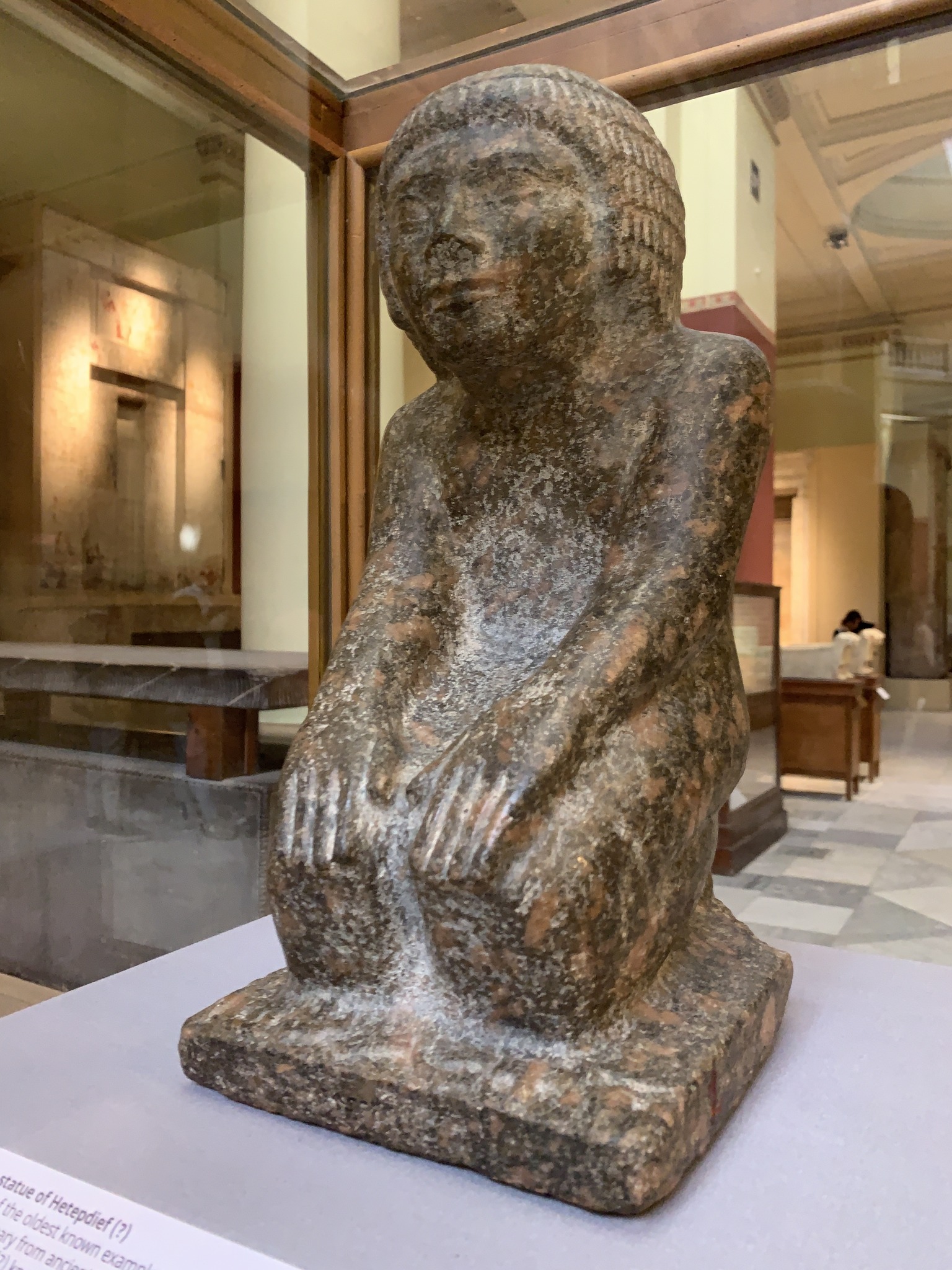
You may remember the name Hetep-sekhem-wy from my post of about three months ago featuring the earliest-known statue of a non-royal … that being Hetepdief in the featured photo. My three other photos are are also from the reign of Hetep-sekhem-wy.
Forse ricorderete il nome di Hetep-sekhem-wy dal mio post di circa tre mesi fa che presentava la prima statua conosciuta di un non reale… ovvero Hetepdief nella foto in evidenza. Anche le altre tre foto risalgono al regno di Hetep-sekhem-wy.
Hetepdief is significant because his right rear shoulder displays the three serekhs of Dynasty II’s first trio of kings which I’ll go through again later.
Hetepdief è significativo perché la sua spalla posteriore destra mostra i tre serekh del primo trio di re della II Dinastia, che analizzerò nuovamente più avanti.
The three other third-party photos are:
Le altre tre foto – di terzi – sono:
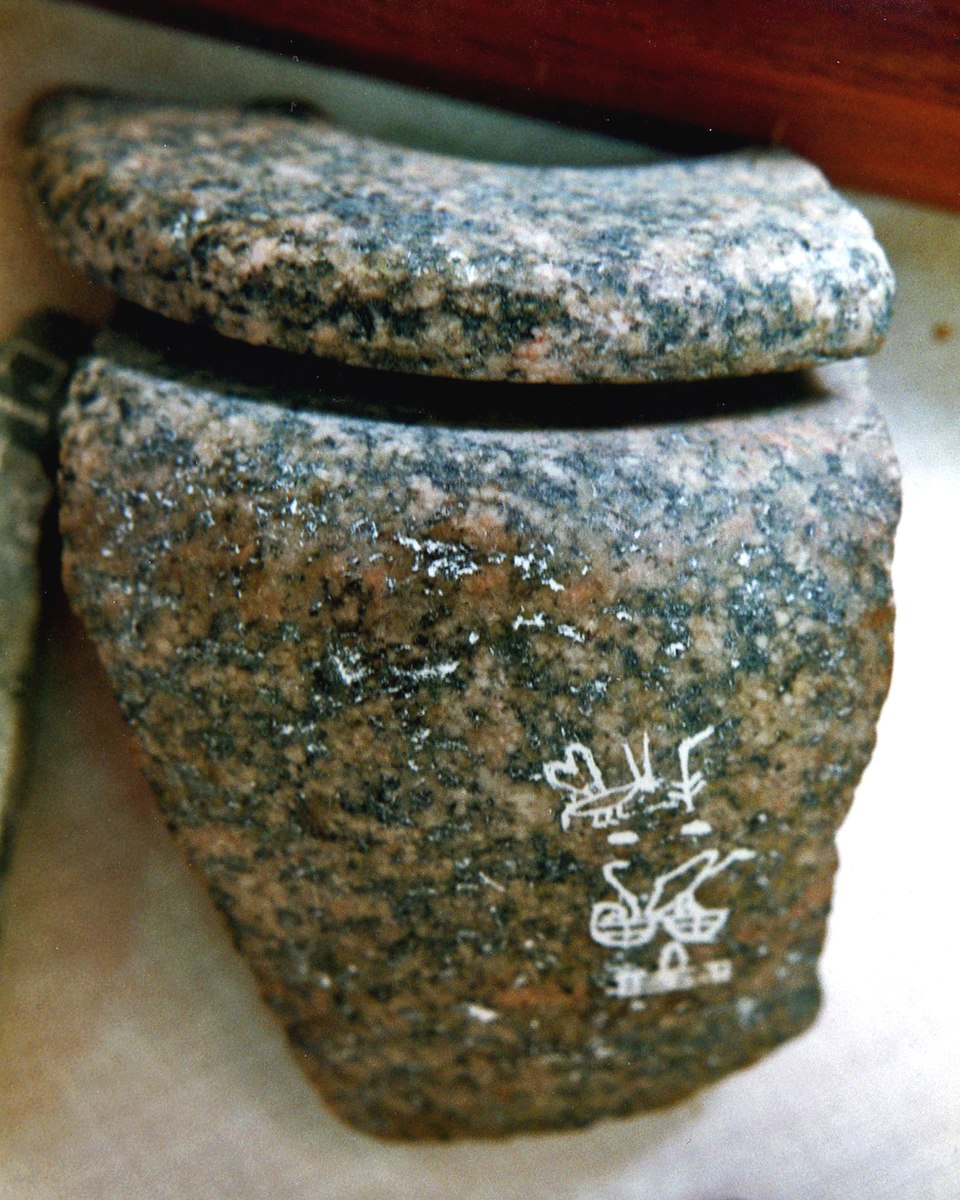
1) a granite vase from the Egyptian Museum featuring only part of Hetep-sekhem-wy’s name that being the 𓊵 offering table. He is the only king of the 30 dynasties (of whom I am aware) whose name begins with ‘Hetep.’
1) un vaso di granito del Museo Egizio che riporta solo una parte del nome di Hetep-sekhem-wy, ovvero la tavola d’offerta 𓊵. È l’unico re delle 30 dinastie (di cui sono a conoscenza) il cui nome inizia con “Hetep”.
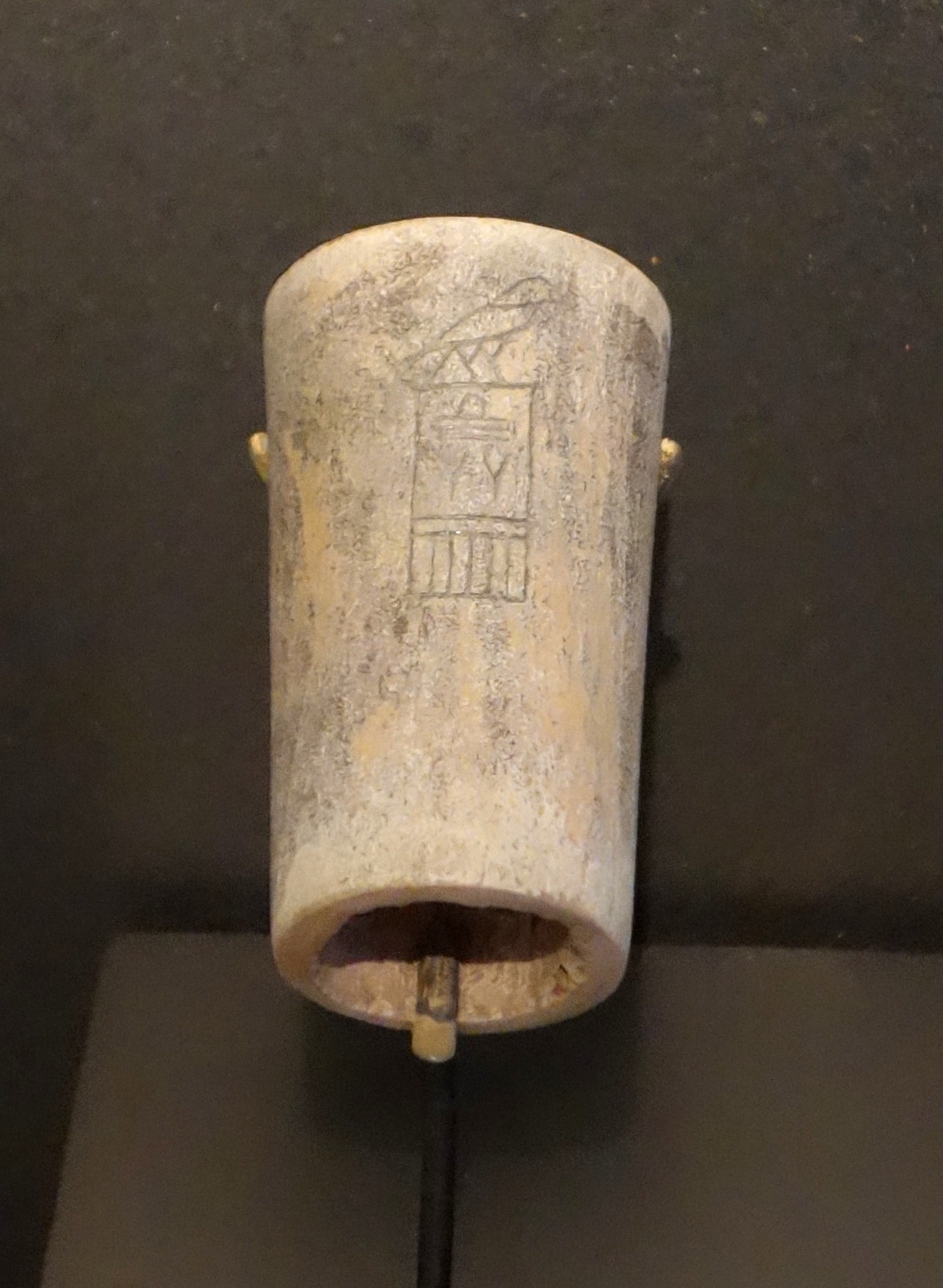
2) a tan-colored bone cylinder from the Brooklyn Museum featuring Hetep-sekhem-wy’s full serekh.
2) un cilindro in osso color marrone, del Brooklyn Museum, con il serekh completo di Hetep-sekhem-wy.

3) a black vase from the National Archaeological Museum of France also featuring his full serekh.
3) un vaso nero del Museo Archeologico Nazionale di Francia, anch’esso con il suo serekh completo.
Hetep-sekhem-wy deviated from the norm. That is, he moved his tomb from the now traditional necropolis at Umm el-Qa’ab at Abydos to the necropolis of Saqqara at “ineb hedj” ( 𓊅 𓌉 meaning “White Walls” or what we now call “Memphis”). That tomb is, unfortunately, not open and has not been open for, I believe, over a century. It still exists though and lies under the Dynasty 5 Pyramid of Unas. In the comments, I’ll show a map of how it is laid out below the Unas pyramid.
Hetep-sekhem-wy si discostò dalla norma. Trasferì cioè la sua tomba dall’ormai tradizionale necropoli di Umm el-Qa’ab ad Abydos alla necropoli di Saqqara a “ineb hedj” (𓊅 𓌉 che significa “Mura Bianche” o quella che oggi chiamiamo “Memphis”). Questa tomba, purtroppo, non è aperta e non lo è più da oltre un secolo, credo. Tuttavia, esiste ancora e si trova sotto la Piramide di Unas, della V Dinastia. Nei commenti, mostrerò una mappa di come è disposta sotto la piramide di Unas.
Hetep-sekhem-wy spelled his name in hieroglyphs as: 𓊵 𓌂𓌂 … 𓊵 is ‘ḥtp’ (hetep or hotep) or an offering table whereas 𓌂 is sḫm (sekhem) or a scepter.
Hetep-sekhem-wy scriveva il suo nome in geroglifici come: 𓊵 𓌂𓌂… 𓊵 è ‘ḥtp’ (hetep o hotep) o una tavola d’offerta mentre 𓌂 è sḫm (sekhem) o scettro.
The 𓌂𓌂 or duplicate scepter pluralizes his name which adds ‘wy’ or ‘wi’ to the end of his name.
Il 𓌂𓌂 o scettro duplicato pluralizza il suo nome che aggiunge “wy” o “wi” alla fine del suo nome.
 LA CIVILTA' EGIZIA