By Jacqueline Engel
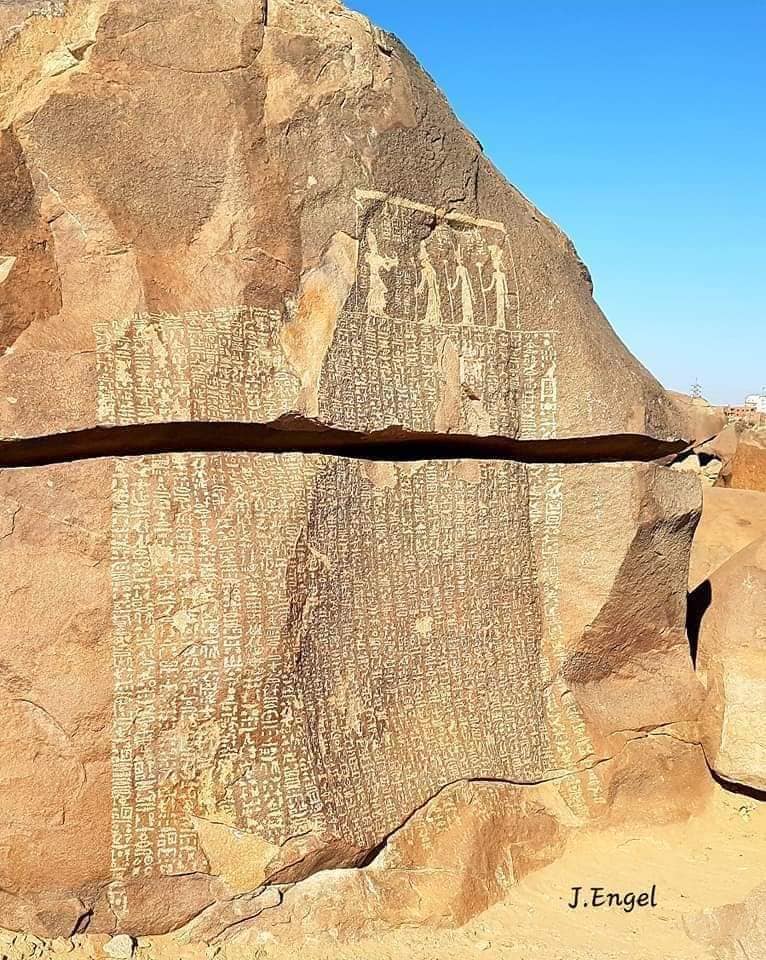
A piece of Pharaonic diary.
Sehel Island Aswan.
The famine story had been engraved on a granite stone in 250 BC during the era of Ptolemy V on the Sehel Island, Aswan. The Stela, which is 2.5 meters in height and 3 meters in width, includes 42 columns of hieroglyphic texts read from right to left.
The Stela had a natural horizontal fissure when the Ptolemies engraved the story on it.
Above the inscriptions, there were drawings depicting King Djoser’s offerings to the triad of the Elephantine deities (Khnum, Anuket, and Satis), which were worshipped in Aswan during the Old Kingdom.
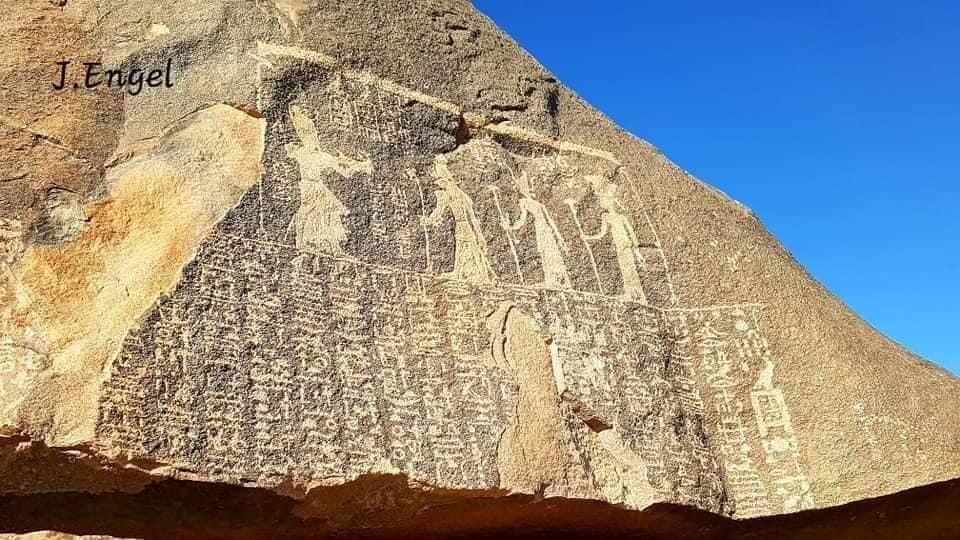
The story told on the stela is set in the 18th year of the reign of Djoser.
The text describes how the king is upset and worried as the land has been in the grip of a drought and famine for seven years, during which time the Nile has not flooded the farmlands.
The text also describes how the Egyptians are suffering as a result of the drought and that they are desperate and breaking the laws of the land.
Djoser asks the priest staff under the supervision of high lector priest Imhotep for help.
The king wants to know where the god of the Nile, Hapi, is born, and which god resides at this place.
Imhotep decides to investigate the archives of the temple ḥwt-Ibety (“House of the nets”), located at Hermopolis and dedicated to the god Thoth.
He informs the king that the flooding of the Nile is controlled by the god Khnum at Elephantine from a sacred spring located on the island, where the god resides.
Imhotep travels immediately to the location (Ancient Egyptian: jbw).
In the temple of Khnum, called “Joy of Life”, Imhotep purifies himself, prays to Khnum for help and offers “all good things” to him.
Suddenly he falls asleep and in his dream Imhotep is greeted by the kindly looking Khnum.
The god introduces himself to Imhotep by describing who and what he is and then describes his own divine powers.
At the end of the dream Khnum promises to make the Nile flow again.
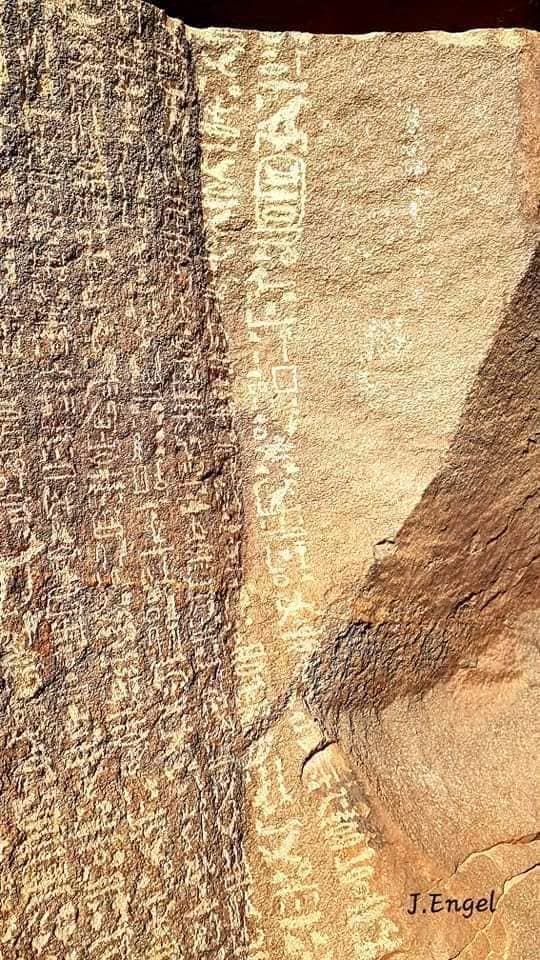
Imhotep wakes up and writes down everything that took place in his dream. He then returns to Djoser to tell the king what has happened.
The king is pleased with the news and issues a decree in which he orders priests, scribes and workers to restore Khnum´s temple and to once more make regular offerings to the god.
In addition, Djoser issues a decree in which he grants the temple of Khnum at Elephantine the region between Aswan and Tachompso with all its wealth, as well as a share of all the imports from Nubia.
(Egypt Today)
 LA CIVILTA' EGIZIA
1 pensiero su “The Famine Stela”