Pictures

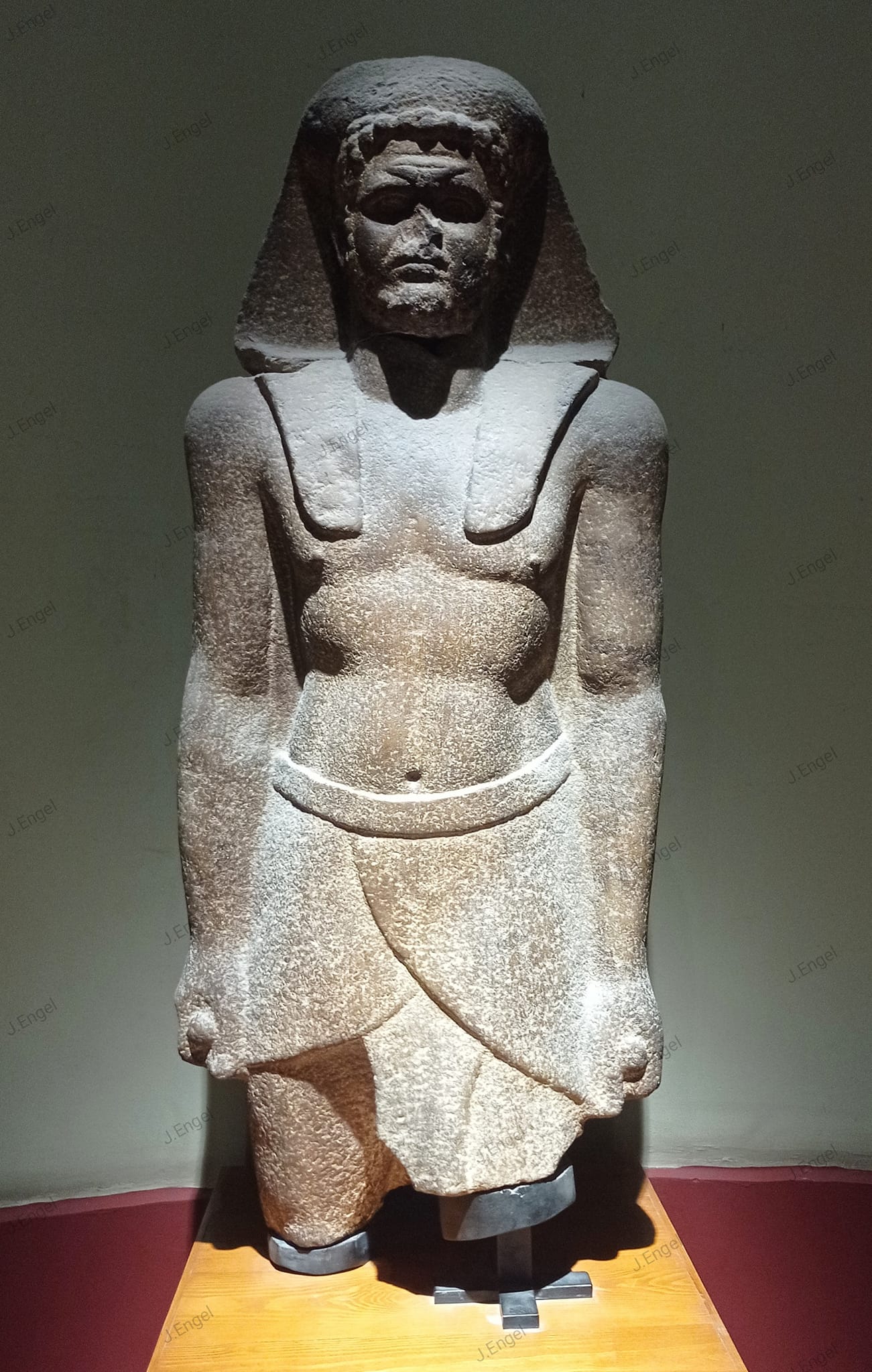
Caracalla as Egyptian king

The head with its distinctive features confirms that this statue represents the Roman Emperor Caracalla.

He is known for granting Roman citizenship to all free inhabitants of the Empire, including Egypt.

His furrowed eyebrows, high cheekbones, and short moustache are easily recognisable. His curly locks and short and equally curly beard are typical of Caracalla’s time.

The body is sculpted in traditional pharaonic fashion. Both arms are pinned to the body and each hand contains a cylindrical object. Caracalla is wearing a shendyt kilt and a nemes headdress.

Unlike ordinary citizens, emperors were allowed to have their images in public and military places, as a means of propaganda or to stand in for the emperor to encourage loyalty.

Cult statues, such as this one, were placed in temples to emphasise the emperor’s divinity.

Roman, reign of Caracalla

AD 211-217,

Quartsite

Mendes, inside the temple enclosure of Banebdjedet.

CG 702 Egyptian Museum Cairo

Pictures

Winged cobra of Tutankhamon

Winged cobra wearing a crown.

Detail of Tutankhamen’s golden throne.

The golden throne was a symbol of status and authority as well as power.

It enforces the fact that Tutankhamun was high in power , wealthy and also that he was an important part in ancient Egyptian society.

The golden throne of Tutankhamun was predominantly made out of wood and it is entirely covered in a layer of pure gold as well as partial areas of silver included in the throne.

Features of the throne included tiles of coloured semi-precious stones, coloured glass in addition to faience.

Egyptian Museum Cairo

Pictures

Terracotta masks

Terracotta masks with fragment of nemes from a cartonnage.

New Kingdom 18th Dynasty (or 1539-1292)

Tomb QH33

Qubbet el-Hawa

Tombs of the Nobles West Bank of Aswan.

QH 33, was found to be oriented to the winter solstice.

Nubian Museum Aswan

Pictures

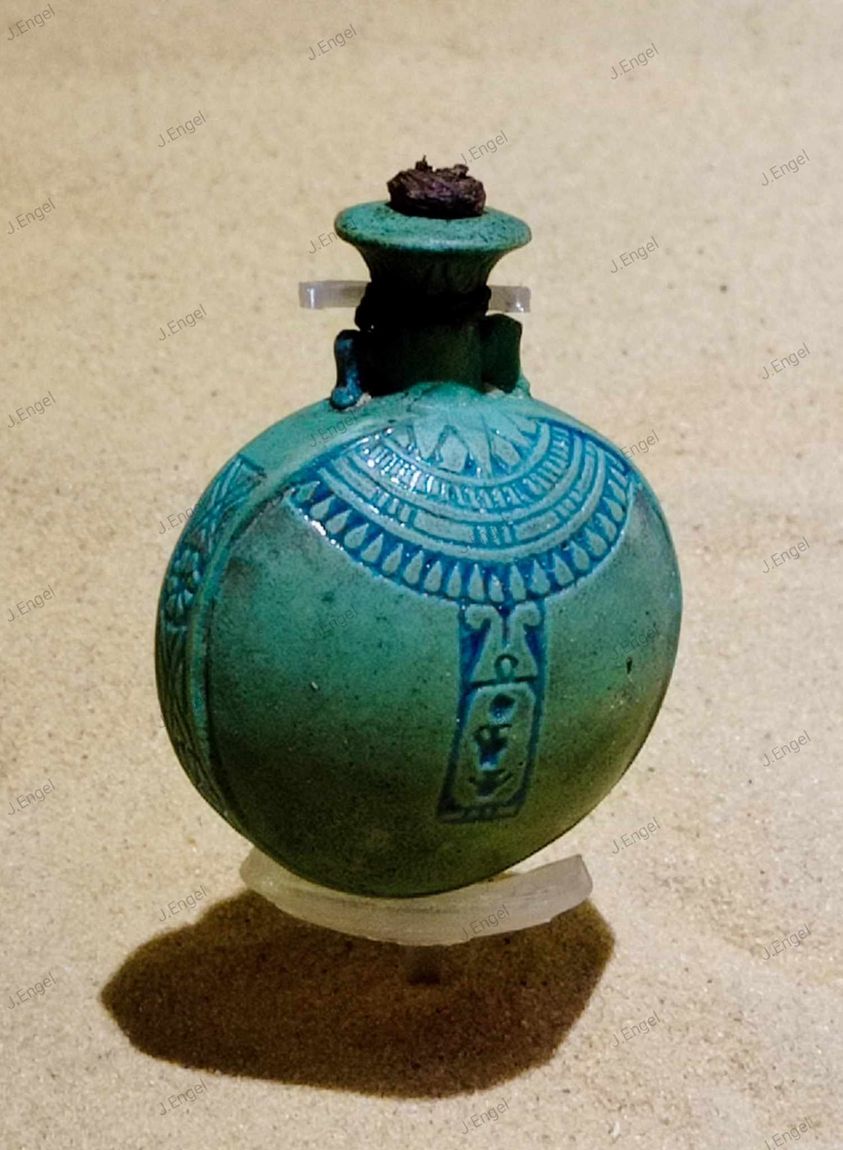
New Year’s faience flask

New Year’s faience flask

Late Period 26th Dynasty (722-525)

Tomb QH33

Qubbet el-Hawa

Tombs of the Nobles West Bank of Aswan.

QH 33, was found to be oriented to the winter solstice.

Nubian Museum Aswan

Pictures

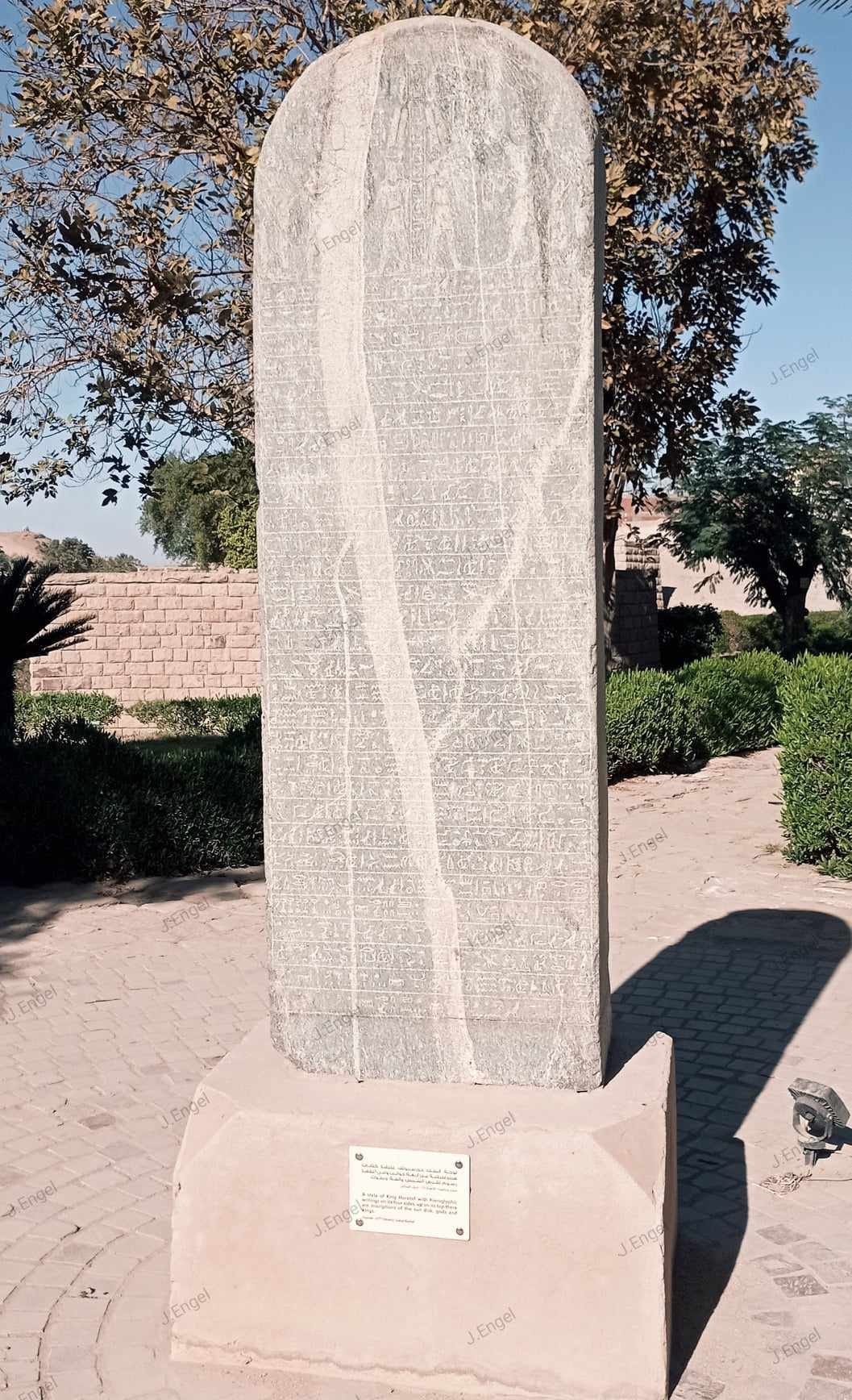
Stela of King Harsiotef

A stela of King Harsiotef with hieroglyphic writings on its four sides, up on its top there are inscriptions of the sun disk, gods and kings.

King Harsiotef is what the description says.
I never heard of him , neither does Google.
Any one?

We find King Harsiotef in the monarch’s list of the kings of Kush.
(Thanks to Chris Quimby, Chris Marriott John Marciano )

Granite Gabal Barkal
25th Dynasty

The Nubian Museum Aswan

Pictures

Faience bead net

Faience bead net (upper part) to cover the mummy’s body

Late Period 26th Dynasty (ca.722-525)

Tomb QH33

Qubbet el-Hawa

Tombs of the Nobles West Bank Aswan

QH 33, was found to be oriented to the winter solstice.

Nubian Museum Aswan

Pictures

Hor Wdja’s mask

Hor Wdja’s, the Elder, first anthropoid coffin (mask)

Late Period 26th Dynasty (ca.722-332)

Tomb QH33

Qubbet el-Hawa

Tombs of the Nobles

QH 33, was found to be oriented to the winter solstice.

Nubian Museum Aswan

Pictures

Head of an acrobat figurine

Small limestone carved feminine head of an acrobat figurine.

Middle Kingdom 12th Dynasty (1939-1760)/ 13th Dynasty (1759-ca.1630)

Tomb QH31

Qubbet el-Hawa

Tombs of the Nobles

West Bank of Aswan.

Nubian Museum Aswan

Pictures

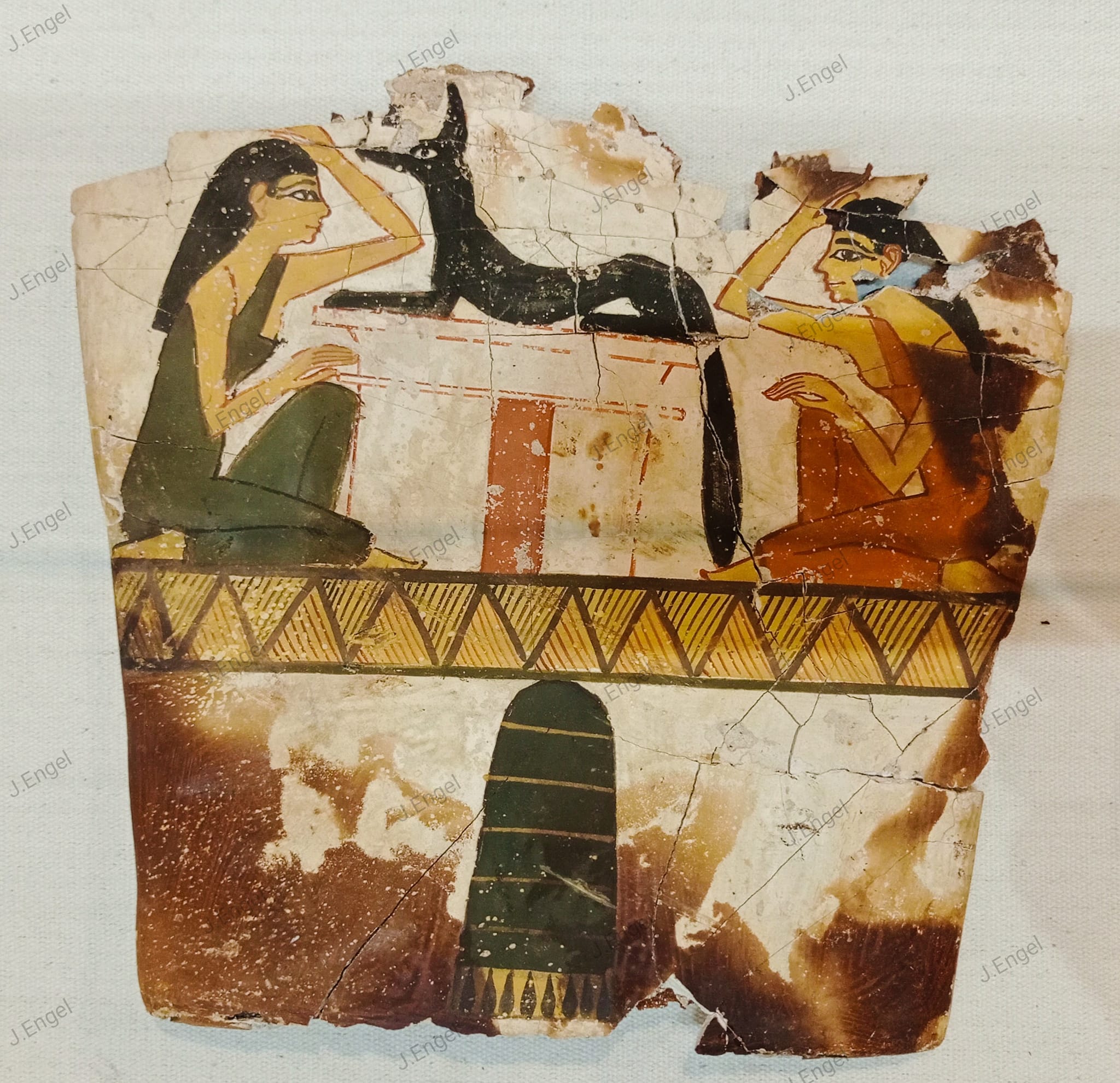
Cartonnage fragment

Cartonnage fragment with two female divinities and Anubis.

New Kingdom 18th Dynasty (ca.1539-1292)

Tomb QH33

Qubbet el-Hawa

Tombs of the Nobles West Bank of Aswan.

QH 33, was found to be oriented to the winter solstice.

The Nubian Museum Aswan