Pictures

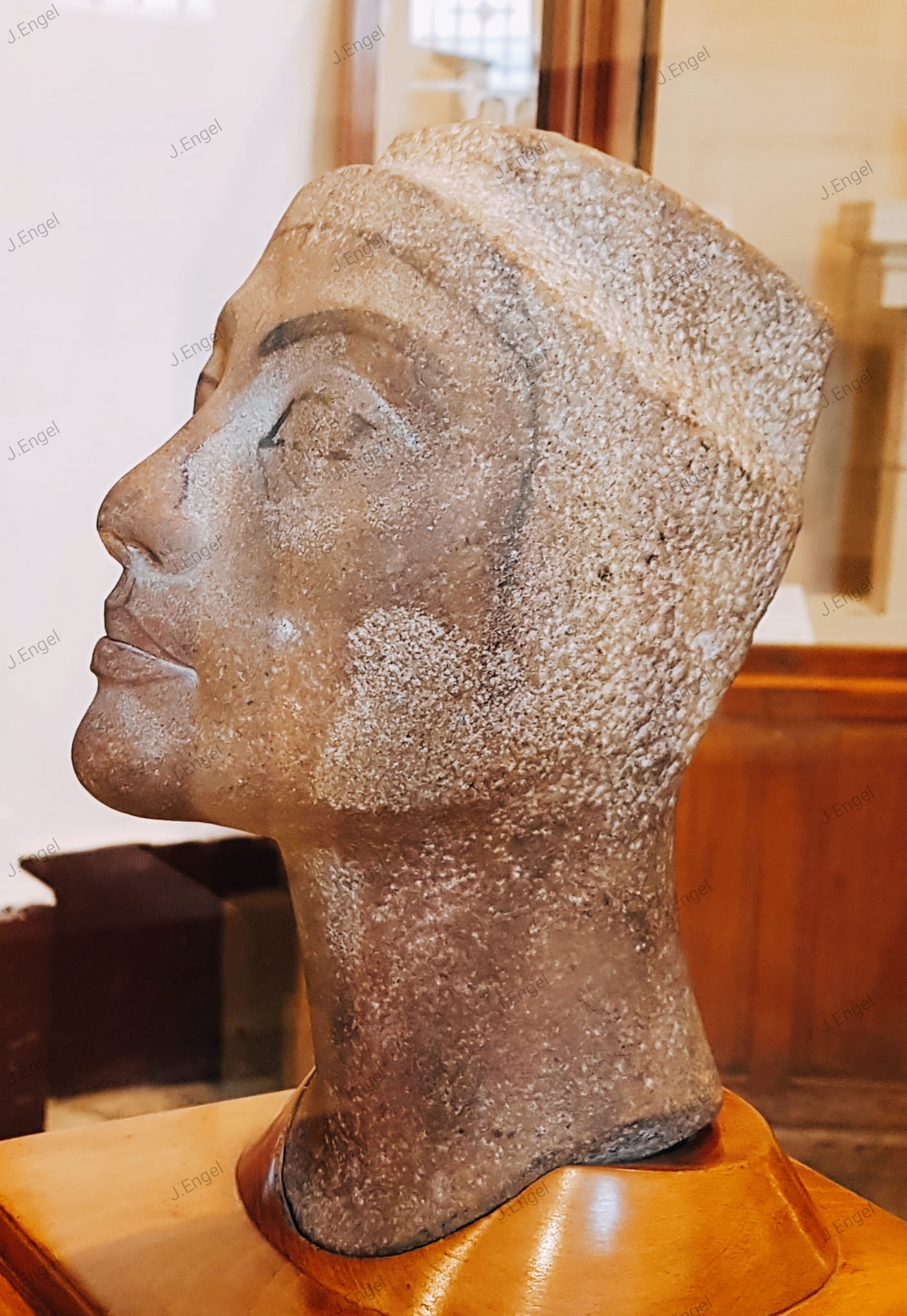
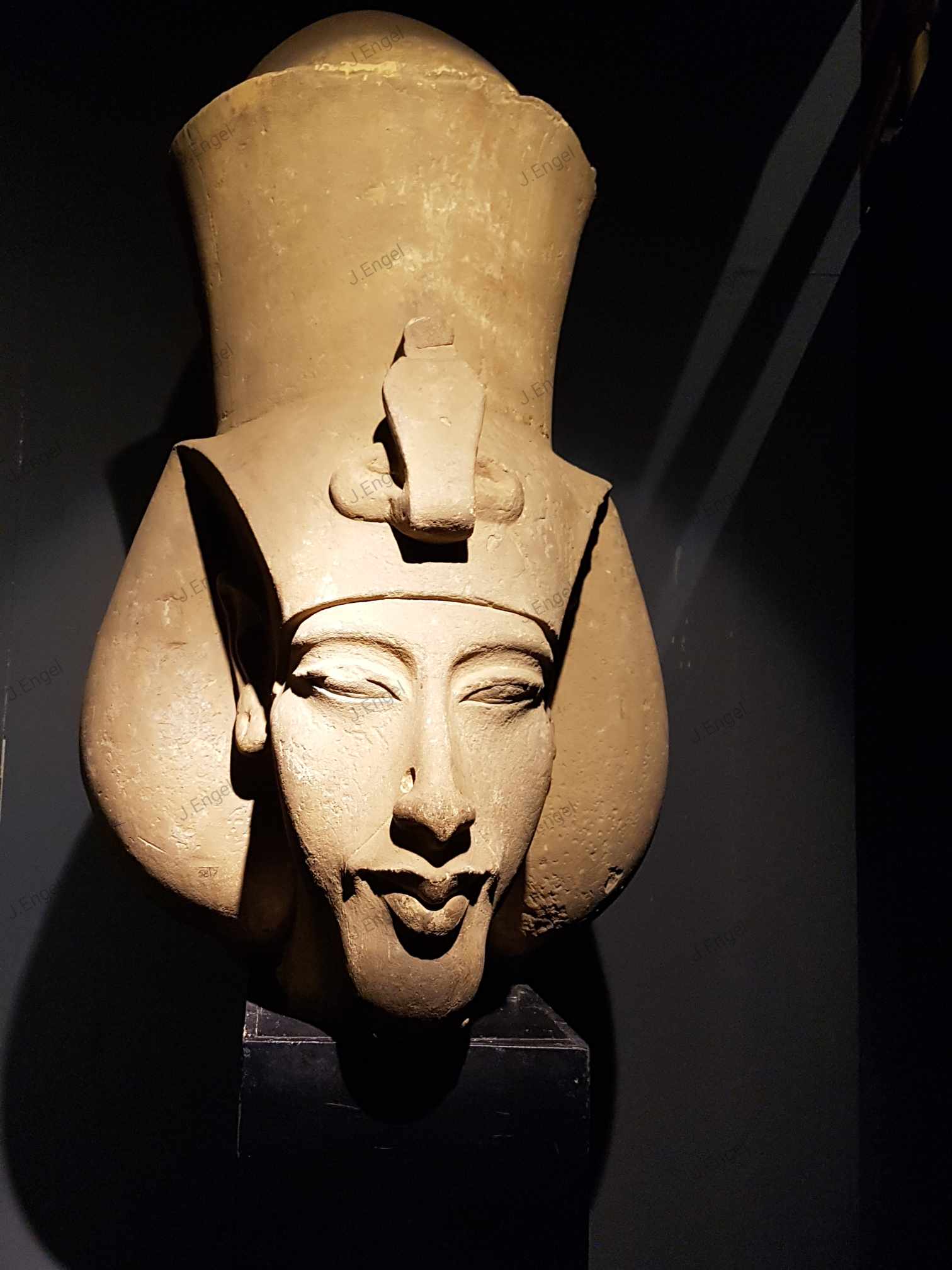
Akhenaton in Alexandria National Museum

Pharao Achenaten.

In the Alexandria National Museum.

Akhenaten, also spelled Akhenaton, Akhnaton, or Ikhnaton, also called Amenhotep IV, Greek Amenophis, king (1353–36 BCE) of ancient Egypt of the 18th dynasty, who established a new cult dedicated to the Aton, the sun’s disk (hence his assumed name, Akhenaten, meaning “beneficial to Aton”).

Pictures

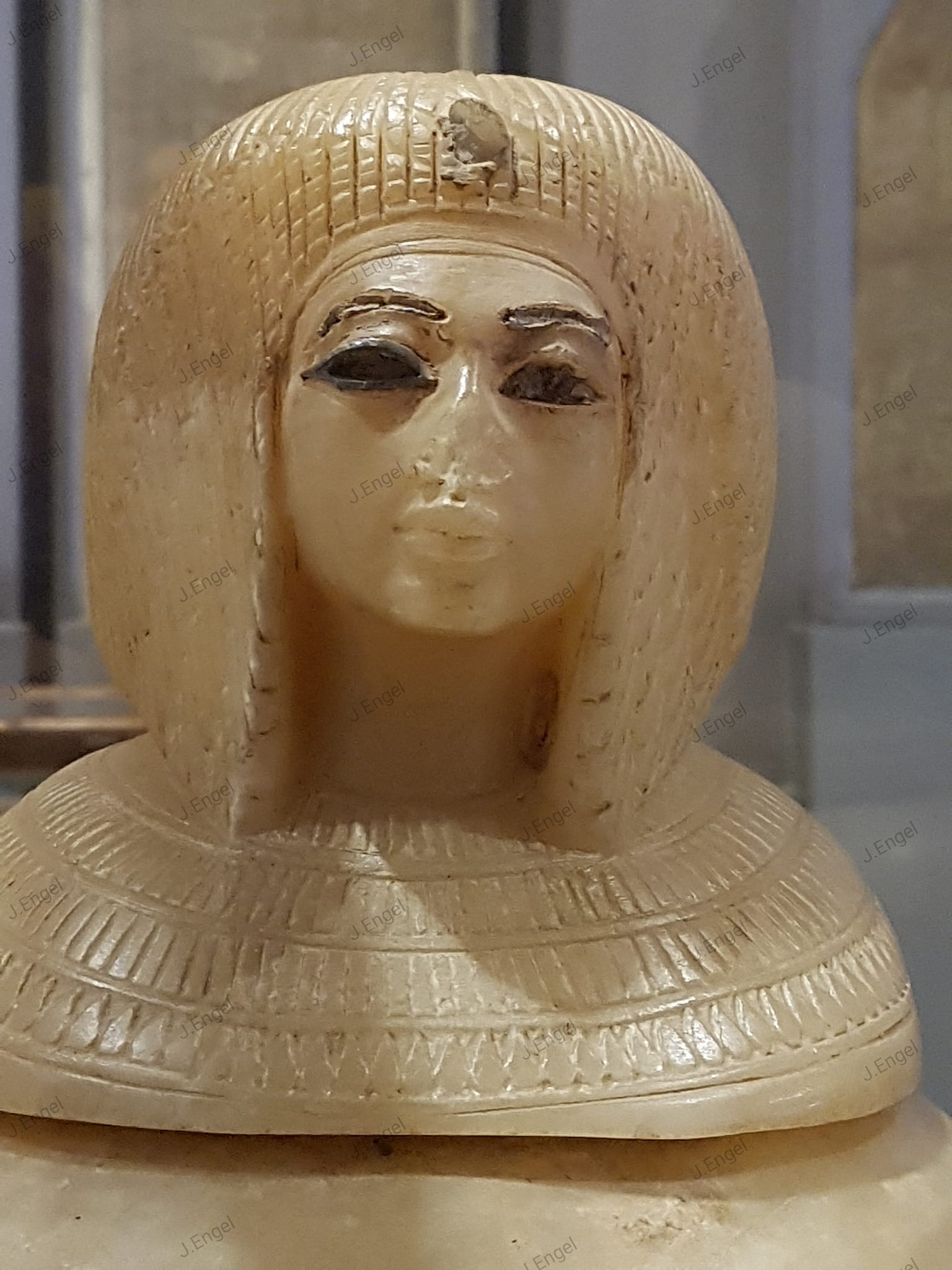
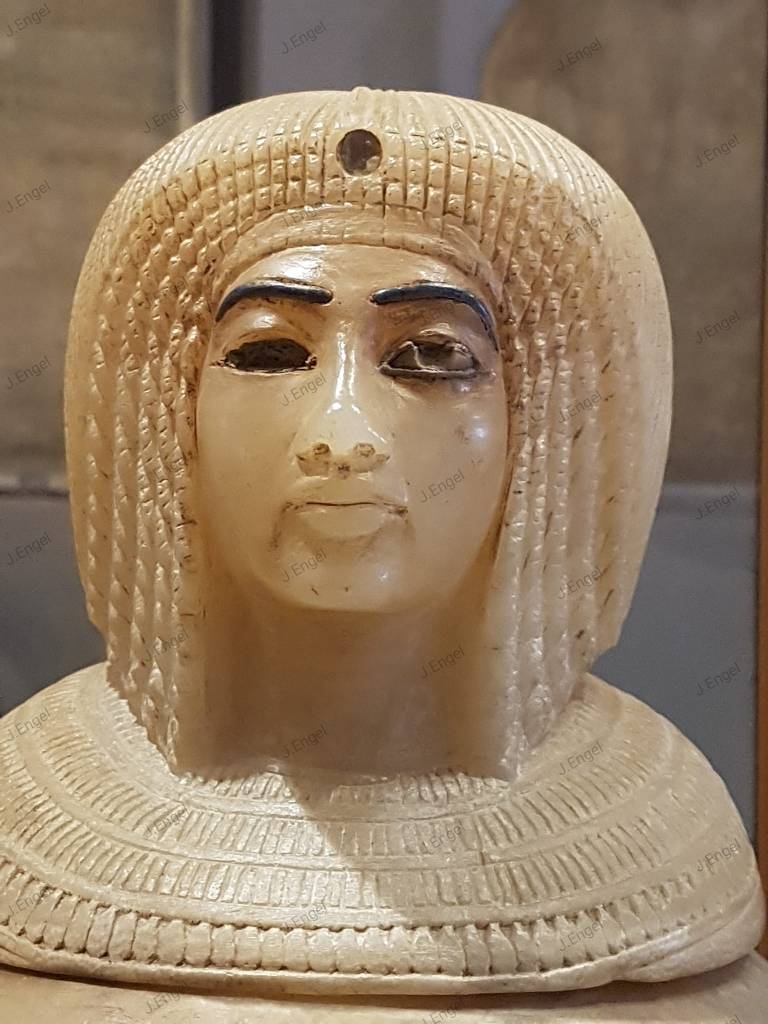
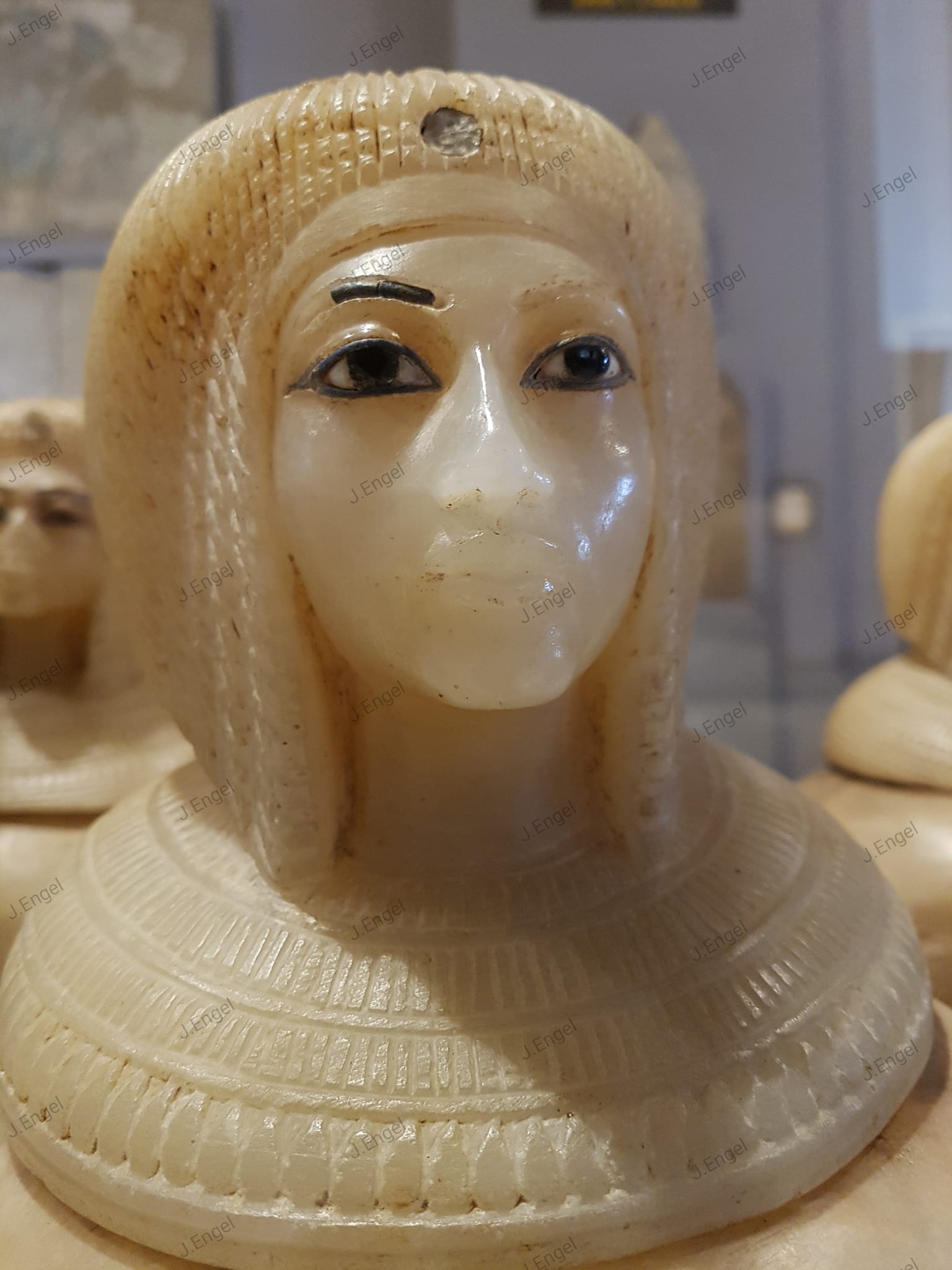
Princess Kiya

Words spoken by (the princess Kiya), justified.

The inscription at the foot of the coffin is one originally appropriate for a woman, but later changed to refer to a man. We now suspect that the original subject is Kiya. The inscription is unique both for its poetic imagery and for the light it sheds on Akhenaten’s religion.

Princess Kiya is a shadowy figure, whose life has been pieced together from fragments of inscriptions, some of which were erased by her contemporaries. She is now believed to be the subject of some of the inscriptions found in the most mysterious of royal tombs, number 55 in the Valley of the Kings.

We encounter her only through her husband, Akhenaten, often referred to as ‘the heretic king’.

He came to the throne as Amenophis IV, but broke with established religion and devoted himself to a single deity known as the Aten. He was married to the beautiful Nefertiti. On many of their monuments Akhenaten and Nefertiti are accompanied by their daughters. It appears that the pair had no sons.

There are, however, two spare princes who appear in the records from Amarna, the capital city that Akhenaten founded for himself. These are Smenkhkare and Tutankhaten (the latter means ‘Living image of the Aten’). They are brothers, and the likelihood is that their father is Akhenaten.

Egyptologists are coming to the conclusion that Kiya was the mother of these princes, and it is to this that she owed her influence with the king. Pharaohs were allowed several wives, and Nefertiti may have accepted this, but the situation has the potential to turn nasty. Somebody is responsible for the erasure of Kiya’s names from most of her inscriptions, but we do not know who this is. Kiya died before Akhenaten.

When Akhenaten did die, he was succeeded briefly by Smenkhkare, and then by his second son, who changed his name to Tutankhamun. The discovery of the latter’s tomb in 1922 made him famous, but the fate of Smenkhkare is more obscure.

Tomb 55 in the Valley of the Kings contained objects from the Amarna court, among them a damaged coffin designed for a woman, although the badly preserved body inside this turned out to be male. This may be Akhenaten, but it is more likely that the body is that of Smenkhkare.

Text by John Ray

Close-up of what is believed to be one of the Princess Kiya’s canopic jars (a sacred vessel containing one of her preserved vital organs).

Three of the four lids of the Canopic jars belonging probably to Princess Kiya.

(The forth is at the Met)

Egyptian Museum Cairo
Pictures

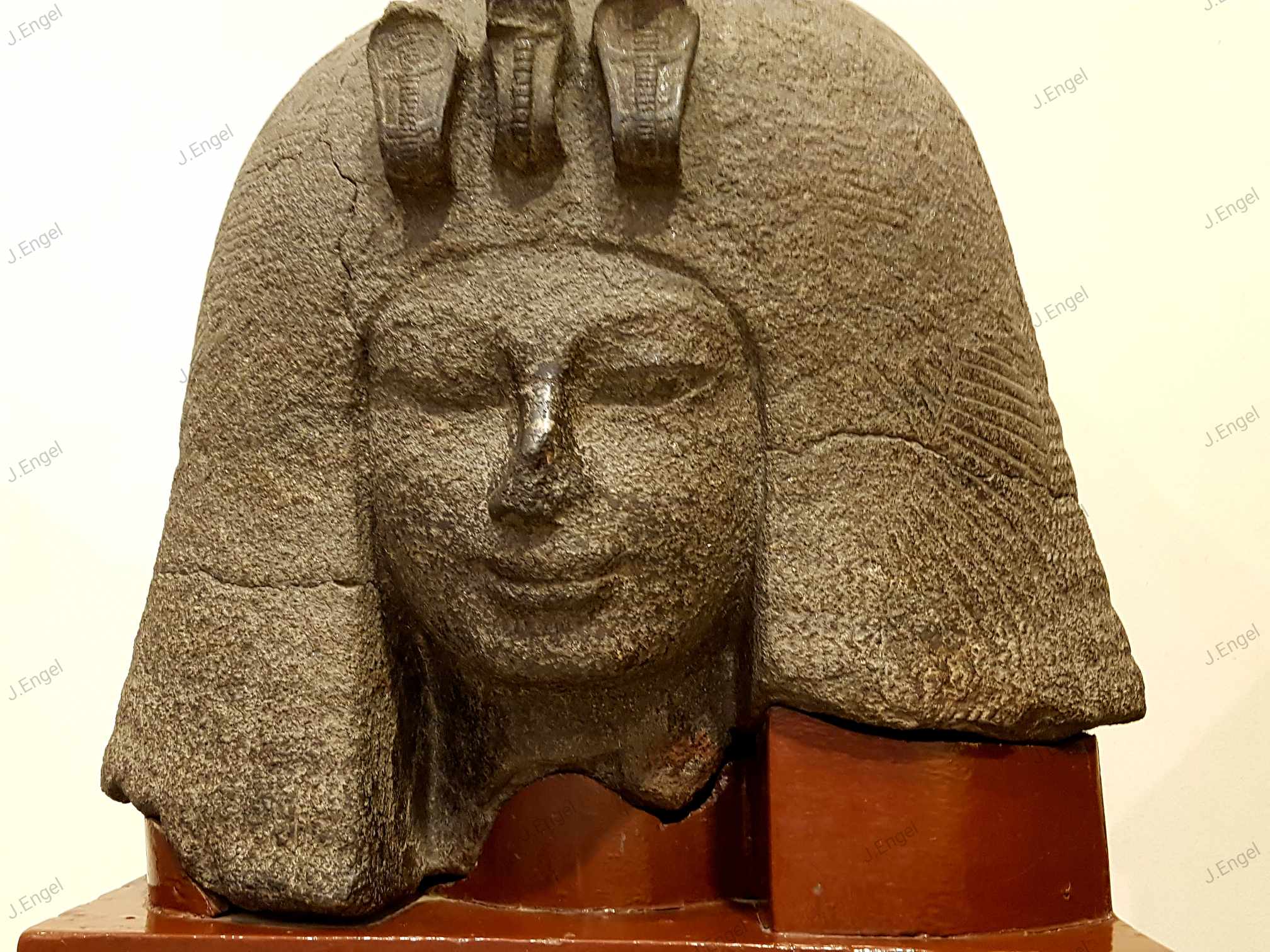
Granite Head of (probably) Queen Tiye

This granite head of Queen Tiye shows the Queen wearing a huge wig, surrounded by the wings of the protective vulture. Over the forehead are two cobra heads and one vulture.

The cobra on the right wears the Red Deshret Crown of Lower Egypt, and the cobra on the left probably wore the White Hedjet Crown of Upper Egypt, now lost.

Despite the damage to the face, her features can be clearly seen. Her oval face has high cheekbones and narrow, almond-shaped eyes. She has the full mouth of a determined and serious woman with a noble spirit. Her lips are smiling, revealing her lovely personality.

This incomplete head probably belongs to Queen Tiye, wife of King Amenhotep III and mother of Akhenaten, based on her distinguished features. The Queen wears a large wig on top of which is the remains of a circular base that was used to support a crown. The wig is decorated with three uraei, or royal cobras, with undulating bodies, lotus flowers, and sunbeams.

Egyptian Museum Cairo

Pictures

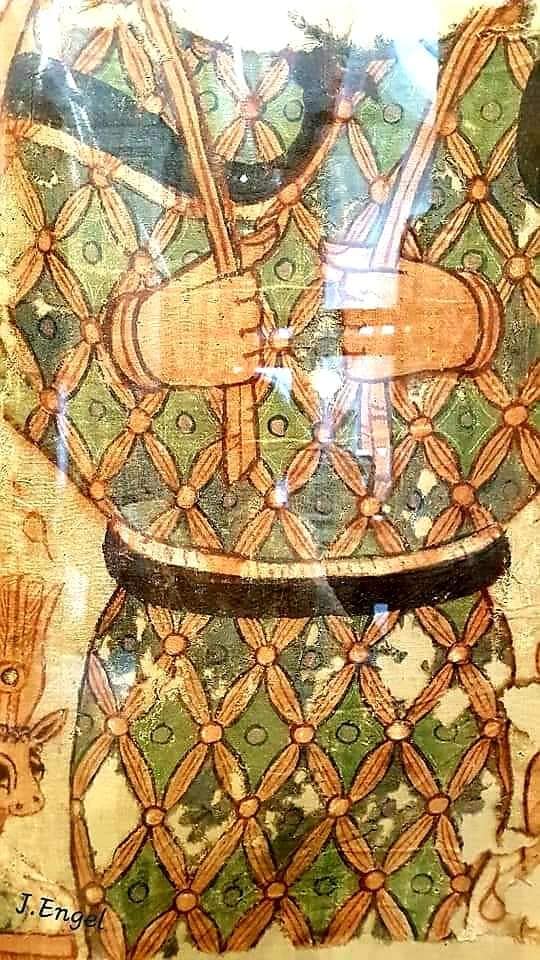
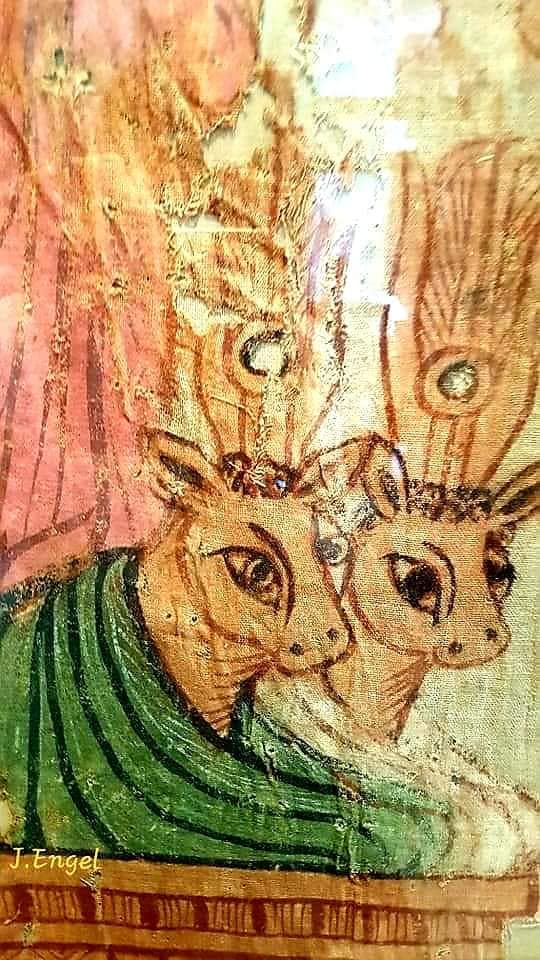
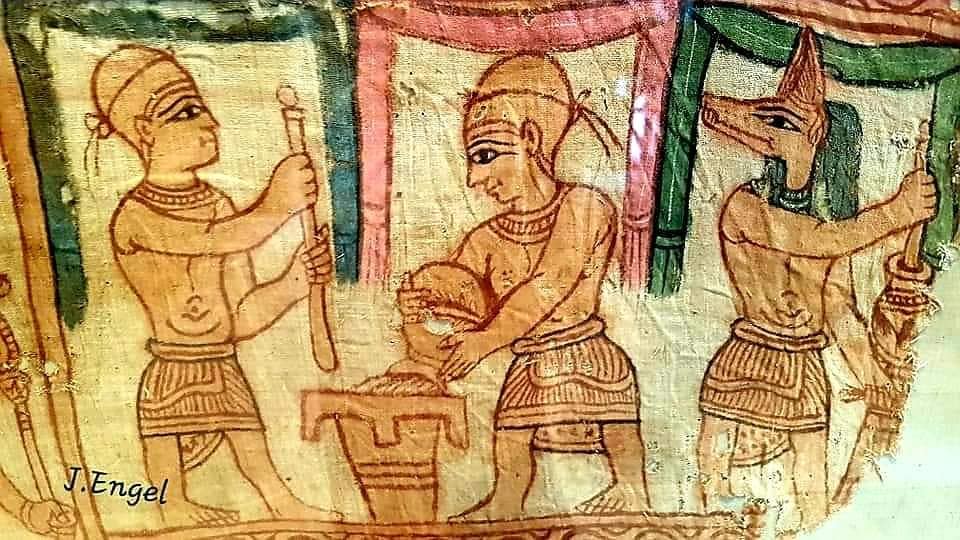
Funary shroud from the tomb of Bakenrenef

The central figure represents Osiris encircled by a snake.

He is flanked by Isis and Nephtis protecting him.

Painted linen.

2nd century AD.

Egyptian Museum Caïro.

Pictures

Amenhotep son of Hapu

This colossal statue represents Amenhotep son of Hapu, vizier and chief architect during the Reign of Amenhotep III (ca 1388-1351 BC)

After his death Amenhotep was deified as a god of medicine and attributed with healing powers.

The statue was carved in the late period, more then half a millennium after his death.

Late Period.

C 746-332BC

Karnak

Pink granite

Egyptian Museum Caïro

Pictures

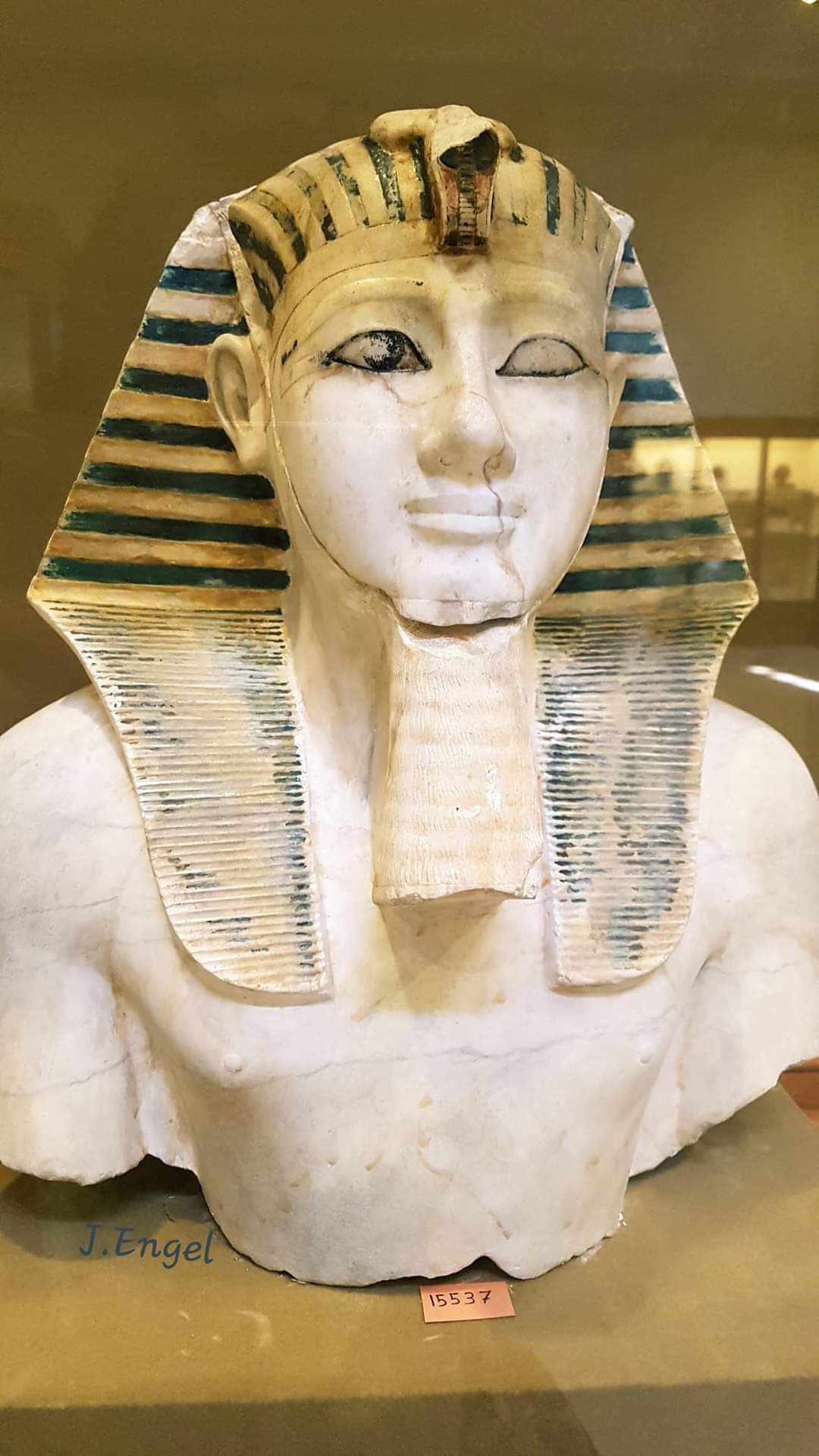
Face of a statue of King Thutmose III

During the 1960’s Polish excavations at the Temple of Thutmose III, a chipped off face of the king was discovered, the face was broken off in antiquity.

The torso of the statue was discovered in the early twentieth century during excavations conducted by Edouard Naville at the mortuary temple of Mentuhotep II at Deir el-Bahri.

It was then placed in the Metropolitan Museum of Art, New York.

In the 1990’s the Metropolitan Museum made this cast of the torso to be displayed with the face while a cast of the face was sent to the Metropolitan Museum and is now displayed with the torso.

18th dynasty

From Deir el-Bahri

Egyptian Museum, Cairo

Pictures

Votive statuette of Queen Ahmose Nefertari

Cult statuettes of Queen Ahmose Nefertari, the famous royal wife and mother of the king Amenhotep I, bear witness to the great devotion the inhabitants of the village of Deir el-Medina felt for this Queen.

The inscriptions on the base of the statue feature the names of the dedicators.

Inv. no.: S. 6128

Wood, paint; dim. 43 x 11 x 23.8 cm

1292–1076 BCE – New Kingdom – Nineteenth – Twentieth Dynasty

Deir el-Medina

In the collection of Museo Egizio Turino

Temporary location: Basilica Palladiana Vicenza fino a Giugno 2023

https://collezioni.museoegizio.it/en-GB/material/S_6128

Pictures

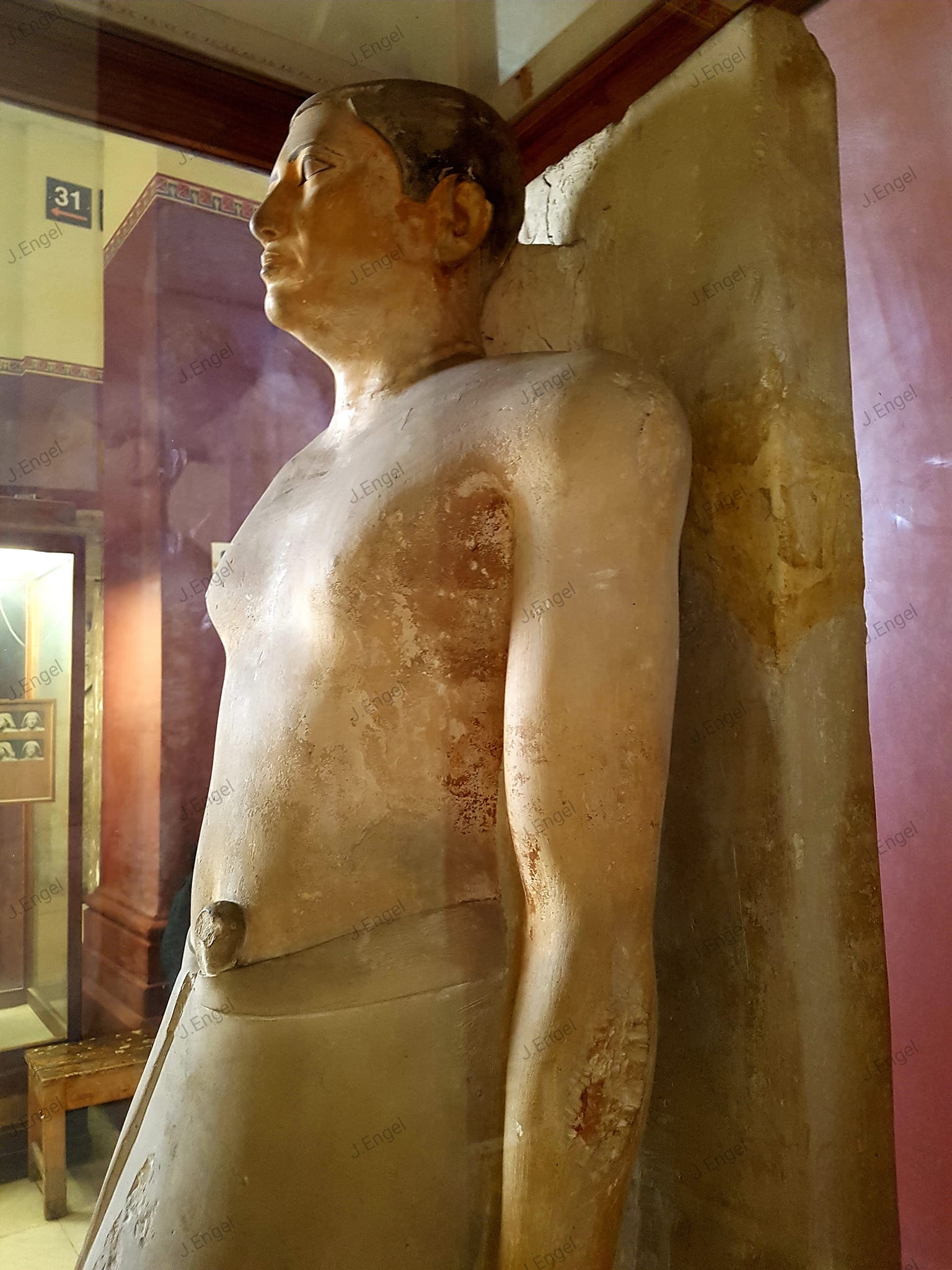
Statue of Ranefer

The statue depicts Ranefer, standing and is wearing an overlapped kilt of medium length. His hair was cut short and the eyes are painted. This splendid statue was found together with another statue, almost identical, in two niches in the chapel at his tomb at Saqqara. This one shows him in an old age while the other in the flush of youth.

Ranefer was a High Priest of Ptah and Seker in Memphis at the end of the 4th Dynasty and the beginning of the 5th Dynasty. His name means “Ra is beautiful”. His main title was “greatest of the directors of craftsmen belonging to the day of festival”. This is a variation of the title normally assigned to the High Priest of Ptah.

Prophet of Ptah and prophet of Seker, Ranefer also declares himself attached to these two divinities which could indicate the religious origin of his career, the term attached designating here the personnel assigned exclusively to the worship and the domain of the god.

Ranefer also declares to be the king’s confidant, a title which indicates that he participated in the king’s privy council, a position also occupied by his predecessors and successors in the pontificate.

Finally and certainly at the same time as he obtained the title of great chief of craftsmen, the main title of the high priest of Ptah , Ranefer is qualified as a participant in the feast of Re , a title which may be a dating index fixing a terminus ante quem to place it in the chronology of the time.

Indeed, this quality of participant in the festival of Re that the high priests of Ptah of this period carry, is clearly attached to the worship which was rendered in the solar temples built by certain sovereigns of the 5th Dynasty and whose first sponsor is Userkaf.

Text: Egypt Museum

Old Kingdom, 5th Dynasty, ca. 2494-2345 BC. Painted limestone.

From Saqqara Necropolis.

Now in the Egyptian Museum, Cairo. JE 10063

Pictures

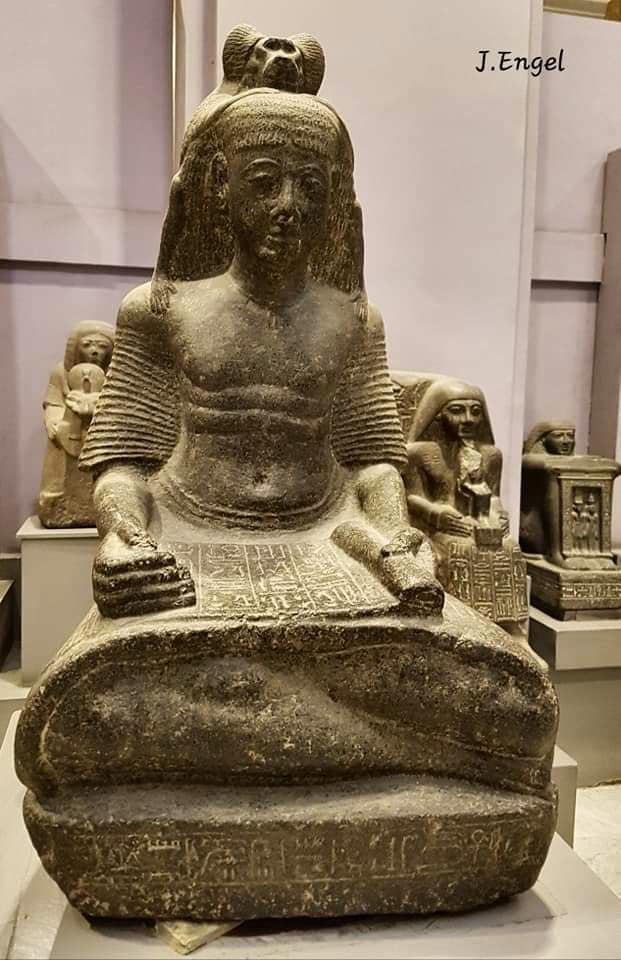
Ramessenakht seated as a scribe

Ramessenakht was the High Priest of Amun during the second half of the 20th Dynasty.

This statue depicts him in the customary pose of a scribe with crossed leg and a roll of papyrus spread over his knees and a cane pen that was once in his right hand, now lost.

Behind the head of the priest appears the head of a baboon that symbols Thoth, god of the Moon, wisdom, knowledge, writing, hieroglyphs, science, magic, art and judgment.

The papyrus roll encloses ten hieroglyphic lines indicating the titles of Ramessenakht and his father the scribe Merybastet .

The hieroglyphic inscriptions on the base of the statue indicate that it was dedicated to Ramessenakht and his son Nesamun , who also became the High Priest of Amun .

20th dynasty, from Karnak

Egyptian Museum Caïro.