Pictures

Isis Amulet

Isis Amulet with Chain of Wendjebauendjed.

This amulet of General Wendjebauendjed is in the shape of a standing figure of Isis. She is shown here as a woman with two horns over her head flanking the solar disk.

The goddess Isis is wearing a tripartite wig with a protective uraeus, or rearing cobra, on the forehead. She is wearing a tight dress, a collar, and bracelets. It seems that she was holding the Shen sign.

Magic plays a central role in all the events involving this goddess: it is through magic that Osiris comes back to life, Horus is conceived and protected, and the deceased assisted in the afterlife. The magic of Isis was also invoked in many spells of protection and healing.

Many myths highlight her great magical ability and in one in particular – in which she learns the true name of the god Re – she consolidates her position as one of the most important deities in terms of magical knowledge and power.

In this myth, Isis creates a snake to bite Re, the sun god. Re is poisoned and can only recover from the bite by revealing his true name to the goddess: knowing the name of someone/something was tantamount to having great power over them…and that is exactly what Isis achieves! Re is healed and Isis strengthens her power.

Third Intermediate Period, 21st Dynasty, reign of Psusennes I, ca. 1047-1001 BC,
from tomb NRT III, Tanis.

Now in the Egyptian Museum, Cairo. JE 87716
Pictures

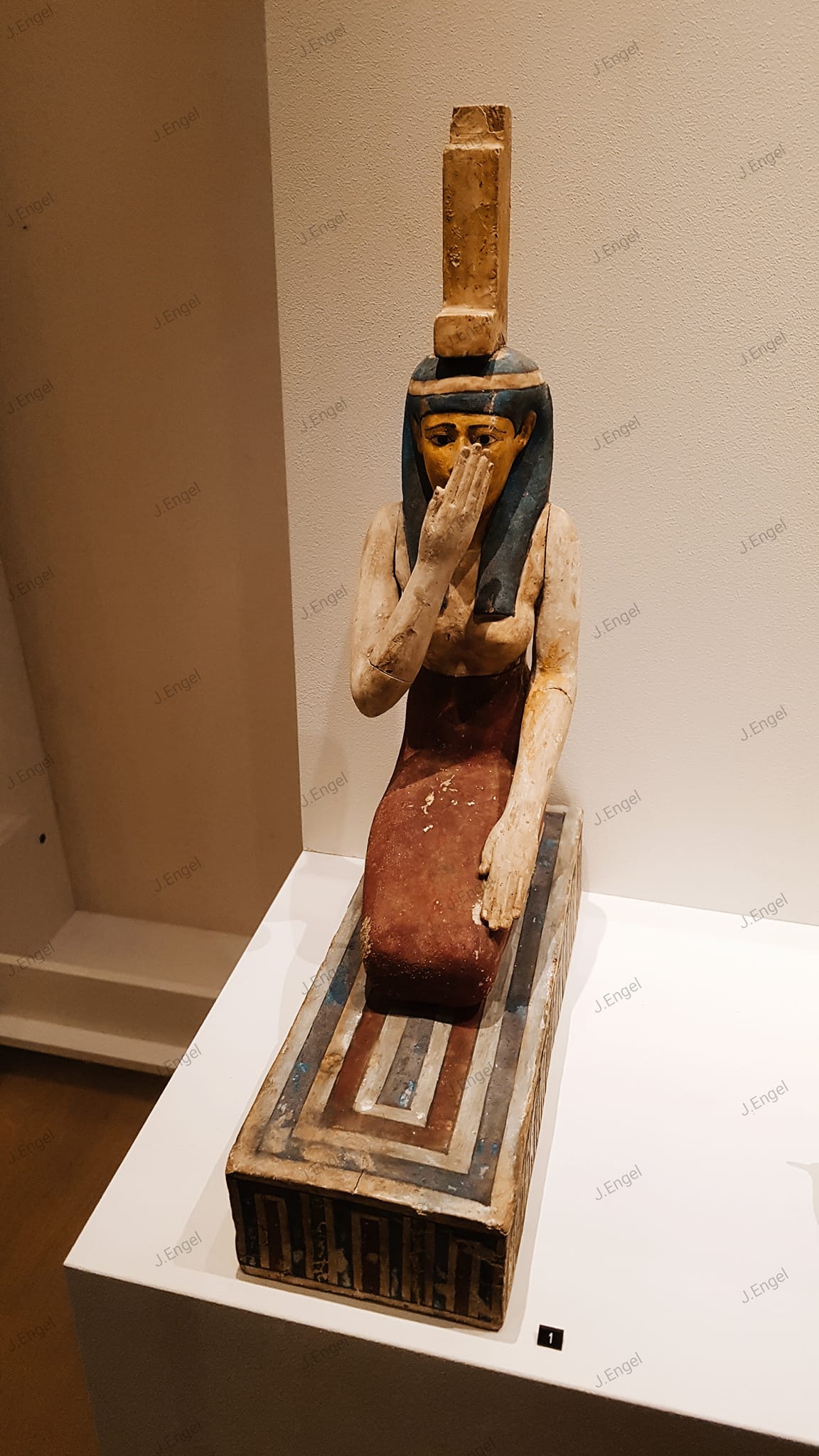
Grieving Isis

Isis cries over her husband’s death.

On her head the hieroglyph of her name.

Tomb statue; wood; from Middle Egypt, Greek Period (ca. 300-200 BC)

Hildesheim, Pelizaeus-Museum, ime 1584046]

Pictures

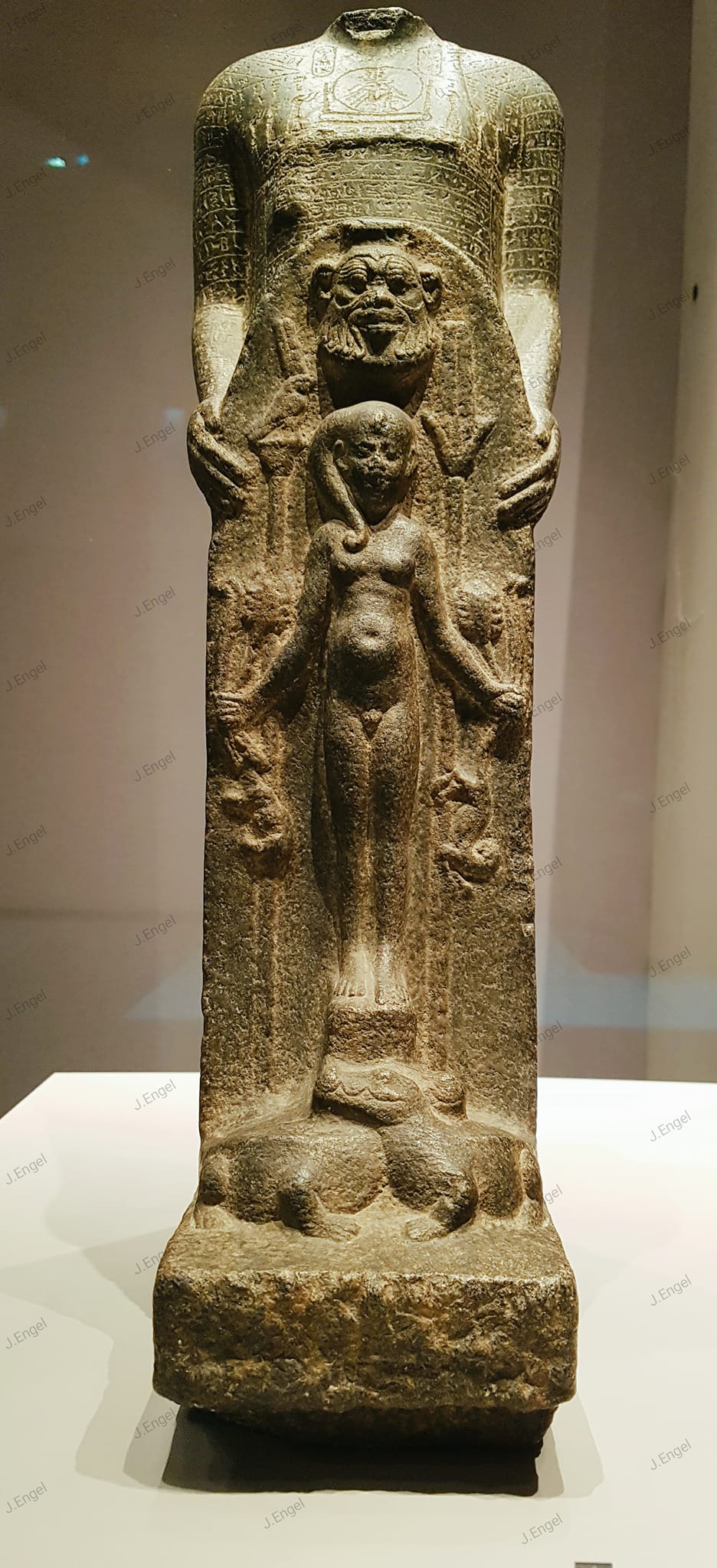
Healing image of the army writer Hor

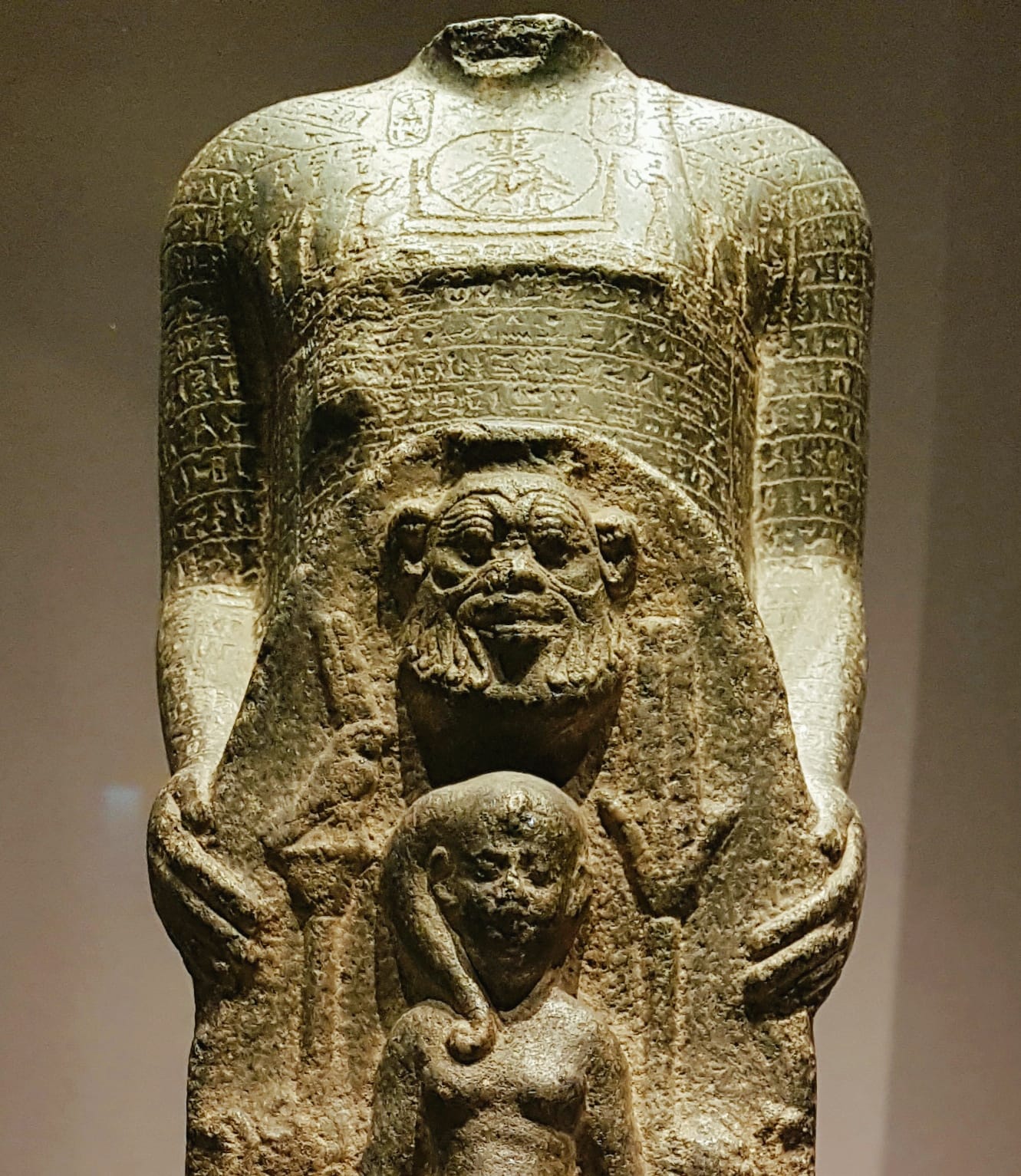
The statue is covered with magical spells and figures of gods.

In his hands Hor holds a so-called Horusstele with an image of the god Harpocrates who protects against snakes and scorpions.

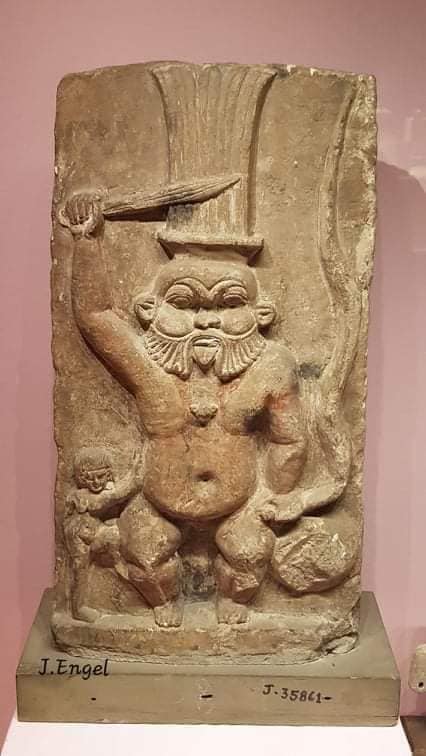
The god Bes above Harpocrates.
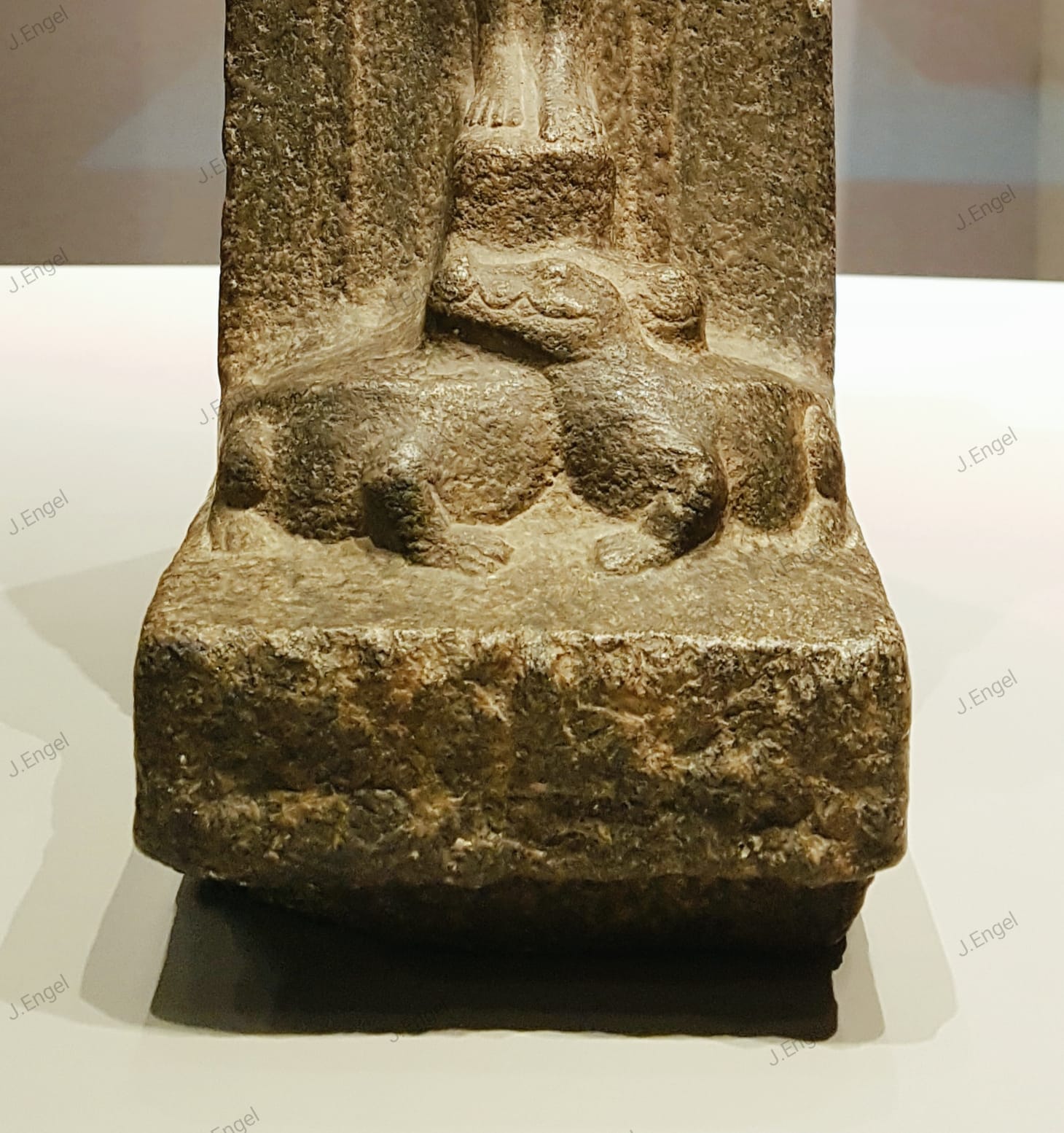
Crocodiles under Harpocrates feet.

Granodiorite; origin unknown;

Early Greek Period (332-305 BC)

Turin, Museo Egizio, inv. c. 3030 [tt 173]

https://m.facebook.com/story.php?story_fbid=2585772664932479&id=100004993125345&mibextid=Nif5oz

Pictures

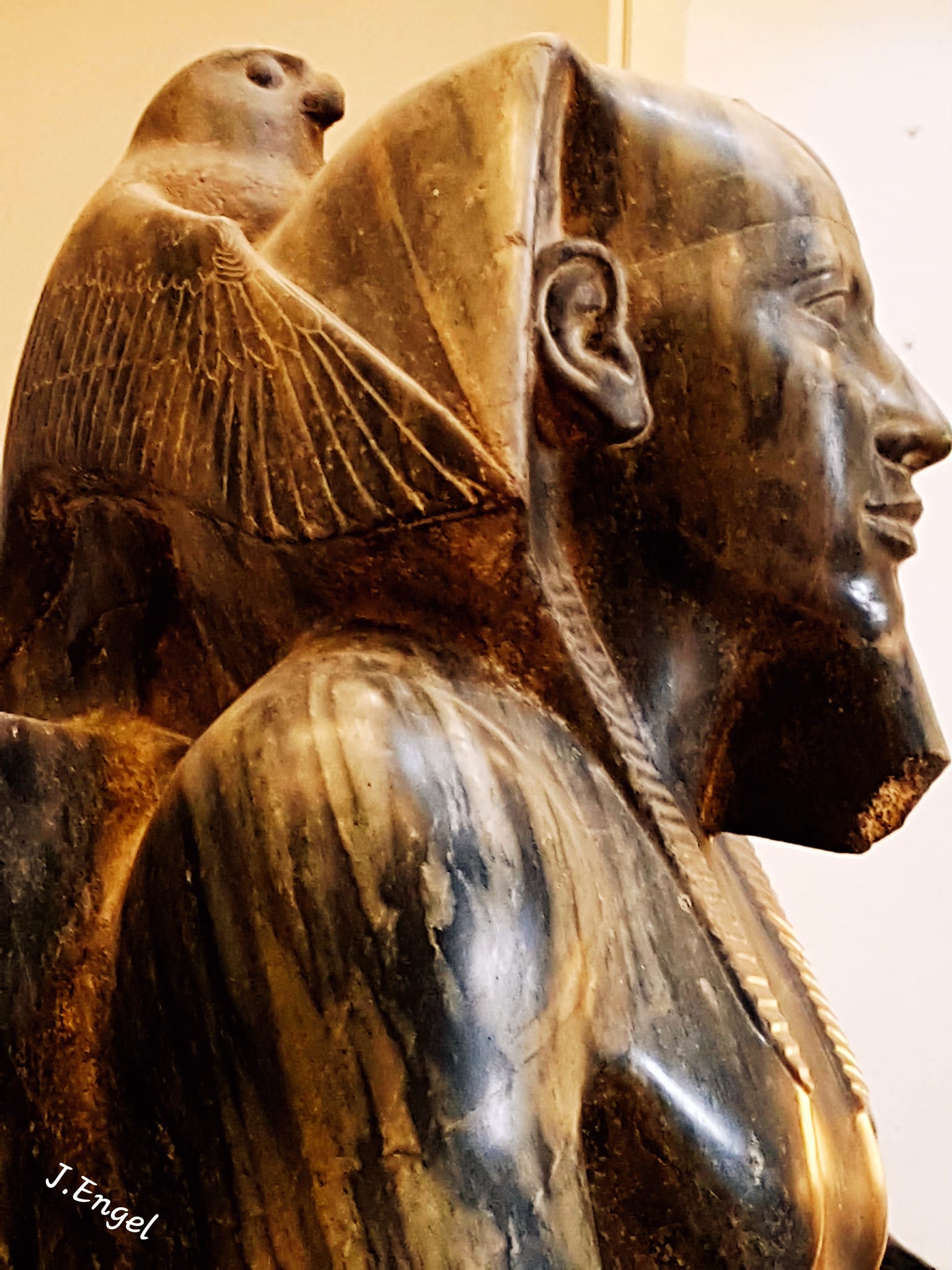
Horus protecting Pharaoh Khafre

By Jacqueline Engel

Egyptian museum. Cairo

Khafra (also read as Khafre, Khefren and Chephren) was an ancient Egyptian king (pharaoh) of 4th dynasty during the Old Kingdom. He was the son of Khufu and the throne successor of Djedefre. According to the ancient historian Manetho, Khafra was followed by king Bikheris, but according to archaeological evidences he was rather followed by king Menkaure. Khafra was the builder of the second largest pyramid of Giza. The view held by modern Egyptology at large remains that the Great Sphinx was built in approximately 2500 BC for Khafra.[2] There is not much known about Khafra, except the historical reports of Herodotus, who describes him as a cruel and heretic ruler, who kept the Egyptian temples closed after Khufu had sealed them.

Pictures

Naos of Sebty

By Jacqueline Engel

This broken statue of a kneeling man called Sebty shows both the holder of the statue, an official in the government of Amenhotep III, and a miniature shrine of Horus, the falcon god.
It is likely that this statue was displayed on a processional way within the temple, the temple of Montu in the Karnak complex in this instance.

Luxor, Karnak Temple
Precinct of Montu
New Kingdom, 18th Dynasty
Amenhotep II (1390-1352 BC)
Quartzite

Hurgada Museum

Pictures

Mummy Portrait

By Jacqueline Engel

This painted portrait belonged to a lady from the Fayum region whose life ended between 80 and 100 BCE approximately, as her hairstyle imitates that of the Empress Domitia Longina, wife of the Roman Emperor Domitian.

She is wearing a Greek style outfit, a purple chiton and himation with elegant golden trims.

This portrait was unusually placed within the mummy cartonnage, replacing the plaster mask.

This piece combines three cultural traditions: the Egyptian religious faith in resurrection, the Greek technique of encaustic painting, and the Roman concept of individual portrait.

About Fayum portraits, see also https://laciviltaegizia.org/2021/11/06/i-ritratti-del-fayyum/

Fayum region.

Roman Period, 1st century CE, 80-100 CE

Encaustic wax painting on wood, Cloth

Encaustic painting, also known as hot wax painting, involves using heated beeswax to which colored pigments are added.

The liquid or paste is then applied to a surface—usually prepared wood, though canvas and other materials are often used.

Hurgada Museum

Pictures

Scribal Statue of Rahotep

By Jacqueline Engel

This statue of Rahotep was found in his tomb with several others.
It is in the position of the scribe, a sign of erudition, as he was also the “Inspector of the royal secretaries.”
There are traces of paint left on the statue.

Saqqara North of Step pyramid, tomb 24 Rahotep.
Old Kingdom
5 Dynasty (2494-2345 BC)
Red granite

Hurgada Museum

Pictures

Protection of Evil through Music

By Jacqueline Engel

Musical instruments in ancient Egypt ranged from the simple percussion ones to the complex harp, whose strings tend to now be lost.

In general, the sistrum was decorated with a head of Hathor or the body of a female.

Music was indeed closely associated to youth and enjoyment with many musicians being accompanied by dancers.

Flower bouquets represent the same youth and freshness associated with these activities, and the same connection to Hathor.

Clappers were also used, to mimic the sound of the simplest instrument, the hands clapping.

They also had the function of warding off bad demons with their noise.

The god Bes with its fierce demeanor did the same, especially during sleep and pregnancy.

He was the only god fronting the viewer in two-dimensional representations.

This allowed him to focus his attention to protecting.

Hurgada Museum

Pictures

Incredible preservation of wood

By Jacqueline Engel

Thanks to Egypt’s dry climate wooden artifacts were well preserved through time as this statue is more then 4500 years old!
This statue would have been meant for the funerary cult of the deceased, unfortuntately anonymous.
Despite its modern rarity, it would have been an affordable version at the time due to it being made of wood.

The statue in the striding walk position.
With his left foot forward it is one of the most typical positions found in Egyptian statuary, from the early times such as this Old Kingdom example up to at least the Greco-Roman period.
The man is wearing a kilt and a dark wig. He is depicted young and healthy to remain as such for eternity.

Hurgada Museum