Pictures

Mummy mask

By Jacqueline Engel

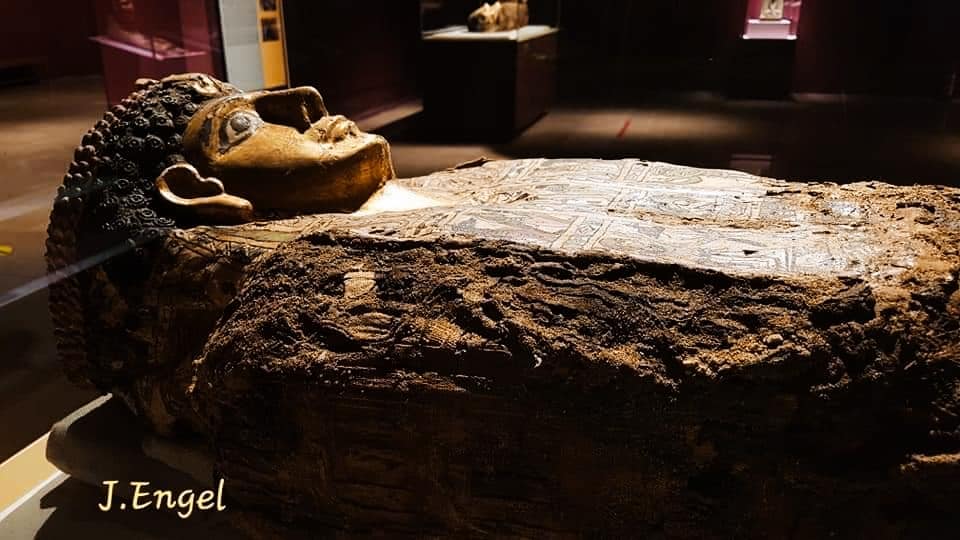
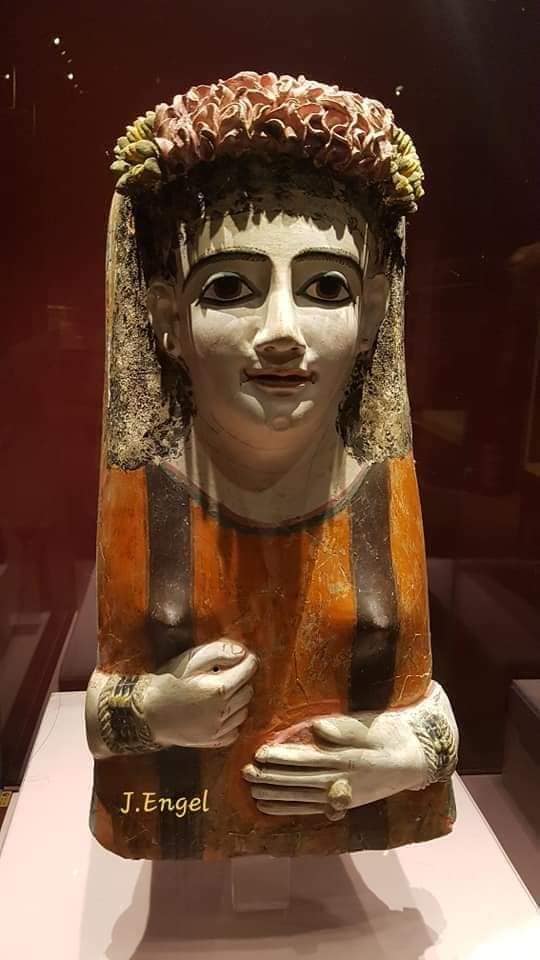
This beautiful mummy mask was part of a cartonnage ensemble, which adorned the mummy of a young woman.

She likely belonged to the upper class, which included many Greeks during this time period.

This double influence is seen in the life like portrait of the lady that is combined with ancient Egyptian funerary scenes, rituals, and deities such as Osiris, Isis, and Anubis among others.

The young woman is depicted with a beautiful face, elegant hair surmounted by a floral garland, and wide eyes that stare off into the distance.

Her red dress decorated with two black stripes, the two rings on her left hand and the two bracelets around each wrist reveal her elevated position in society.

Middle Egypt.

Asyut.

Roman Period. 1st century AD

Linen, Plaster. Paint

Hurgada Museum
Pictures

Coffin lid

By Jacqueline Engel

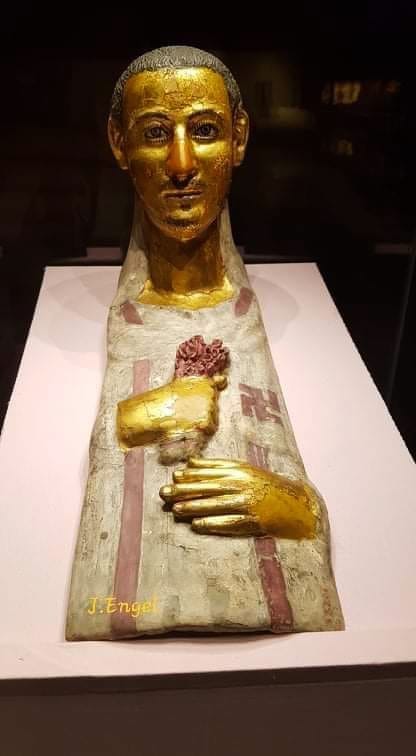
This coffin lid with its gilded mask depicts a young male.

The chiton is adomed with two purple stripes, while the mantle is decorated with a purple swastika.

This symbol in pre-Christian world symbolised fertility and the concept of birth and rebirth.

The face is softly modelled with short cropped hair, a low cut short beard, and a moustache.

This young man perhaps died in the first quarter of the 3rd century AD.

Provenance unknown.

Roman Periód, 3rd century AD

Gilded wood. Paint Cloth

Hurgada Museum

Pictures

THE VALLEY OF THE GOLDEN MUMMIES

By Jacqueline Engel

In 1996, Dr. Zahi Hawass and his team of Egyptian experts discovered an immense cemetery in Bahariya Oasis in Egypt’s Western Desert.

Over a hundred mummies were found in this site, which is today known as the Valley of the Golden Mummies, all dating to Egypt’s Greco Roman Period (332 BC-395 AD).

Many of the mummies who were discovered, including the three on display here, were those of wealthy individuals.

This is evident from the use of cartonnage (plaster covered linen) covering the face and chest which was then coated with gold.

The head section of the cartonnage was moulded into the shape of the face of the deceased to preserve their likeness for eternity.

The decoration on the mummy with the brightly painted chest plate depicts funerary deities to help him achieve an afterlife.

The two mummies that have gold chest plates most likely belonged to a man and his wife, since they were discovered side by side.

Very exceptionally, the mummy of the woman is depicted smiling.

Her head was interestingly turned towards her husband, locked in an eternal loving gaze.

Hurgada Museum

Pictures

Gilded Cartonnage.

By Jacqueline Engel

T

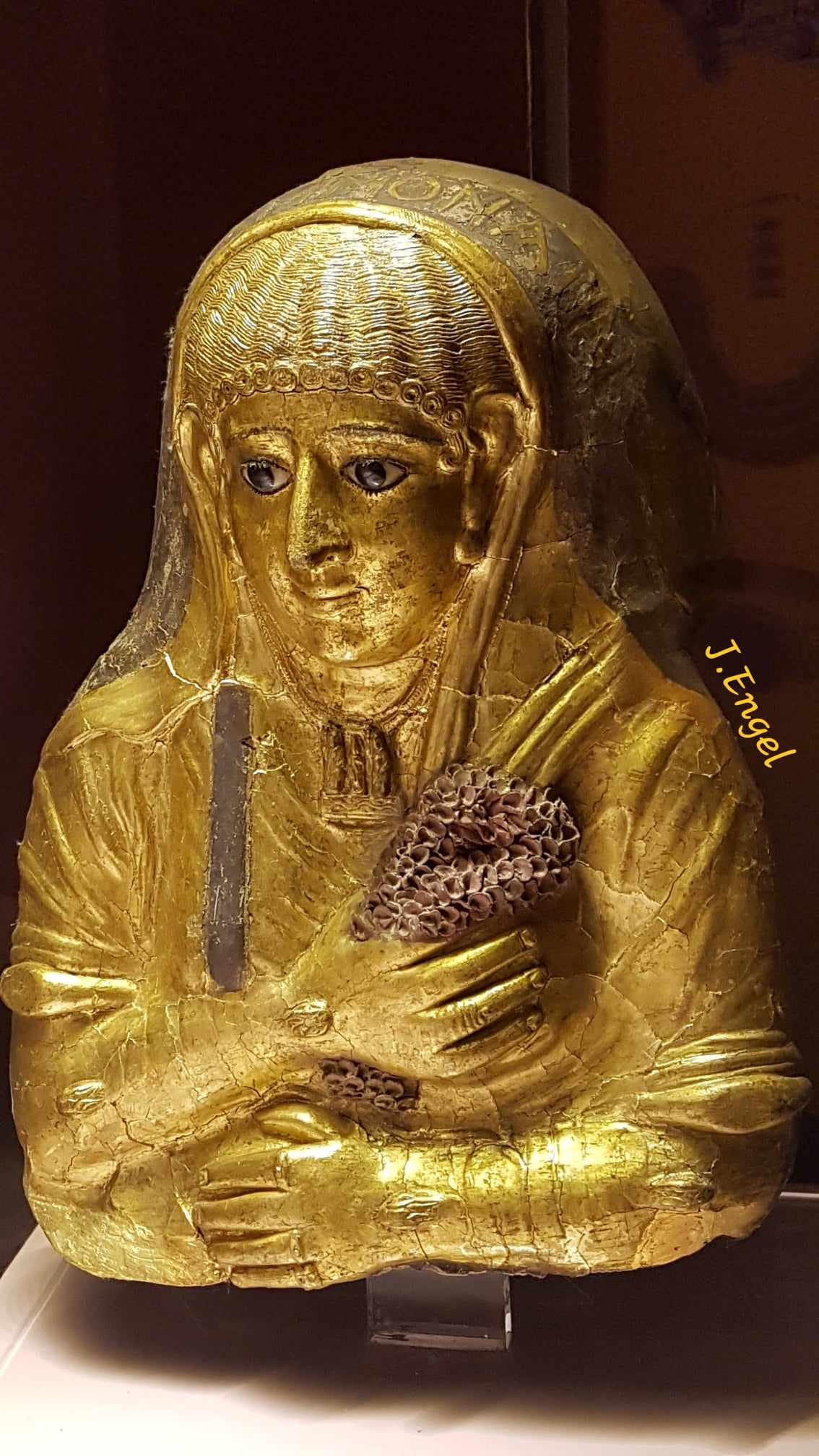
This gilded cartonnage mummy mask comes from the Fayum region.

This mask belongs to a lady named Ammonarin, whose name and dress perfectly reflect her Greco-Egyptian cultural and religious background.

Ammonarin is dressed in a tunic with black clavus and himation (cloak or shawl) worn above the head.

She has a necklace with pendant depicting Isis, Sarapis and Harpocrates. As jewellery, she also has two bracelets in the form of snakes, similar to those on display in the Museum.

Her hairstyle follows the fashion trends set by the Empress Livia.

Fayum region

Hawara Roman Period, 1st century CE, 50-70 CE

Plaster, Paint, Gold, Linen

Hurgada Museum

Pictures

The Ka Statue of King Rameses II

By Jacqueline Engel

Hurgada Museum

This statue is a depiction of the royal ka of King Ramses II” the Great” 1279-1213 BC of the 19th Dynasty.
The ka can be understood as a combination of both someone’s character, and their life force.
The word ka was written with a hieroglyph in the shape of two upraised ams.

The King as the point of contact between the human and divine worlds, was possessed by a different vital force: the royal ka.
Every king in ancient Egyptian History was believed to have been possessed by It.
The presence of the ka hieroglyph on the head of this statue identifies it as a represetation, not as King Ramses II himself, but of his royal ka.

This statue, discovered in December 2019, is only the second statue of its kind to have ever been recovered.
It was found in Mit Rahina, near modern Cairo, next to the site of the Great Temple of Ptah in the ancient capital of Memphis.
The first known royal-ka statue discovered in 1894, was that of the little known 13th Dynasty (1795-1650 BC) king, Auibre Hor, which is on display in the Egyptian Museum in Calro.

Pictures

Sothis/Sopdet the dog star

By Jacqueline Engel

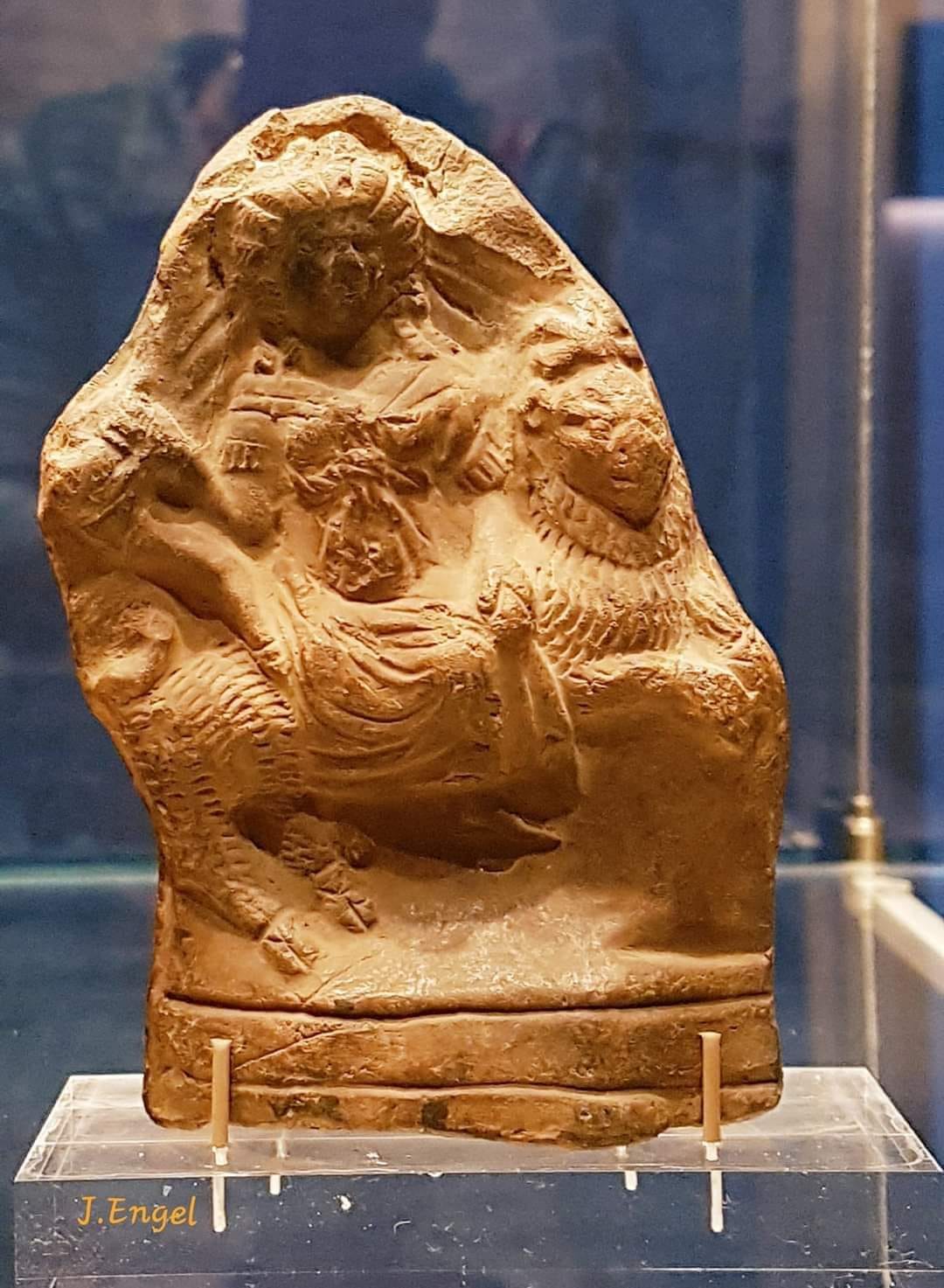
Sothis rides a dog with a star between the ears.
The zodiac sign Sirius is still called the Big Dog.

Sopdet is the ancient Egyptian name of the star Sirius and its personification as an Egyptian goddess. Known to the Greeks as Sothis, she was conflated with Isis as a goddess and Anubis as a god.

Votive image, terracotta , origin unknown.
Roman period. 2-3 Century AD
RMO LEIDEN.HOLLAND.

Pictures

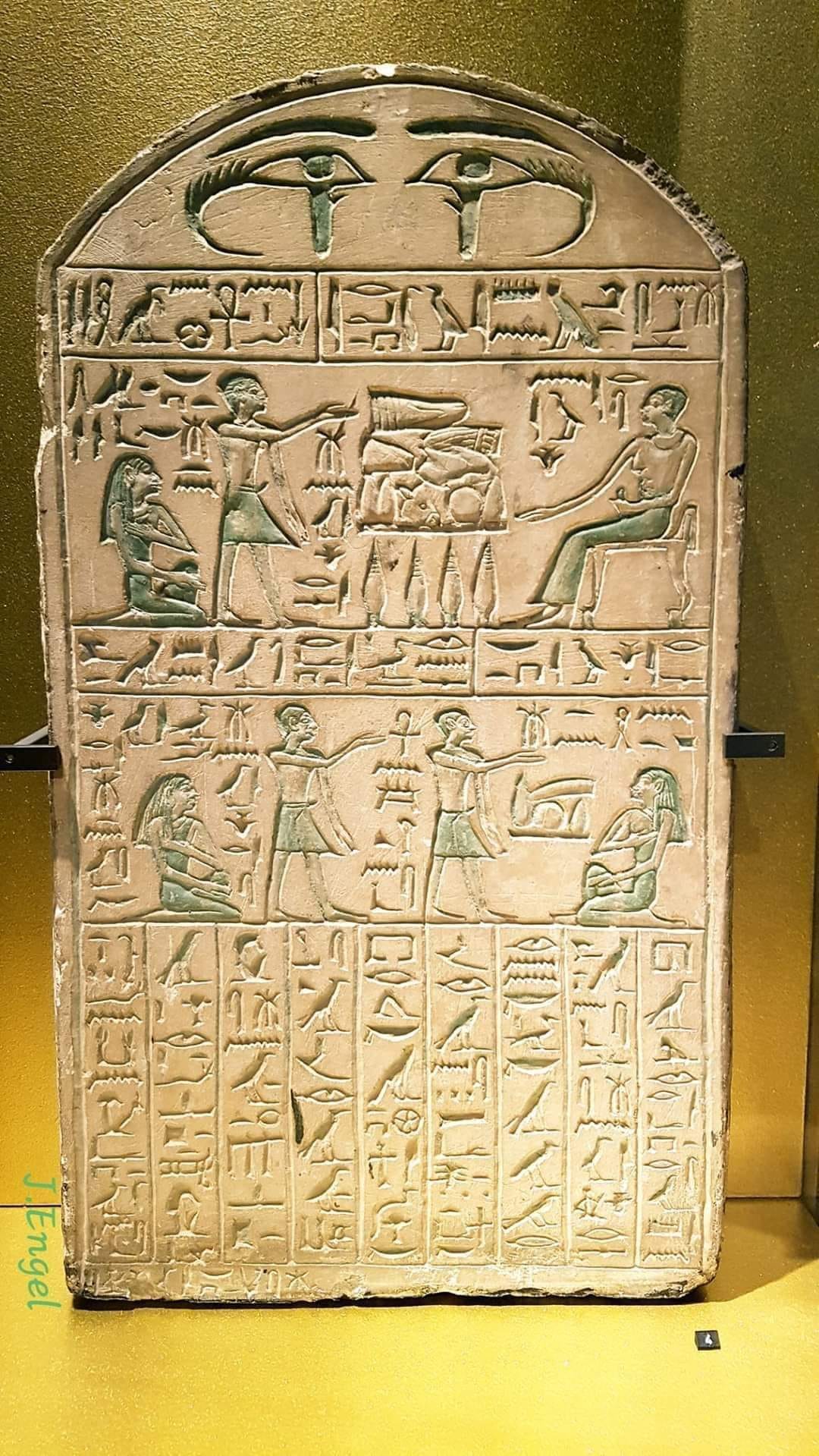
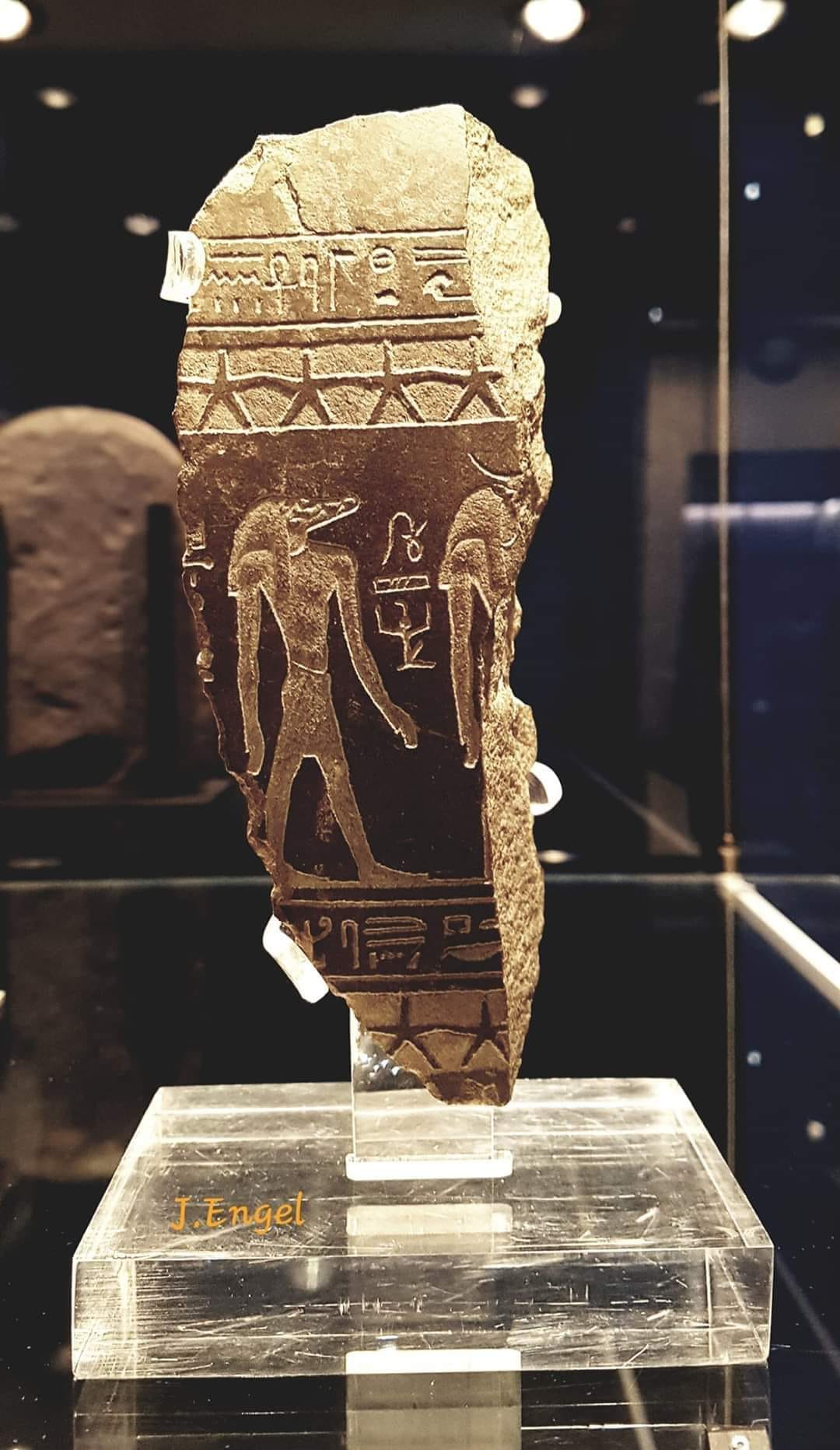
Stela of the god Wepwawet

By Jacqueline Engel

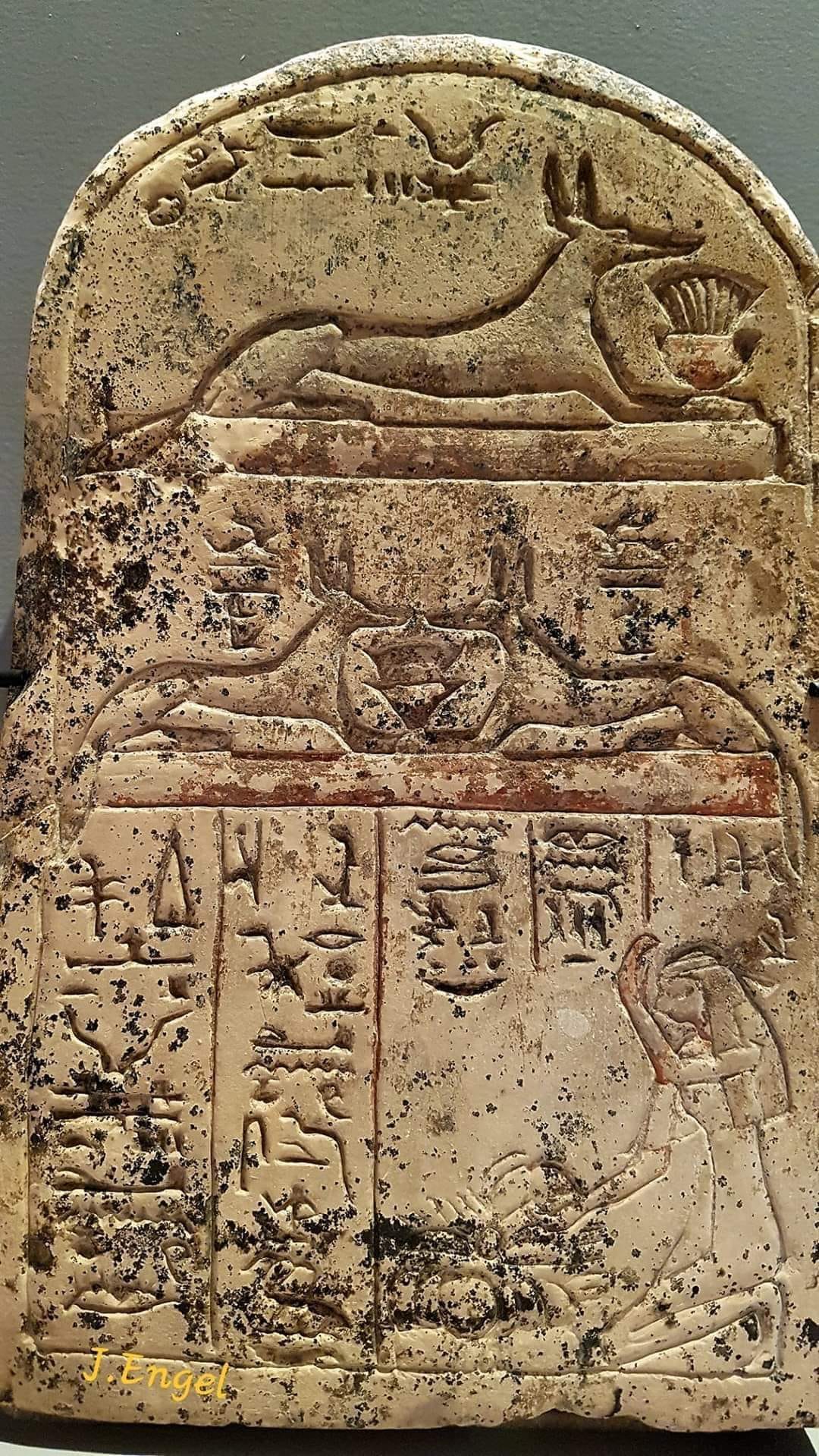
Limestone.
Asyut?
New Kingdom. 19-20 Dyn.1292-1077BC
The Louvre Museum Paris

In late Egyptian mythology, Wepwawet(hieroglyphic wp-w3w.t; also rendered Upuaut, Wep-wawet, Wepawet, and Ophois) was originally a war deity, whose cult centre was Asyut in Upper Egypt (Lycopolis in the Greco-Roman period).
His name means opener of the ways and he is often depicted as a wolf standing at the prow of a solar-boat.
Some interpret that Wepwawet was seen as a scout, going out to clear routes for the army to proceed forward.
One inscription from the Sinaistates say that Wepwawet “opens the way” to king Sekhemkhet’s victory.

Pictures

Queen Amose Nefertari

By Jacqueline Engel

Queen Amose Nefertari was honored after her death as protectress of the Theban Cemetery.

The grave workers of Deir El Medina dedicated figurines to her in the local Temple.

Wood.

Deir el-Medina Thebes

New Kingdom 19 Dyn. 1292-1191BC.

Egyptian Museum Turin.

Pictures

Dean of stars

By Jacqueline Engel

.

Fragment of a water clock, with an image of various stars from ten-day periods.

A waterclock or clepsydra (Greekκλεψύδρα from κλέπτειν kleptein, ‘to steal’; ὕδωρ hydor, ‘water’) is any timepiece by which time is measured by the regulated flow of liquid into (inflow type) or out from (outflow type) a vessel, and where the amount is then measured.

Grauwak .

Origin unknown.

Greek Period. 332-30 BC

Egyptian Museum Turin.