Di Grazia Musso
Ardesia grigio-verde
Altezza 49,5 cm., P. 15 cm, L. 13,5 cm
Altezza della testa 7 cm
Agyptisches Museum, Berlino
Inv. n. 10972
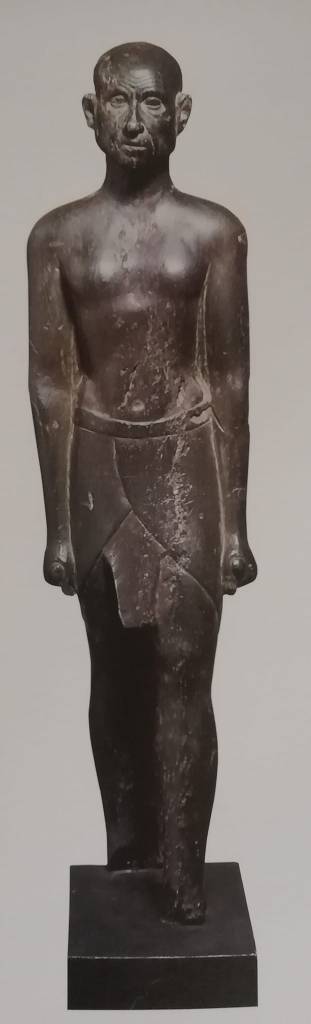
Il soggetto di questa scultura può non apparire particolarmente attraente, ma l’opera è notevole.
A prima vista pare essere composto da due parti non appartenenti l’una all’altra; dal collo in giù sembra una scultura idealizzata, con il gonnellino quale unico capo di vestiario.
Uno sguardo più attento rivela un corpo tonico, non più giovane, ma ancora in forma; il modellato della mosculatura è limitato e sul petto risaltano seni quasi femminili.
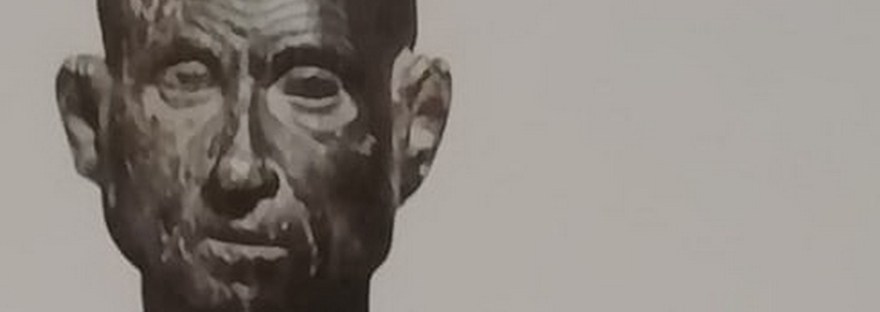
La testa è notevole : la fronte corrugata, profondi solchi nasolabiali e l’angolo sinistro della bocca leggermente sollevato ne fanno un notevole approccio naturalistico.

Da: Lembke, Katja, and Günter Vittmann. “Die Ptolemäische Und Römische Skulptur Im Ägyptischen Museum Berlin. Teil I: Privatplastik.” Jahrbuch Der Berliner Museen, vol. 42, 2000, pp. 7–57.
The base and feet of the statue are missing. The lower corner of the chick pillar has been replaced. Numerous damages cover the surface, especially in the area of the right half of the head and the left half. Tool marks are clearly visible on the front, especially between the legs and around the fists. The head and body also lack the final smoothing. The back is only roughly worked.
The life-size statue of a standing bald man wears a smooth three-part apron. The uninscribed back pillar ends py-ramidally at forehead height. The arms resting against the body hang down vertically. The sitter holds shadow sticks in his fists. The left leg is set forward; it is connected to the back pillar by a bar. The upper body is slender and narrow, the chest slightly protruding. The abdominal muscles are only indicated in outline. The muscles of the arms and legs are also barely sculpted.
The head is small and rectangular, the individual shapes are coarse and angular. The car-nate is floppy and mobile. The cheeks are slightly sunken. Bags under the eyes are indicated. The nasolabial folds lead deep into the chin area. Four parallel wrinkles are carved into the forehead in a wavy pattern. Another one directly above the brows is interrupted by three steep wrinkles at the root of the nose. The slightly protruding brows follow the curve of the forehead wrinkles. The eyes are deep-set and bordered by angular lids. The nose is long and bulbous, the mouth full-lipped and roughly shaped.
the statue resembles a statue in Cairo, whose head is embossed, while the body lacks only the smoothing. In the Berlin statue, however, the head and body show the same sketchy execution. In addition, an almost identical piece in the Brooklyn Museum shows that the statue must have been installed in this form in a temple. Further information can be gleaned from the inscription on the statue in Brooklyn: Firstly, the statue comes from Kar-nak, so that an Upper Egyptian provenance can also be assumed for the Berlin piece.
Secondly, for reasons of content, the text must have been created in the 1st century BC or at the beginning of the Roman period. According to Bothmer, the Egyptian type of statue suggests a date at the end of the Lagid reign. In connection with the apparent incompleteness, reference should be made to two other statues from the Roman period that show the same phenomenon, but have already moved away from the striking portrait of old age. Accordingly, a dating of the Berlin statue to the last years of Ptolemaic rule is suggested
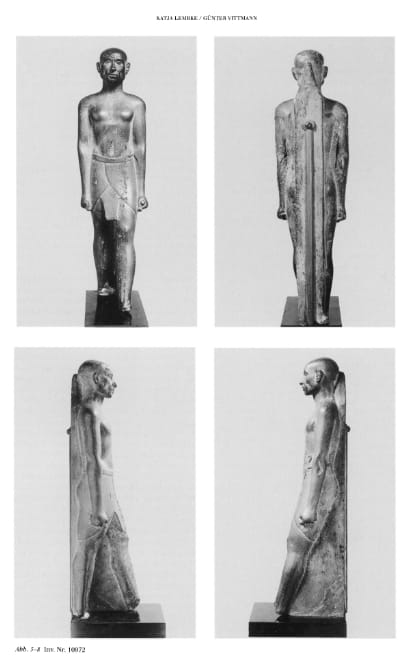
La base e i piedi della statua sono mancanti. L’angolo inferiore del pilastro è stato sostituito. Numerosi danni ricoprono la superficie, soprattutto nella zona della metà destra della testa e della metà sinistra. I segni di utensili sono chiaramente visibili sulla parte anteriore, soprattutto tra le gambe e intorno ai pugni. Anche la testa e il corpo mancano della levigatura finale. Il retro è lavorato solo in modo approssimativo.
La statua a grandezza naturale di un uomo calvo in piedi indossa un grembiule liscio in tre parti. Il pilastro posteriore non iscritto termina piramidalmente all’altezza della fronte. Le braccia appoggiate al corpo pendono verticalmente. Il seduto tiene nei pugni dei bastoni da ombra. La gamba sinistra è avanzata; è collegata al pilastro posteriore da una barra. La parte superiore del corpo è snella e stretta, il petto leggermente sporgente. I muscoli addominali sono indicati solo a grandi linee. Anche i muscoli delle braccia e delle gambe sono appena scolpiti.
La testa è piccola e rettangolare, le singole forme sono grossolane e angolari. L’incarnato è floscio e mobile. Le guance sono leggermente infossate. Sono presenti borse sotto gli occhi. Le pieghe nasolabiali si estendono in profondità nella zona del mento. Quattro rughe parallele sono incise sulla fronte con un andamento ondulato. Un’altra, direttamente sopra le sopracciglia, è interrotta da tre rughe ripide alla radice del naso. Le sopracciglia leggermente sporgenti seguono la curva delle rughe della fronte. Gli occhi sono infossati e delimitati da palpebre angolari. Il naso è lungo e bulboso, la bocca a labbra piene e di forma approssimativa.
La statua assomiglia a una statua del Cairo, la cui testa è sbalzata, mentre al corpo manca solo la levigatura. Nella statua di Berlino, tuttavia, la testa e il corpo presentano la stessa esecuzione sommaria. Inoltre, un pezzo quasi identico conservato al Brooklyn Museum dimostra che la statua doveva essere installata in questa forma in un tempio. Ulteriori informazioni possono essere ricavate dall’iscrizione sulla statua di Brooklyn: In primo luogo, la statua proviene da Kar-nak, per cui si può ipotizzare una provenienza dall’Alto Egitto anche per il pezzo berlinese.
In secondo luogo, per ragioni di contenuto, il testo deve essere stato creato nel I secolo a.C. o all’inizio del periodo romano. Secondo Bothmer, il tipo di statua egizia suggerisce una datazione alla fine del regno dei Lagidi. In relazione all’apparente incompletezza, occorre fare riferimento ad altre due statue di epoca romana che mostrano lo stesso fenomeno, ma si sono già allontanate dal suggestivo ritratto della vecchiaia. Di conseguenza, si suggerisce una datazione della statua di Berlino agli ultimi anni del dominio tolemaico.
Fonte
Egitto 4000 anni di arte – Jaromir Malek – Edizioni Phaidon
 LA CIVILTA' EGIZIA