By Jacqueline Engel
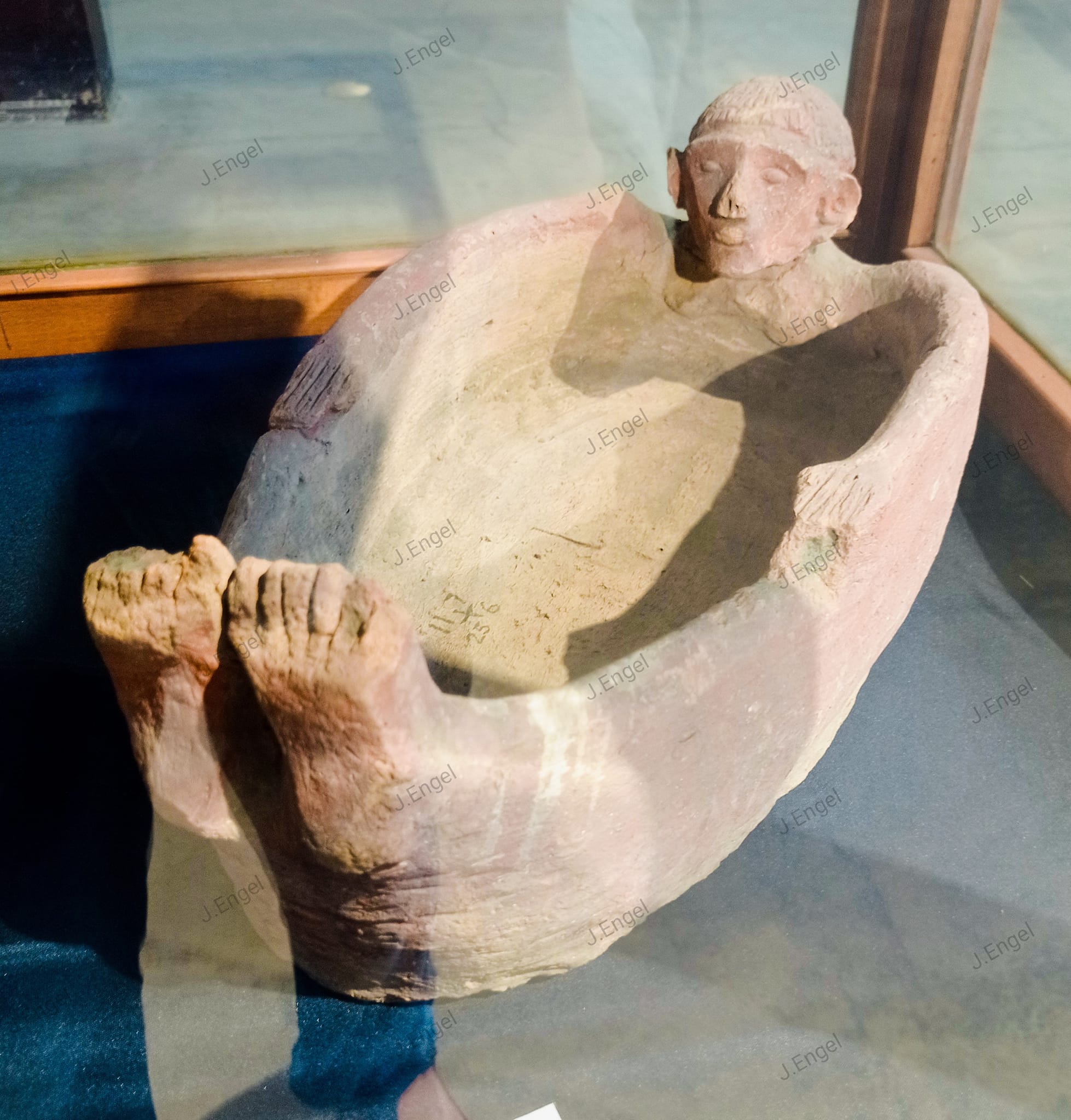
Dish shaped Human-Body
Middle kingdom;
TR 11/7/25/6.
Egyptian Museum Cairo
Il sito web del Gruppo Facebook
By Jacqueline Engel
Dish shaped Human-Body
Middle kingdom;
TR 11/7/25/6.
Egyptian Museum Cairo
By Jacqueline Engel

Ankhet’s sarcophagus is decorated with images and texts that will allow her to breathe again in the afterlife.
The human headed bird across her chest is Ankhet’s ba, or soul, which travels between the worlds of the living and the dead.
It grasps symbols of eternal life, such as masts and sails representing wind and air, and the ankh-sign representing life.
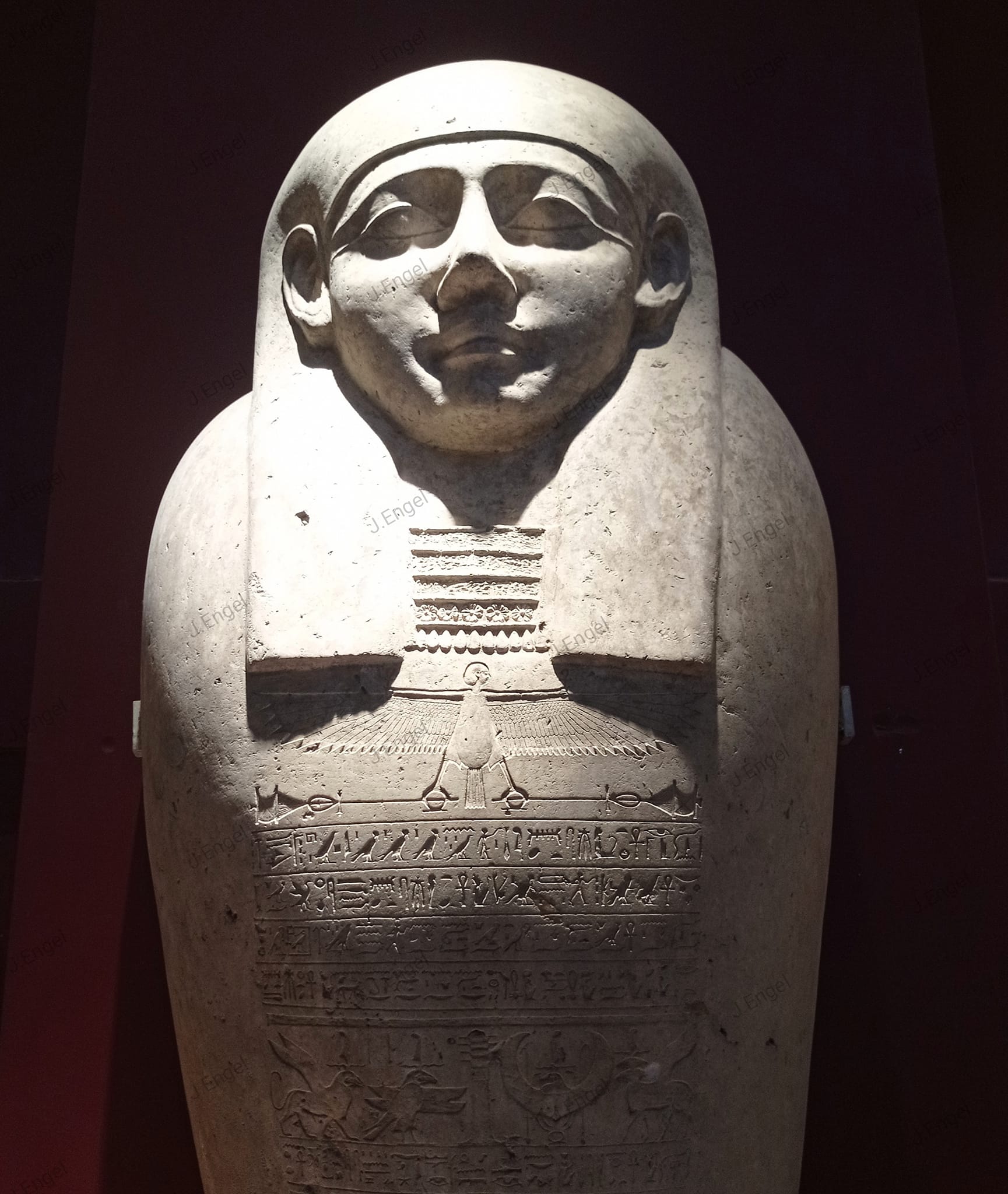
Book of the Dead spell 191, inscribed in hieroglyphs, describes bringing the ba removing the shades.
Below, the four winds are depicted as ram-headed creatures bringing life-giving air from all directions. Underneath, the god of the afterlife, Osiris, reclines on a bed and the sun god Ra is barn from a lotus flower, flanked by three gods holding a mast.

Ptolemaic, 150-100 BC,
Saqqara,
Limestone, JE 4739
Text and location Egyptian Museum Cairo
By Jacqueline Engel

Bust of the chief lector priest Kaaper
called Sheikh El-Balad
This statue, found at Saqqara, came from the tomb of Kaaper and depicts him in his youth as a toll slim young man.
The statue would have stood at the back of the offering chapel in his tomb along with the other statue of Kaaper.
Next to him: Upper part of statue of wife of the chief lector priest Kaaper, called ‘Sheikh El-Balad
This statue was discovered in the same mastaba as the statue of Kaaper.
It is therefore thought to belong to his wife.
It shows a woman with a wig with a straight hairstyle and central parting.
She wears a tight dress and the usekh, a wide collar, which are both typical of Old Kingdom fashion.
His mastaba, a flat-roofed tomb (named “Saqqara C8”) was discovered by Auguste Mariette in the Saqqara necropolis, just north of the Step Pyramid of Djoser.
5th Dynasty Old Kingdom
Saqqara
Egyptian Museum Cairo
By Jacqueline Engel
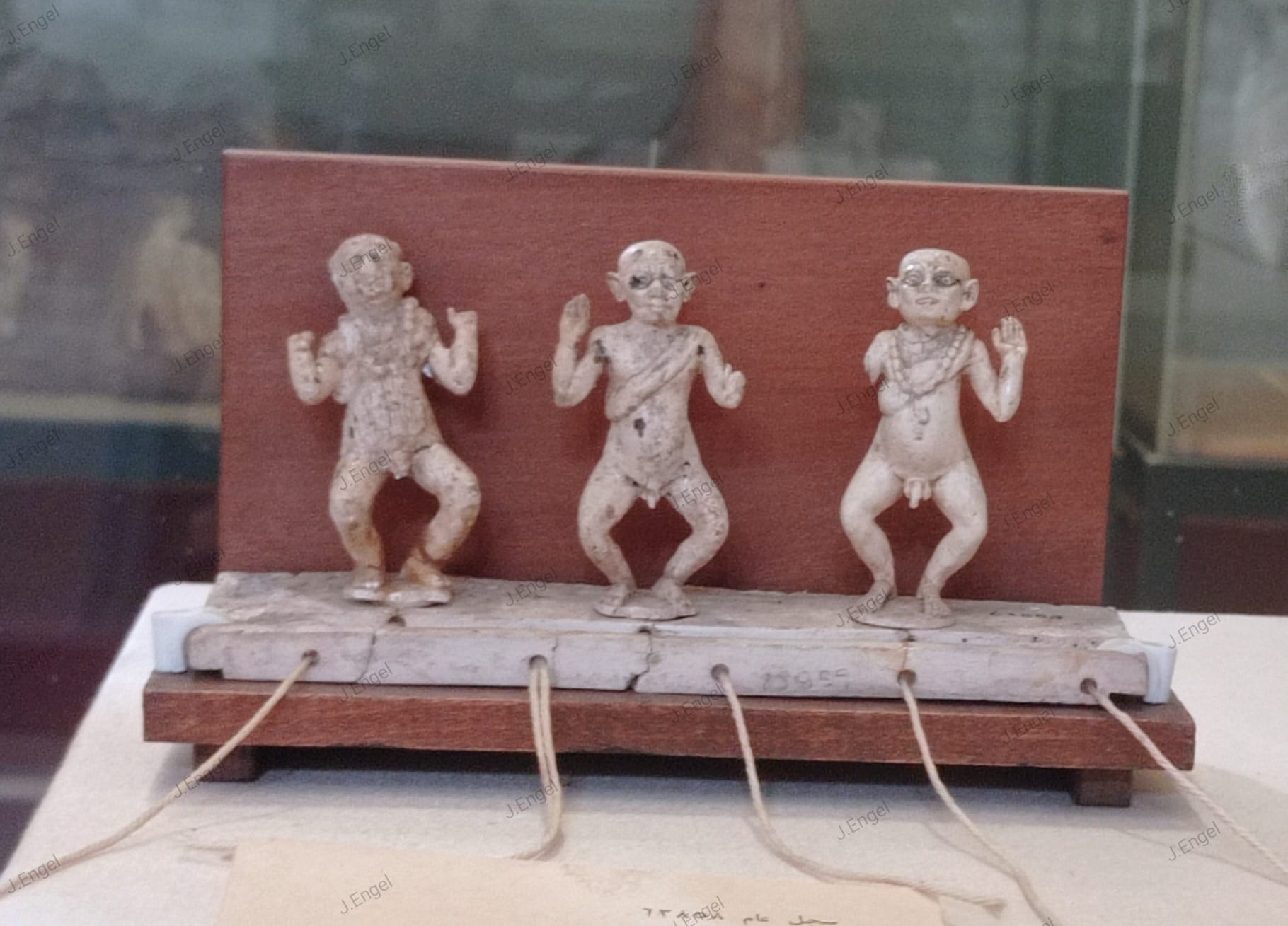
Three dancing Dwarfs.
Used as toy
Ivory
El-lisht
M.K 12th Dyn.
JE. 68858-6.8 10542.
Egyptian Museum Cairo
By Jacqueline Engel
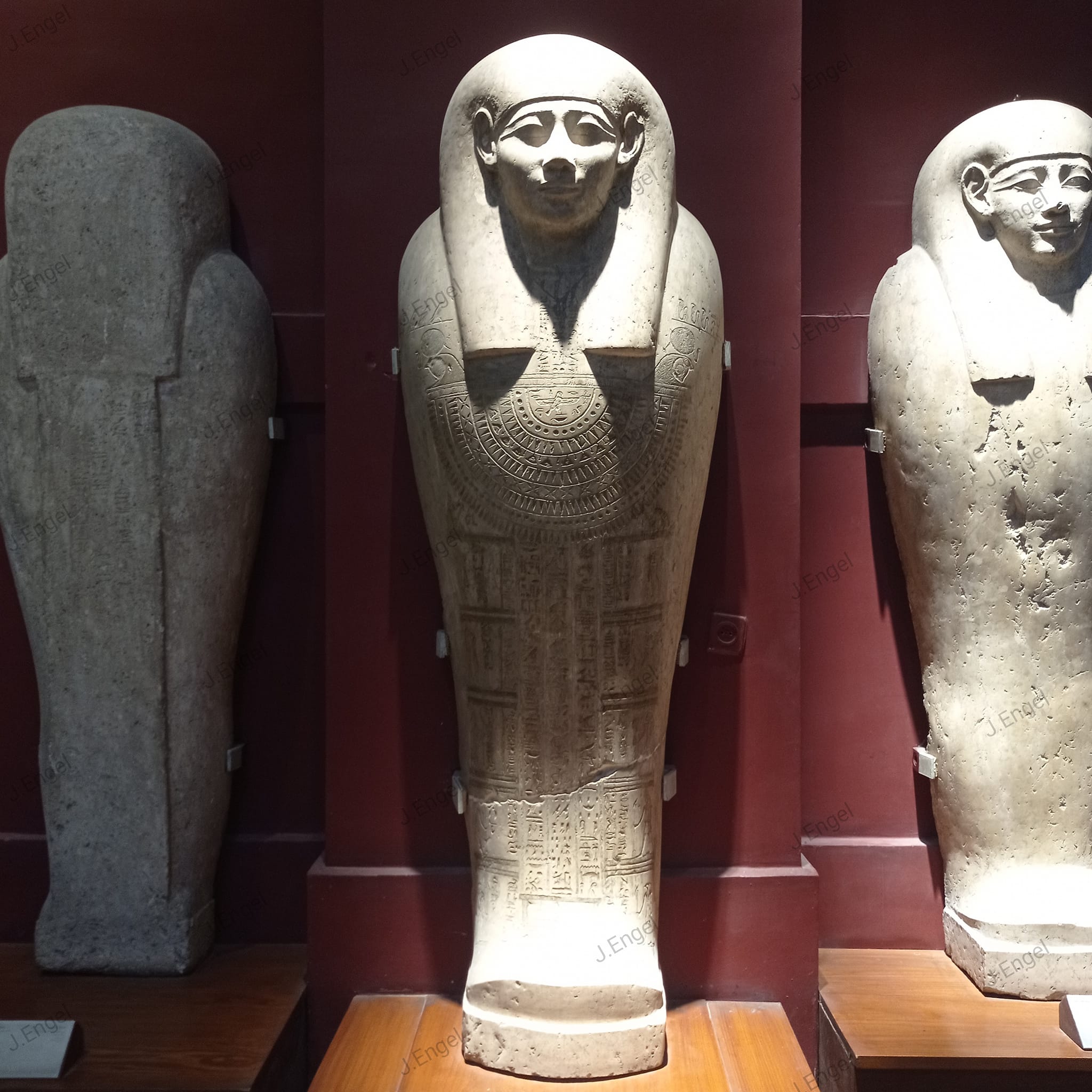
Pawerdiu was a priest in the 10th Upper Egyptian nome, the province south of Asyut.
He wears an elaborate usekh-collar and a small necklace with a heart shaped pendant.
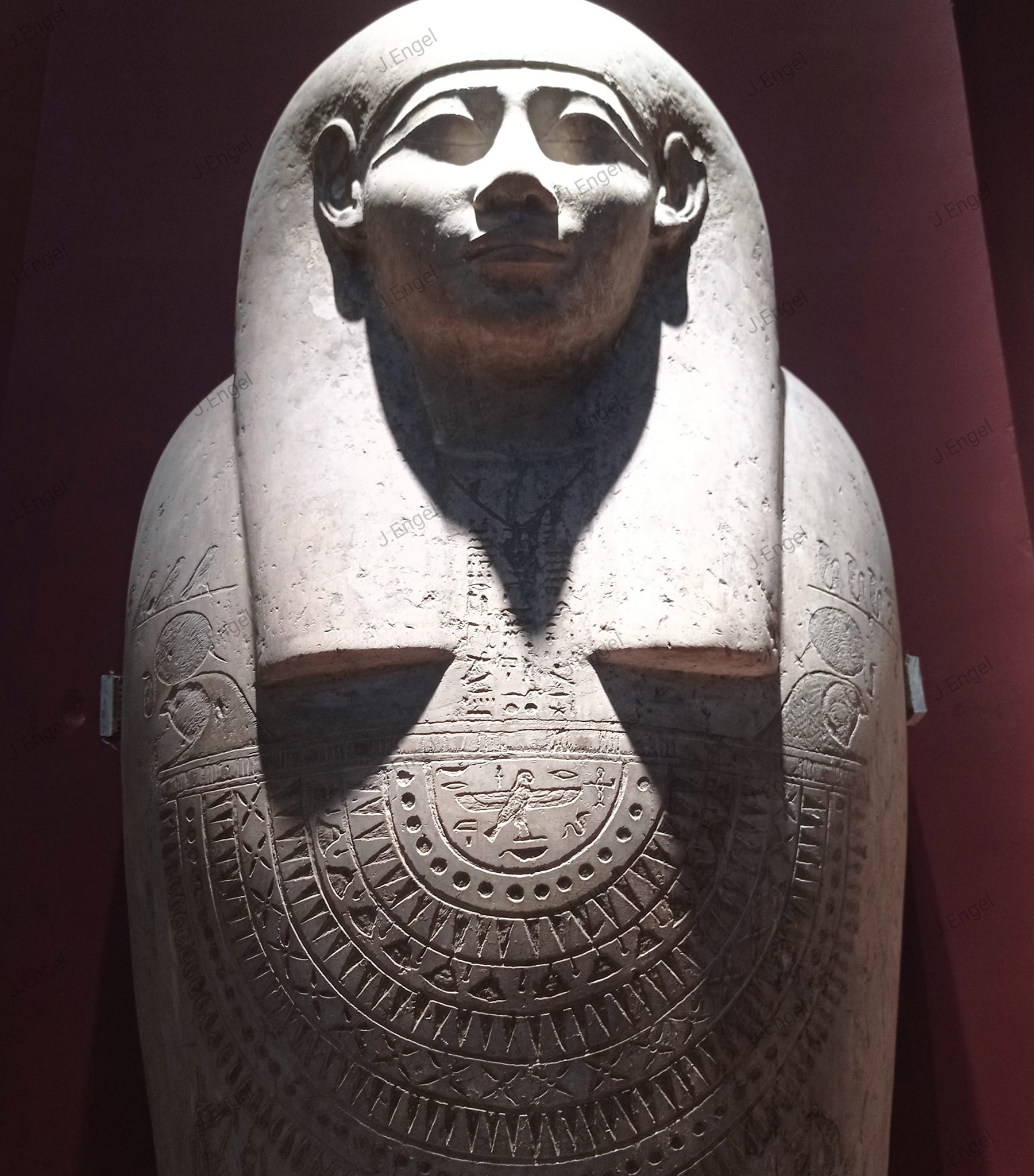
On either side of the central inscription, various deities are arranged in five rows separated by a sky-sign.
On the feet two jackal gods sit on a shrine.
These gods offer the deceased protection.
Their words and offerings defend Pawerdiu on his dangerous journey to the afterlife.

The four sons of Horus are depicted in the top two rows, usually responsible for the preservation of the stomach, liver, Intestines, and lungs.
Here, they present linen to Pawerdiu’s ba and ka souls, heart and mummy.
Text and location: Egyptian Museum Cairo
By Jacqueline Engel
IL TESTO COMPLETO DEL “DECRETO DEL CANOPO”, GENTILMENTE FORNITO DA ALBERTO ELLI, È DISPONIBILE QUI
THE COMPLETE TEXT OF THE “CANOPUS DECREE”, KINDLY PROVIDED BY ALBERTO ELLI, IS AVAILABLE HERE
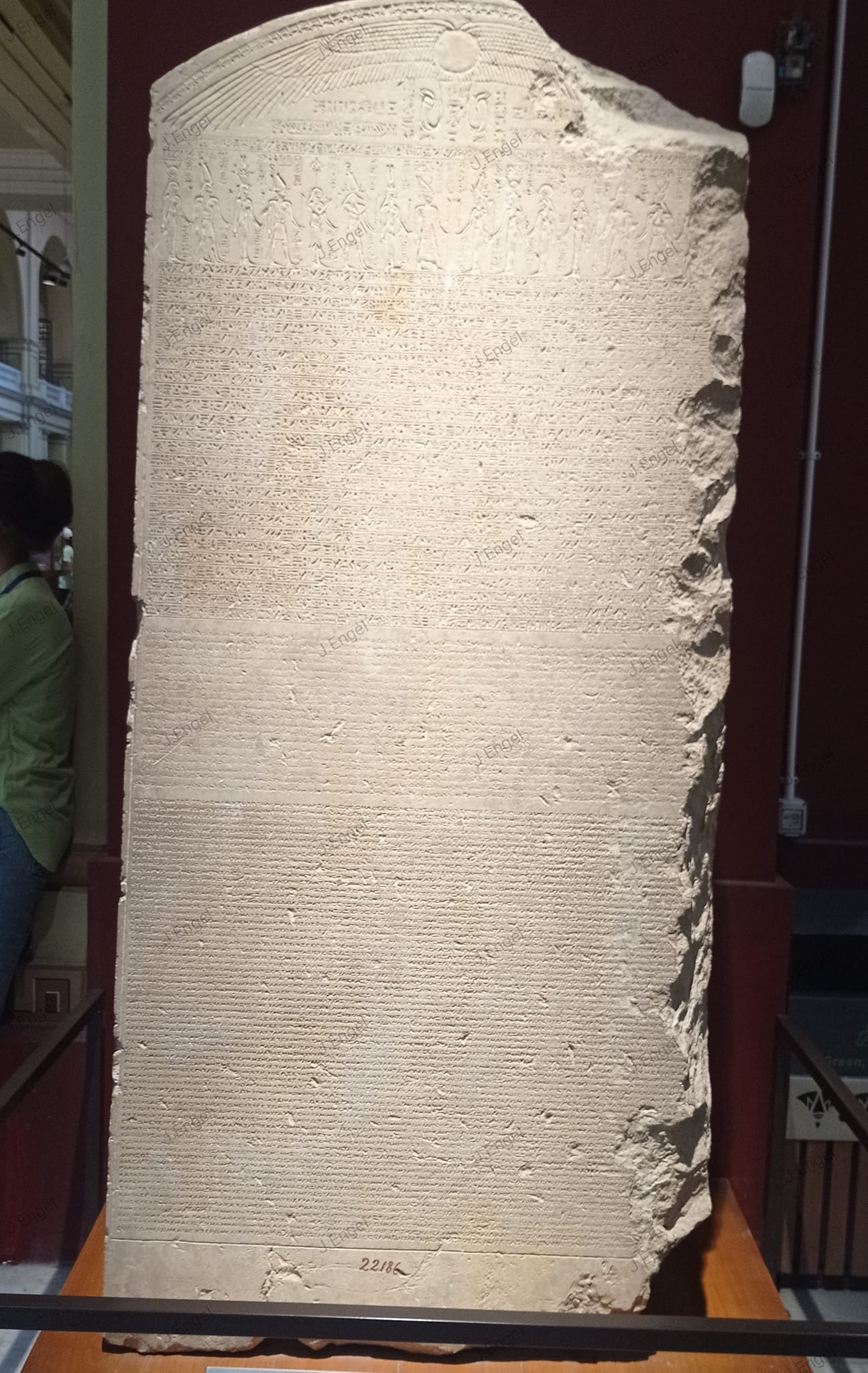
The Canopus Decree is part of a series of bilingual inscriptions inserted in three scripts hieroglyphs, demotic and Greek.
The most famous is the Rosetta Stone, which provided the key to deciphering hieroglyphs in 1822. This Canopus Decree records a great assembly of priests held at Canopus on 7 March 238 BC in honour of Pharaoh Ptolemy III Euergetes, his wife Queen Berenice II, and their daughter Princess Berenice.
It discusses topics such as military campaigns, famine relief, Egyptian religion, and governmental organisation in Ptolemaic Egypt.

It also mentions the king’s donations to the temples and his support for ancient cults, and states that the stela should be erected in all temples of first, second and third rank.
Text and location: Egyptian Museum Cairo
By Jacqueline Engel

Detail of the Gilded Wooden Throne of Tutankhamun.
One of the two lion heads on either side of the front.
Dynasty 18, reign of Tutankhamun,
ca. 1336-3327 BC
wood, Gold Glass, Carnelian
Tomb of Tutankhamun, Antechamber JE 62028-SR 1/881-Carter 91
The rich decoration and the unparalleled craftsmanship of this piece make the throne of Tutankhamun one of the most iconic artifacts known from ancient Egypt.
The piece was extensively re-worked after its original manufacture, and it has been speculated it may originally have been made for Akhenaten.
In any case, its current form dates to the earliest years of Tutankhamun, the back panel still bearing traces of both the king’s birth name, Tutankhaten (The Living Image of the Aten) and his queen’s birth name, Ankhesenpaaten (Her Life is Aten).
Icons of the Amarna period are still to be seen on the throne, in particular the sun-disk that dominates the main scene: less obviously, flying ducks among the marshes on the rear of the backrest are typical of the period. Underneath the Aten, Tutankhamun is shown lounging on his throne while Ankhsenamun applies perfume from a cup she holds to his left shoulder. The winged cobras that make up the armrests, the two lion heads on either side of the front, and the cobra frieze on the rear served as insignias of protection for the reigning pharaoh. Between the legs of the chair the sema-tawy motif was formerly present. The intertwined lotus and papyrus stalks symbolized the unified Upper and Lower Egypt resting beneath the sovereign pharaoh. The accompanying footstool in the display was found on the seat between the armrests and is presumed to have originally been used with this throne.
Text and location: Egyptian Museum Cairo
By Jacqueline Engel
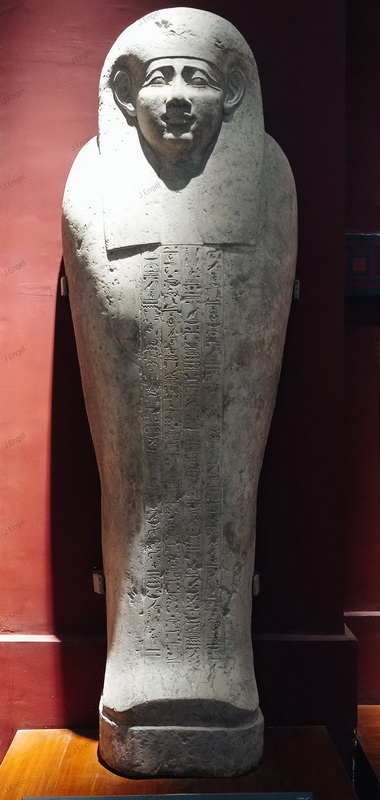
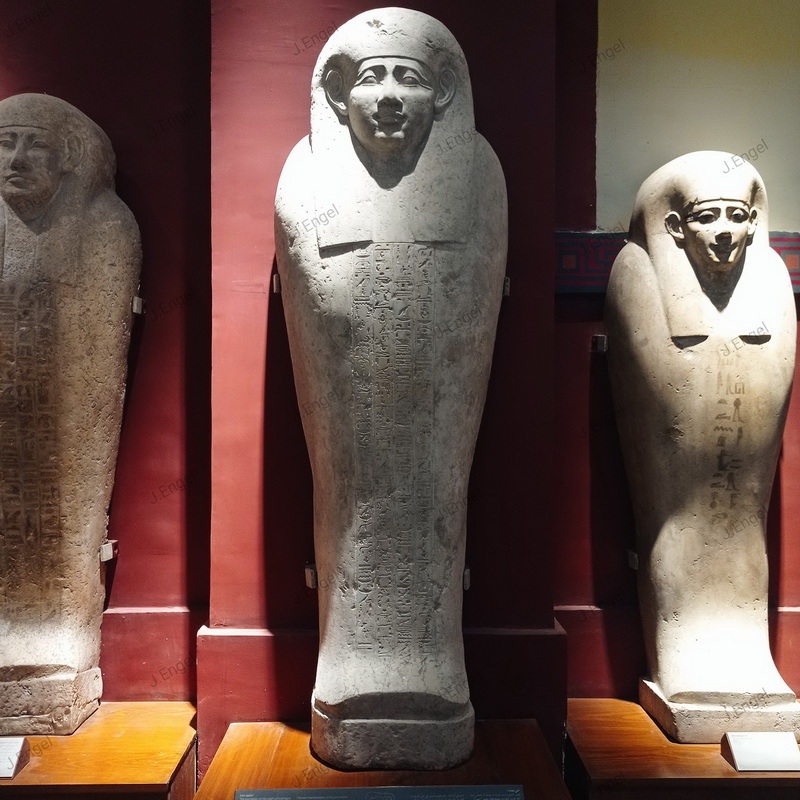
The inscription on Horudja’s sarcophagus describes it as a mother embracing her son:
Your mother Nut has spread herself over you in her name of “tomb”, your mother Nut may not be far from you in her name of “sky”.
Since the first appearance of this spell in the 5th Dynasty pyramid of Unas (2350 BC), the idea of the mother goddess giving birth to the deceased remained popular.
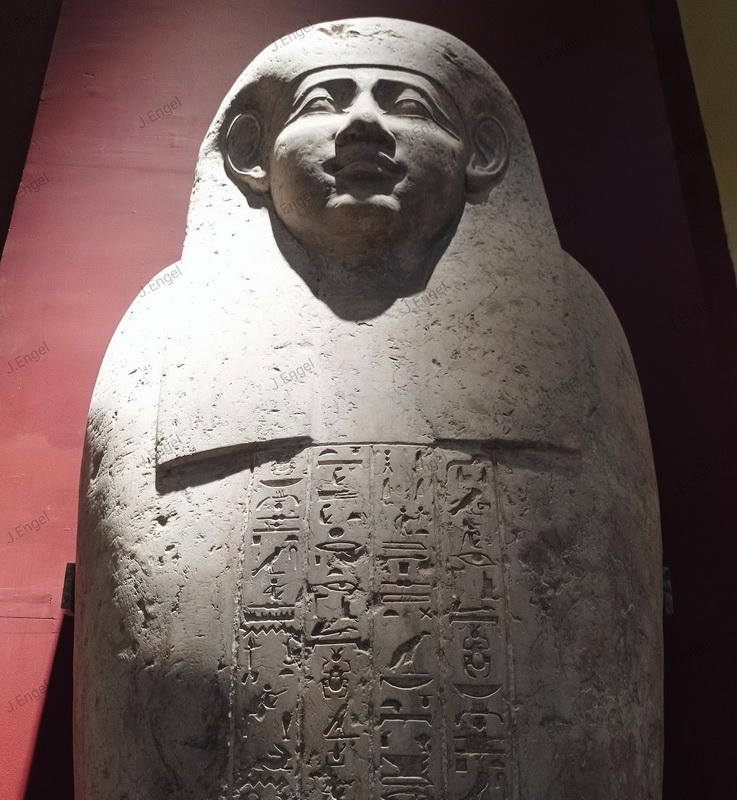
The twin manifestation of Nut (as mother and sky) transforms the sarcophagus simultaneously into a womb-like space and the entire universe.
As the sun sets at night and rises again in the morning, so will Nut give birth to Horudja, every day for eternity.
According to the The Manchester Museum, Horudja was a priest of the goddess Neith during the 30th Dynasty (380-343 BC)
Text and location: Egyptian Museum Cairo
By Jacqueline Engel

Detail of the Gilded Wooden Throne of Tutankhamun.
Dynasty 18, reign of Tutankhamun,
ca. 1336-3327 BC
wood, Gold Glass, Carnelian
Tomb of Tutankhamun, Antechamber JE 62028-SR 1/881-Carter 91
The rich decoration and the unparalleled craftsmanship of this piece make the throne of Tutankhamun one of the most iconic artifacts known from ancient Egypt.
The piece was extensively re-worked after its original manufacture, and it has been speculated it may originally have been made for Akhenaten.
In any case, its current form dates to the earliest years of Tutankhamun, the back panel still bearing traces of both the king’s birth name, Tutankhaten (The Living Image of the Aten) and his queen’s birth name, Ankhesenpaaten (Her Life is Aten).
Icons of the Amarna period are still to be seen on the throne, in particular the sun-disk that dominates the main scene: less obviously, flying ducks among the marshes on the rear of the backrest are typical of the period. Underneath the Aten, Tutankhamun is shown lounging on his throne while Ankhsenamun applies perfume from a cup she holds to his left shoulder. The winged cobras that make up the armrests, the two lion heads on either side of the front, and the cobra frieze on the rear served as insignias of protection for the reigning pharaoh. Between the legs of the chair the sema-tawy motif was formerly present. The intertwined lotus and papyrus stalks symbolized the unified Upper and Lower Egypt resting beneath the sovereign pharaoh. The accompanying footstool in the display was found on the seat between the armrests and is presumed to have originally been used with this throne.
Text and location: Egyptian Museum Cairo
By Jacqueline Engel
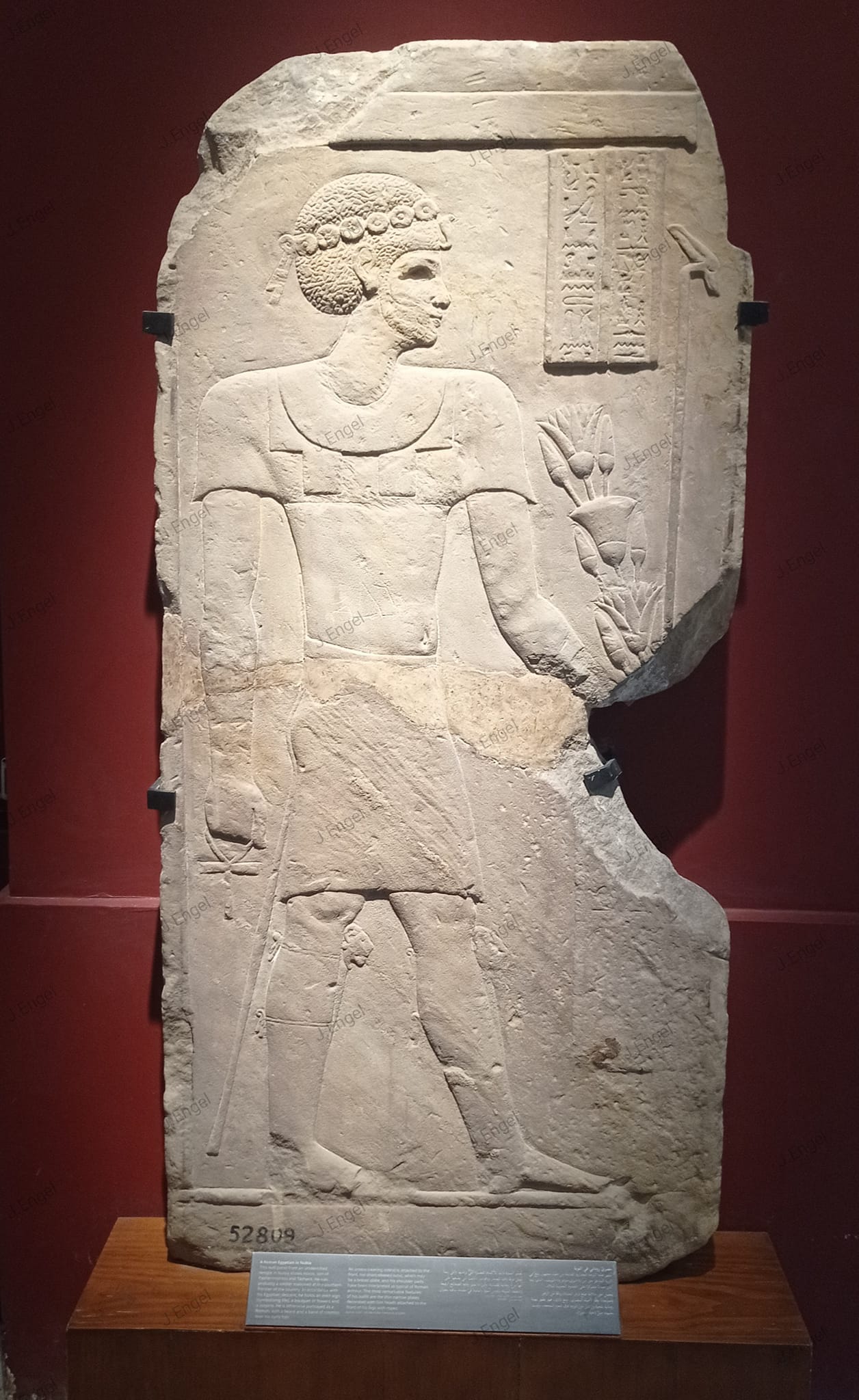
From an unknown temple located in Nubia, depicting Hor Ibn Ba Shiri, who may have been a soldier stationed on the country’s southern border.
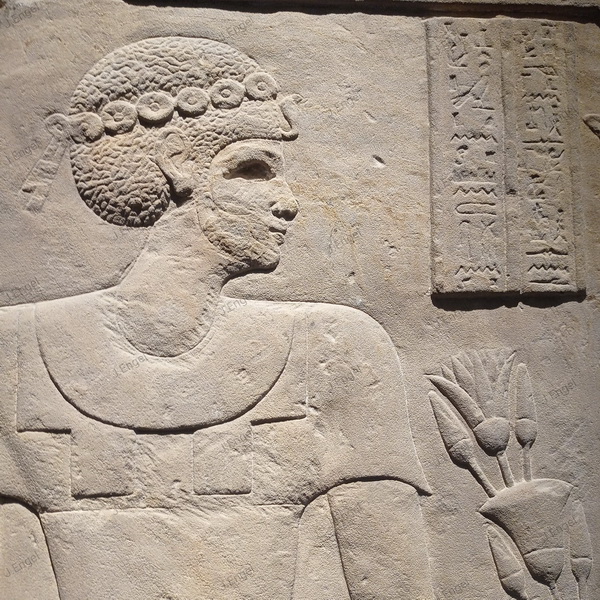
The jacket worn by Hor Ibn Ba Shiri forms a protective chest armor, and the shoulder protectors that he wears represent traditional Roman armor. The most notable feature of his garment is the thin, delicate plates decorated with lions’ heads and attached to the front of his legs with ropes.

Hor carries the sign of the Ankh (the symbol of life), a bouquet of flowers, and a scepter according to his Egyptian origin.
However, he appears in a Roman form with a beard and a wreath of roses over his curly hair, and a uraeus (cobra snake) is attached to his forehead.
Roman era (30 BC. – 364 AD).
Text and location: Egyptian Museum Cairo
 LA CIVILTA' EGIZIA