Pictures

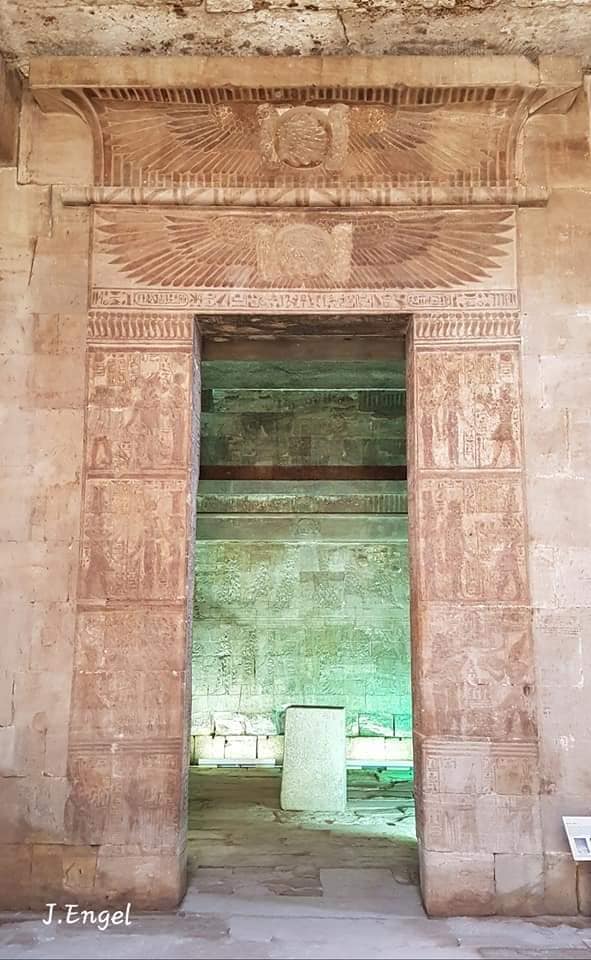
Small Isis Temple

By Jacqueline Engel

Small Isis Temple in the middle of Aswan City

Construction of the 19–metre-high temple started in during the reign of Pharaoh Ptolemy III. (690BC)

It was built a place for worshipping the goddess Isis.

The King offering to the goddess Isis who is breastfeeding Horus.

The temple was built of sandstone, and has two doors, of which the main one is crowned with an ornament topped by a winged sun disk.

It is through this door that visitors enter into a hall with three open rooms.

On the eastern wall of the middle room, also called the Sanctum, some scenes of offering sacrifices had been engraved.

The temple walls also feature scenes from Egyptian mythology, as Isis brings Osiris back to life, gives birth to Horus, and mummifies Osiris after his death.

The King offering to the goddess Isis.
Behind her is the goddess Hathor.

Its decorations date from the period of the later Ptolemies and of the Roman emperors Augustus and Tiberius (27 BCE-37 CE), but were never completed. The Roman emperor Hadrian (117-138 CE) added a gate west of the complex. Other small temples or shrines dedicated to Egyptian deities in the complex include a temple to Imhotep, one to Hathor, and chapels to Osiris, Horus, and Nephthys.

Towards the main hall’s back wall, one can admire the wonderful scenes depicting the King making offerings to the gods Satet, Anqet, and Khnum, known as the Aswan trinity.

This section contains three imposing granite altars in the hall, two of which are located on the northern corridor of the main hall. The other altar is situated on the southern corridor, in addition to another one inside the Chamber of the Holy of Holies.
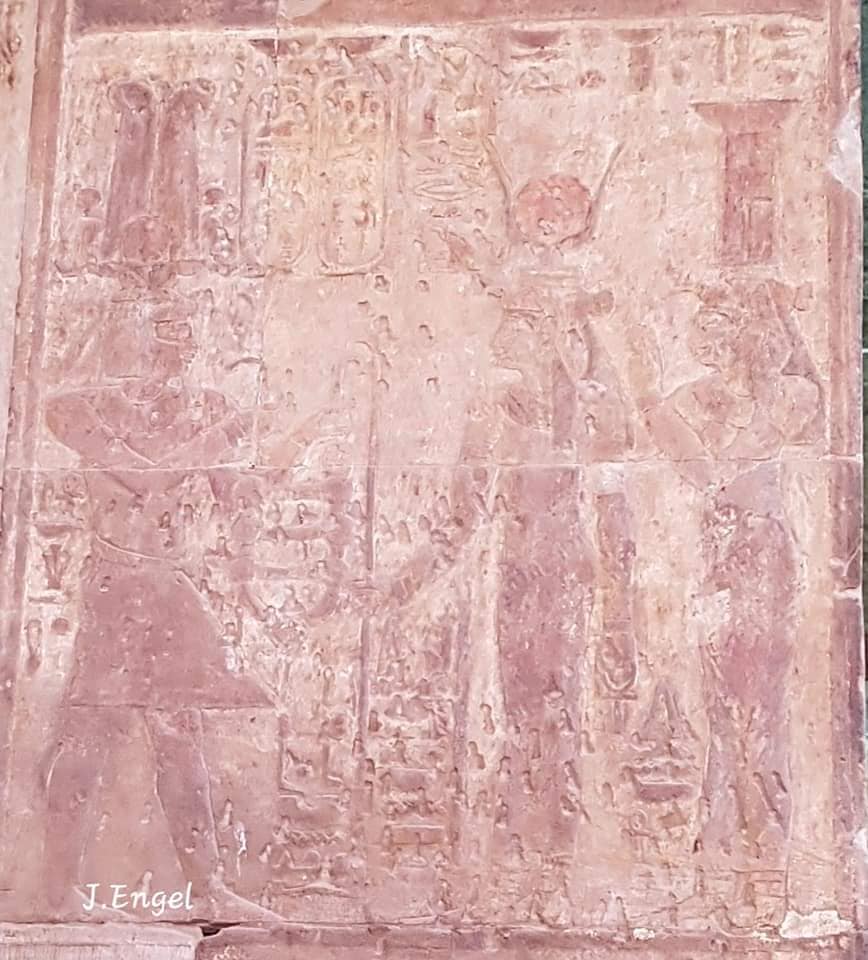
The King offering to the goddess Isis.
Her sister, the goddess Nephtys behind her.

All of these altars contain inscriptions of the titles of the Pharaoh Ptolemy IV, along with some pictorial scenes on the southern pillar of the hall representing a group of saints.

The latter discovery confirms that the temple was used as a church in later periods.

In the middle of the temple’s façade is the majestic main gate, decorated with colourful scenes and texts, and above which one can find the winged sun disk featured in the middle.

The entrance leads to a transverse hall containing three rooms in the middle of the hall of the Holy of Holies.

Pictures

Seated Statue of Hatshepsut

By Jacqueline Engel

ca. 1473-1458 B.C.E.; Dynasty 18; reign of Hatshepsut and Tuthmosis III; New Kingdom
Egyptian; Western Thebes
Red granite; H. 65 3/4 in. (167 cm
) – The MET New York.

This graceful, life-size statue depicts Hatshepsut in female attire, but she wears the nemes headcloth, a royal attribute usually reserved for the reigning king.

In the columns of text inscribed beside her legs on the front of the throne, she has already adopted the throne name Maatkare, but her titles and epithets are still feminine. Thus, she is Lady of the Two Lands and Bodily Daughter of Re.

On the back of the throne, part of an unusual and enigmatic scene is preserved. At the left is the goddess Ipi, a protective deity depicted as a pregnant hippopotamus with feline legs who wears a crocodile draped across her head and down her back and carries knives.

This goddess was the protector of pregnant women and of children and thus would have been associated with the reigning queen. This mixture of attributes belonging to king and queen suggests that the statue comes from the time when Hatshepsut was making the transition from queen regent to coruler with her nephew Tuthmosis III

Pictures

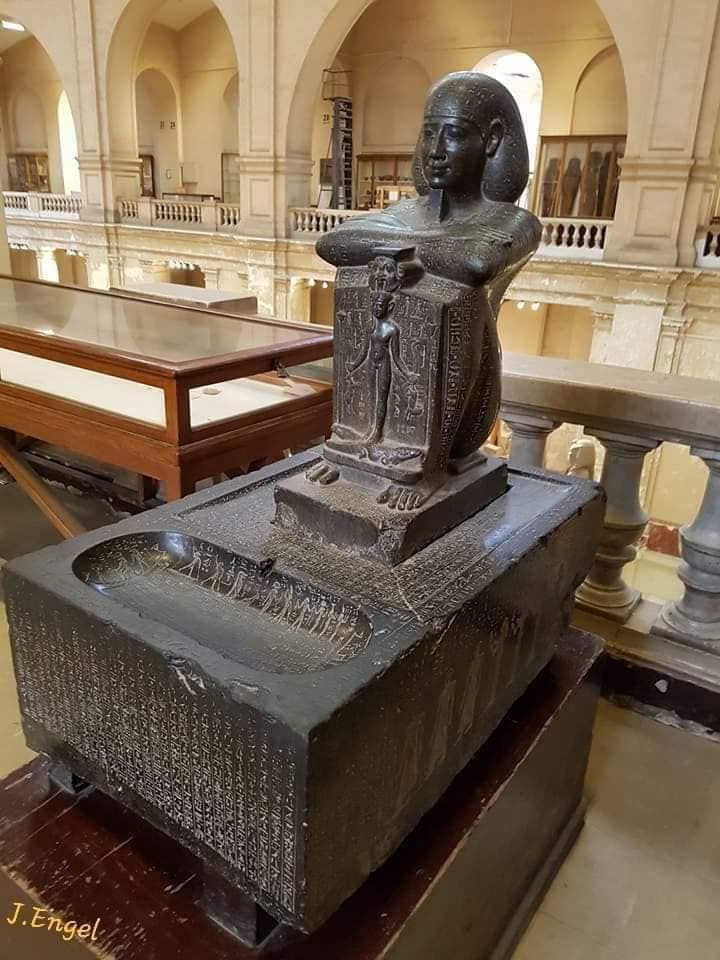
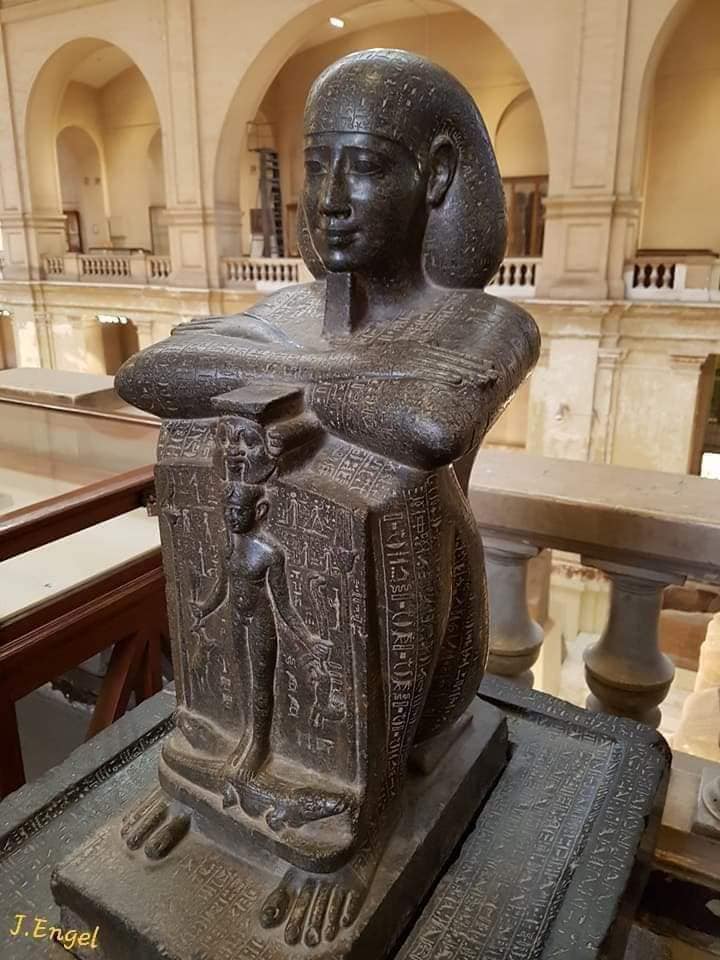
Djedhor

By Jacqueline Engel

Black granite cube statue of the Healer Djedhor, with Herupakhart, or Harpocrates, child deity with the sidelock of youth, mastering snakes, wild animals, and standing on a crocodile.

The whole statue is covered with magic and healing spells.

Egyptian Museum Caïro

Back to Jacqueline’s pictures

Pictures

Table for Libations or Offerings

By Jacqueline Engel

Sculpted from an alabaster block, this altar was used either as a sacrificial altar or a libation table. It is decorated with the forms of two lions, whose front and back paws are beautifully defined. The altar slopes downward towards a circular basin, around which the tails of the lions are curled.

Magical offering formulas and prayers were recited when libations like water, milk, beer or wine were poured over the altar.

The liquids were then collected in the basin and presented to the gods or to the ka of the deceased.

The same magical and sacred formulas were required during sacrificial rites performed on the altar, and in this case, the blood of the sacrificial animal was collected in the basin.

The use of lion heads and paws, as decorative elements on thrones, chairs and beds, was a popular theme in ancient Egypt.

The lion was associated with the horizon, where the sun god rose, and these features imbued the item of furniture with an air of strength and protection. Funerary beds matching the style of this altar were found in the tomb of King Tutankhamun, as well as in the funeral procession scenes in the Tombs of the Nobles in Thebes from the New Kingdom Period.

The alabaster stone, often referred to as calcite by Egyptologists, was called shes by the ancient Egyptians, and quarried at Hatnub near Minya, 250 km south of Cairo.

Old Kingdom, end of 2nd Dynasty, around 2690 BC.

From the Mortuary Temple of Djoser, Saqqara.

Now in the Egyptian Museum, Cairo. CG 1321

Back to Jacqueline’s pictures

Pictures

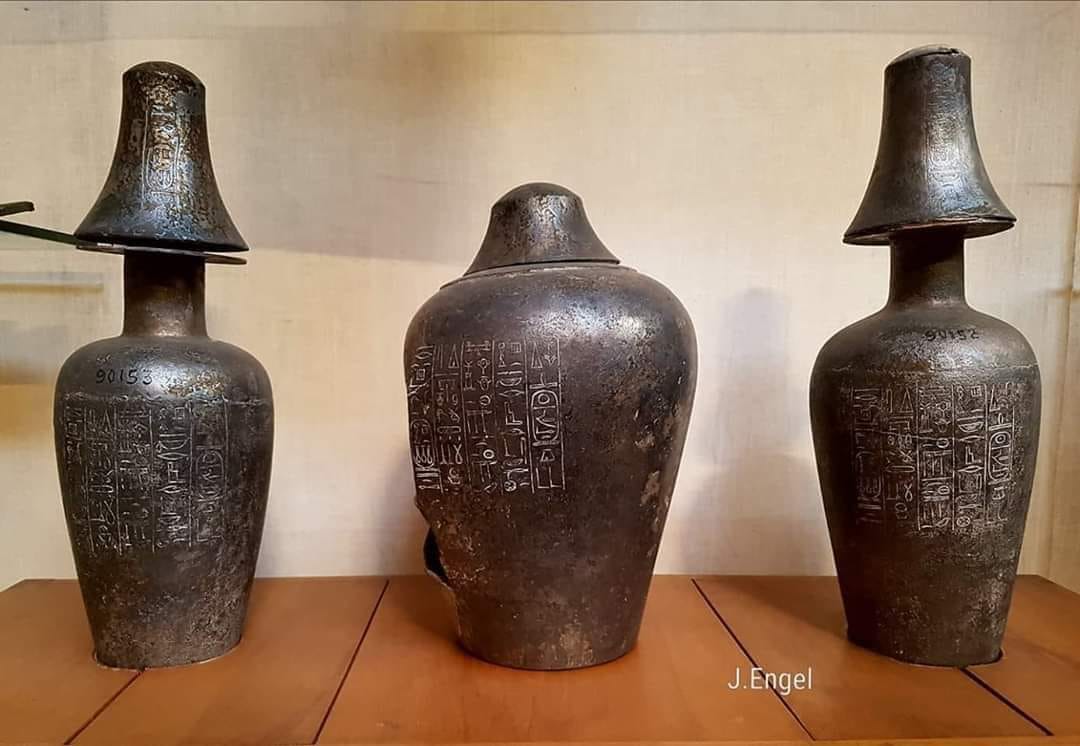
Silver vases of the Princess Neferwptah

By Jacqueline Engel

Silver vases of the Princess Neferwptah.

Daughter of Amenemhat III.

Most probably water vases used for preliminary purification.

Middle Kingdom. 1842-1797 BC

Harwara.

Egyptian Museum Caïro.

Back to Jacqueline’s pictures

Pictures

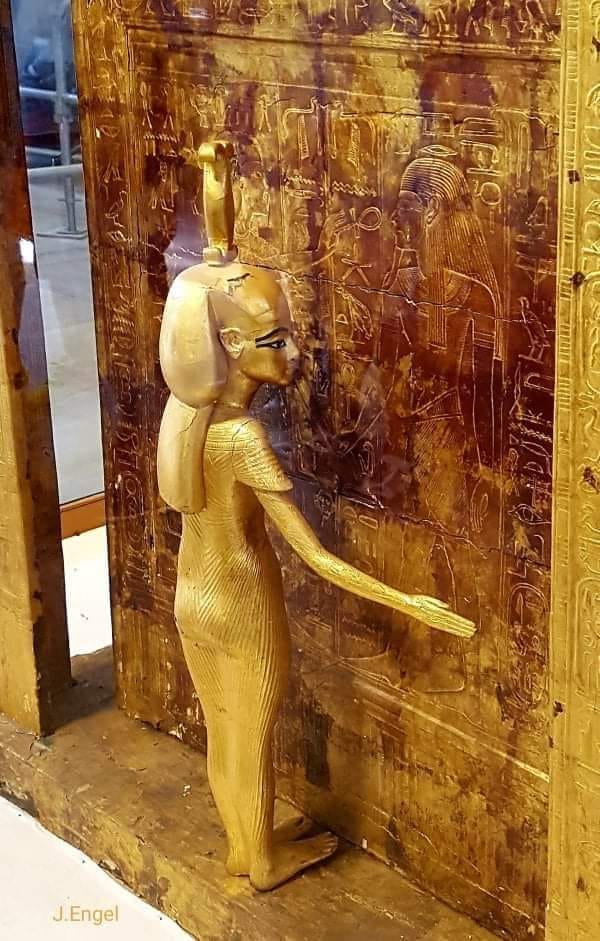
Neith

By Jacqueline Engel

Goddess Neith (with weaver symbol) at the canopic shrine of Tutankhamun.

This gilded wooden shrine, contained a smaller alabaster canopic chest that in turn housed the four canopic jars, containing the vicera. Inside these jars were found four miniature coffins with the internal organs of the king.

This shrines upper part of the roof is decorated with protective cobras. Four goddesses surround the shrine, spreading their arms in a protective manner.

18th dynasty, from Valley of the Kings, tomb of Tutankhamun – KV62

As one of the eldest goddesses, Neith emerged from the primeval waters to create the world. As time went on and myths evolved, Neith took on other characteristics and responsibilities. Although originally a hunter and warrior, and always considered a great protector of the Egyptian people, she was also a wise mediator between gods, as well as between humanity and the gods. In addition, Neith cared for the dead and helped to dress their souls in preparation for the afterlife.

Warrior goddess Neith is considered the mother of all the gods. She was a creator of the world and the mother of the very influential sun god Ra, who finished the creation after his birth. As a creator, Neith was an early goddess in the Egyptian pantheon and the people worshipped her throughout Egypt. In later years, Neith was mainly recognized in the Western Nile Delta at her cult center of Sais.

Known as a huntress during the pre-dynasty time period, her symbol was a shield crossed with arrows. The other symbol of Neith is a weaving shuttle. She was also considered the goddess of weaving. Frivolous as this may seem for a goddess, there is a myth that suggests Neith created the world by weaving it.
Neith was the patron goddess of the Red Crown of Lower Egypt, and was often portrayed wearing her Red Crown. However, in the creator stories inscribed in ancient hieroglyphics, she is also portrayed with an ejaculating phallus. Although known as goddess, Neith was actually androgynous, at least in terms of her role in creation.

Back to Jacqueline’s pictures

Pictures

Wadjet

By Jacqueline Engel

Bronze figure of the lioness-headed goddess Wadjet, seated on a throne which is attached to a rectangular plinth. Remains of headdress consist of circular modius and uraeus.

Sides of throne have standard decoration; back bears incised falcon and papyrus-plants.

Hole through base-plate of plinth, interior of figure hollow.

Hands clenched on lap.

Late period. 600-350 BC

British Museum London.

Back to Jacqueline’s pictures

Pictures

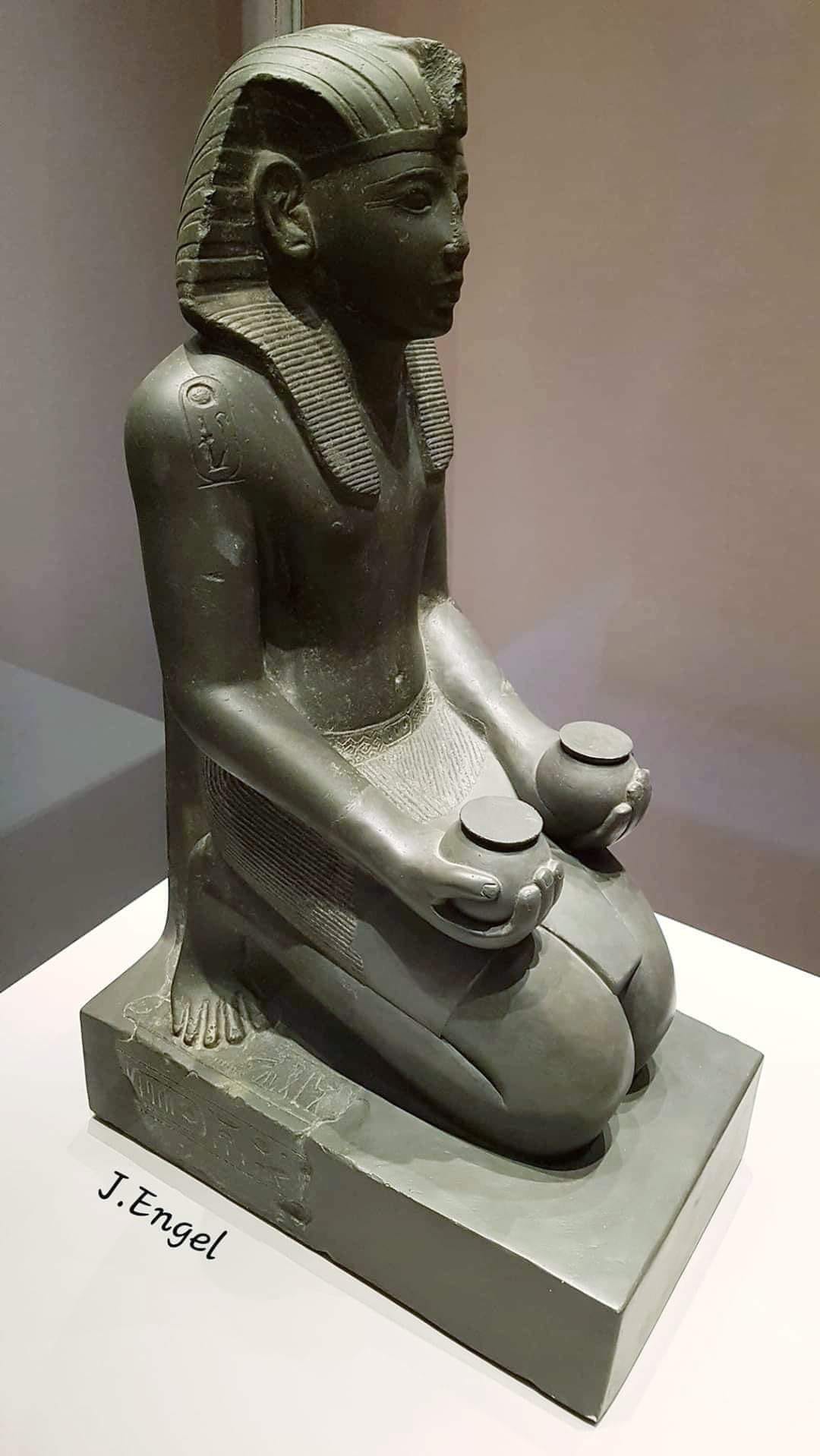
Mudstone statue of Ramses IV

By Jacqueline Engel

A kneeling figure of Ramses IV wearing the ‘nemes’ head-dress and ‘shendyt’ kilt. On his right shoulder is incised his prenomen, and his nomen is carved on his left shoulder. His prenomen is also incised in an oval in the centre of the girdle of his kilt.

The back pillar bears two columns of incised hieroglyphs giving the king’s names with epithets. Fragments of the king’s name and titles remain on the right and left sides of the base. At the top of the base there are the remains of inscriptions on the right and left sides. The front part of the statue including the front of the base, knees and hands of the figure are lost and have been restored in recent times with a ‘nw’-bowl in each hand. The rear of the base and the bottom of the back pillar have also been lost and recently restored. The nose and uraeus of the figure have been damaged. The surviving portion of the back pillar is worn in places. There are no traces of colour.

Height: 128.5 centimetres

Width: 50 centimetres

Depth: 32 centimetres

Weight: 70 kilograms

Greywacke.

New Kingdom. 20Dyn. 1156-1150 BC.

British Museum London.

Back to Jacqueline’s pictures

Pictures

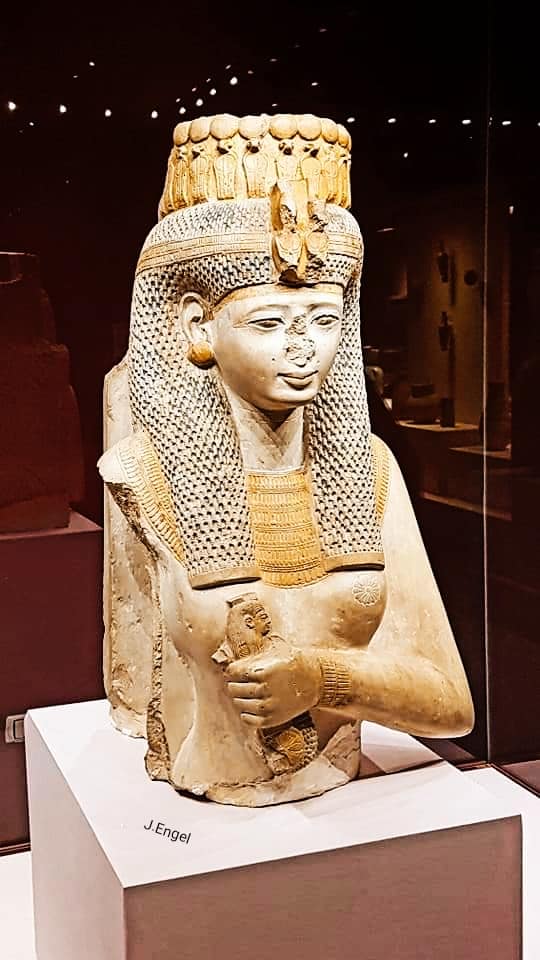
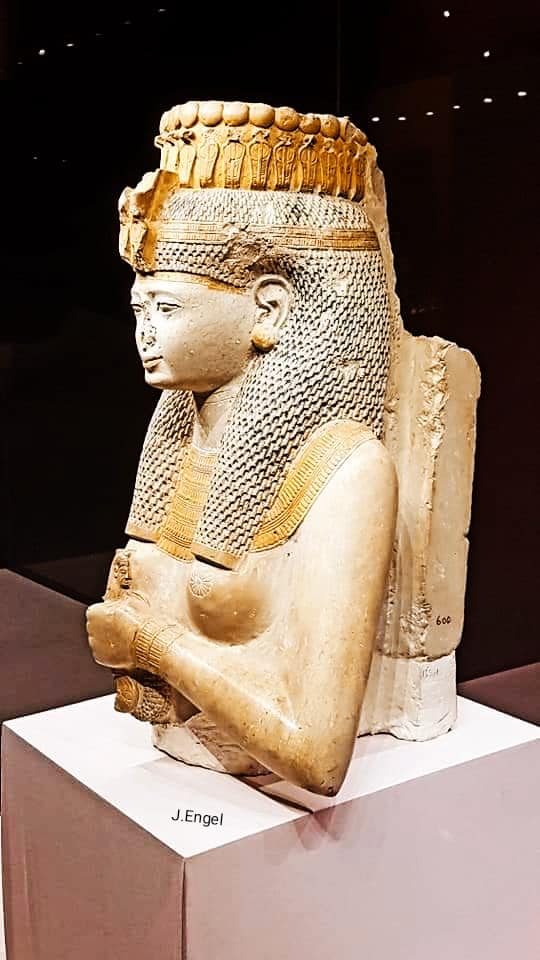
BUST OF QUEEN MERITAMUN

By Jacqueline Engel

Luxor, Queen’s Palace Northwest of the Rammesseum
New Kingdom, 19th Dynasty
Ramses II (c. 1279-1213 BC)
Painted limestone
Hurgada Museum

Queen Meritamun was one of the daughters of Rameses II who became his Great Royal Wife after the death of her mother, Nefertari.

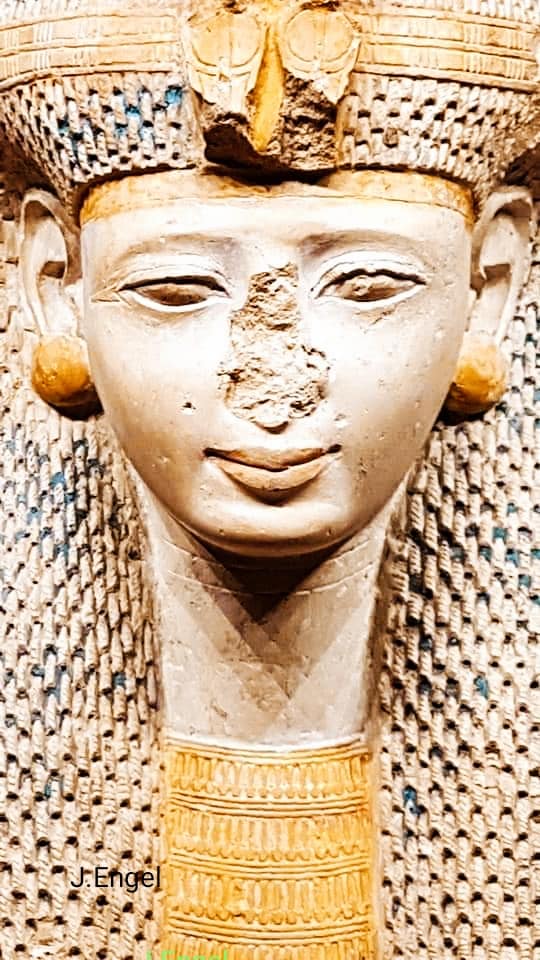
This statue clearly displays the ancient Egyptian sculptor’s mastery of his craft. This is especially clear in the intricate tresses of her elaborate blue wig, and in the symmetry and attention to detail to the beads of her wide collar.

There are two cobras on her forehead. The one on the left is wearing the White Crown of Upper Egypt, and the other the Red Crown of Lower Egypt.

They represent Nekhbet and Wadjet, the titular goddesses of Upper and Lower Egypt respectively.

On her wig Meritamun is wearing a headdress whose base consist of Uraei, protective cobras with sun disks on their heads.

The Uraeus was a symbol af the power of the sun god.

Two tall feathers would have surmounted this base, but the top of the statue is unfortunately missing.

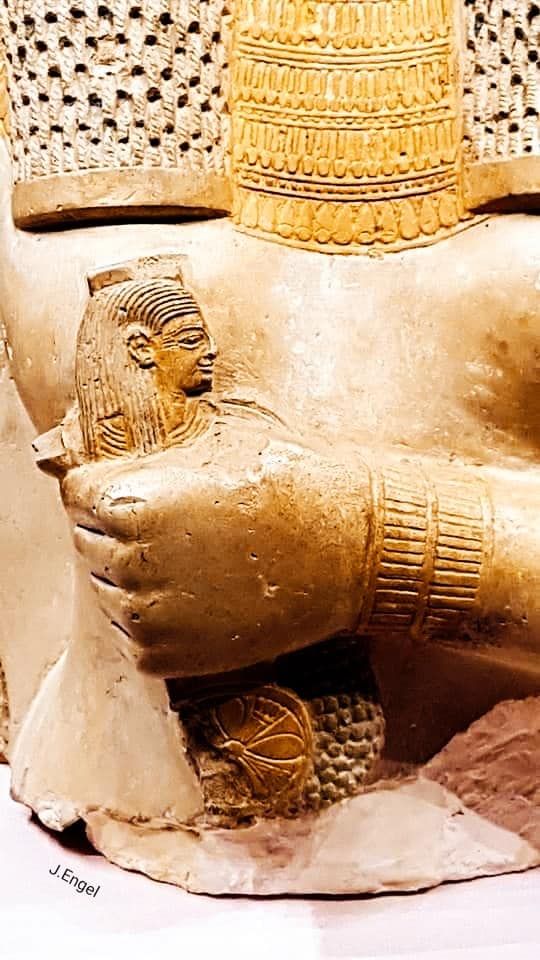
Meritamun holds a menat, a necklace that was closely associated with Hathor,the goddess of fertility, love and music.

It is composed of rows of beads with a counterpoise, which appropriately has the shape of Hathor, thus associating Meritamun with this goddess.

The name of Mentamun is not preserved on the back pillar of the statue, but the titles are very similar of those found on the back of a colossal statue of hers in Akhmim, which also depicts her with the same headdress.

Back to Jacqueline’s pictures