By Jacqueline Engel

Fine ostrich-feather fan of ivory, the handle inscribed with the names of Tutankhamun.
The peculiar shape minimizes the motion of the hand.
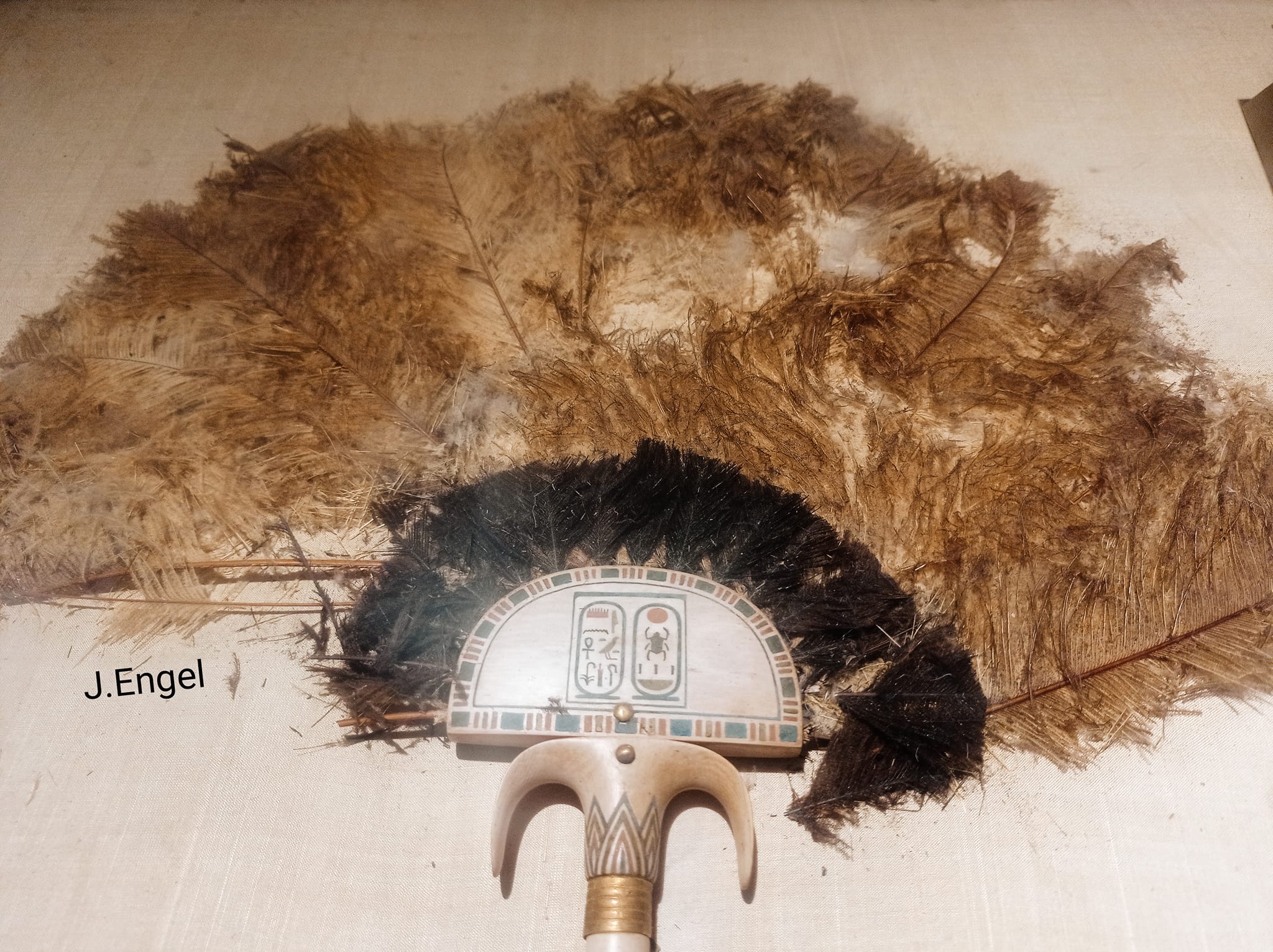

Egyptian Museum Caïro.
Il sito web del Gruppo Facebook
By Jacqueline Engel
Fine ostrich-feather fan of ivory, the handle inscribed with the names of Tutankhamun.
The peculiar shape minimizes the motion of the hand.
Egyptian Museum Caïro.
By Jacqueline Engel

The royal couple, portrayed in the informal attitudes introduced during the Amarna period, is relaxing in a lush garden. The floral motif is continued in the other decorative panels, which depict a variety of animals in pursuit of their prey. The lid shows the queen offering flowers to the king, while below them attendants are plucking flowers.
Made of a red wood, almost every part of the outer surface is either inlaid, gilded, covered, or veneered. Ebony, ivory, faience, calcite, and gilt are the materials that richly decorate the surface and adhere to it by means of glue and, in a few cases, copper nails.

In the center, surrounded by borders of stained ivory, is a scene depicting the king and queen in the marshes. Tutankhamun sits on a cushion on a chair while shooting arrows into the thicket before him. Fish are depicted in the pool, while birds flutter around the vegetation. Ankhesanamun, seated on a cushion at his feet, holds his next arrow in her left hand, while an attendant in the lower right retrieves a speared fish and bird.


Egyptian Museum Caïro
By Jacqueline Engel

Remains of a painted plaster pavement from the ruins of a palace of King Akhenaten near El-Hagg Qandll (El-Amarna).
It was found in 1891 and it was decided that it be left in situ and a shelter was constructed over it.
In 1910, some villagers, apparently out of spite, broke in and destroyed most of it. The pieces were brought to the Museum and the whole reconstructed from drawings made of it while it was complete.
XVIIIth Dynasty.
Egyptian Museum Caïro
By Jacqueline Engel

Gilded openwork cartonnage frame of the mummy of Tuya who was married to the priest Yuya and was the mother of Queen Tiye, wife of King Amenhotep III.
She had several titles including the singer of Amun’ and ‘the Cloth Inspector of the Royal Palace’.
It was damaged by the looters on January 28, 2011. Parts were broken and other parts were cracked. It has now been restored to its former condition.
Gilded cartonnage New kingdom, 18th dynasty – Valley of the Kings, Thebes.
Egyptian Museum Caïro
By Jacqueline Engel

The coffin was discovered in the tomb of Sennedjem among several other coffins of the family members.
It belongs to the Lady Isis wife of the artisan Khabekhent, son of Sennedjem.
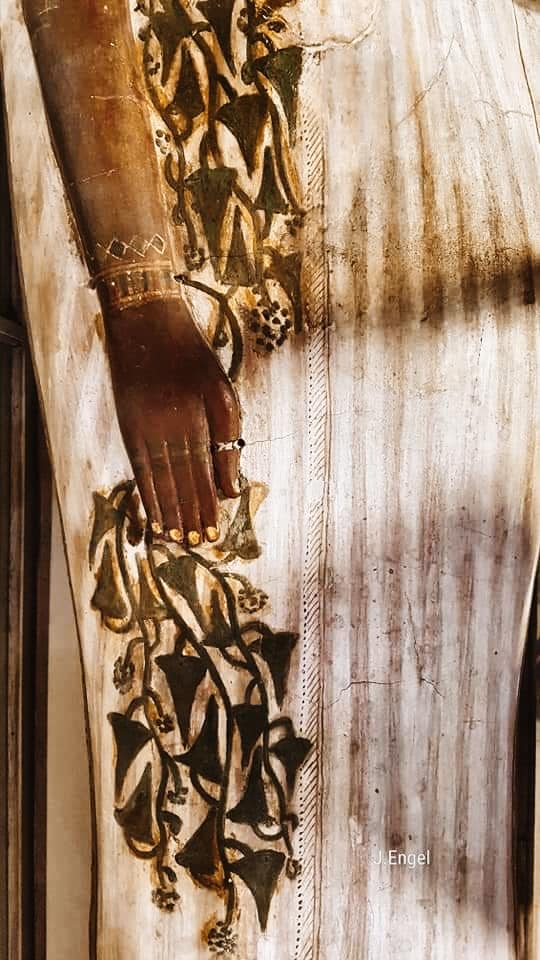
The outer coffin depicts Isis in a loose robe carrying the secret Ivy leaves and the coffin is surrounded by the four sons of Horus to protect her body.

Tomb of the Noble Sennedjem
New Kingdom, 19th Dynasty (1295-1186 BC)
Deir el-Madina, Thebes
Wood – Pigment
Text and location NMEC Cairo
By Jacqueline Engel

The ancient Egyptian knot hieroglyph, or girdle knot.
Besides its use as a hieroglyph, it has usage in statuary and reliefs.
The knot hieroglyph is also an amulet, typically made of worked stone, or as jewellery elements.
Detail of statue at the Egyptian Museum Caïro
By Jacqueline Engel

Fine wooden head of a woman.
The wig is covered with a kind of black paste on which are gilt ornaments.
El Lisht. 12 Dyn
By Jacqueline Engel

New Kingdom. 18Dyn. 1375BC
Egyptian Museum Caïro.
Yuya and Tuya lived during the 18th dynasty in ancient Egypt and were the parents of Queen Tiya, meaning their status was higher than that of ordinary Egyptians.
Their tomb is located in Egypt’s Valley of the Kings.
By Jacqueline Engel

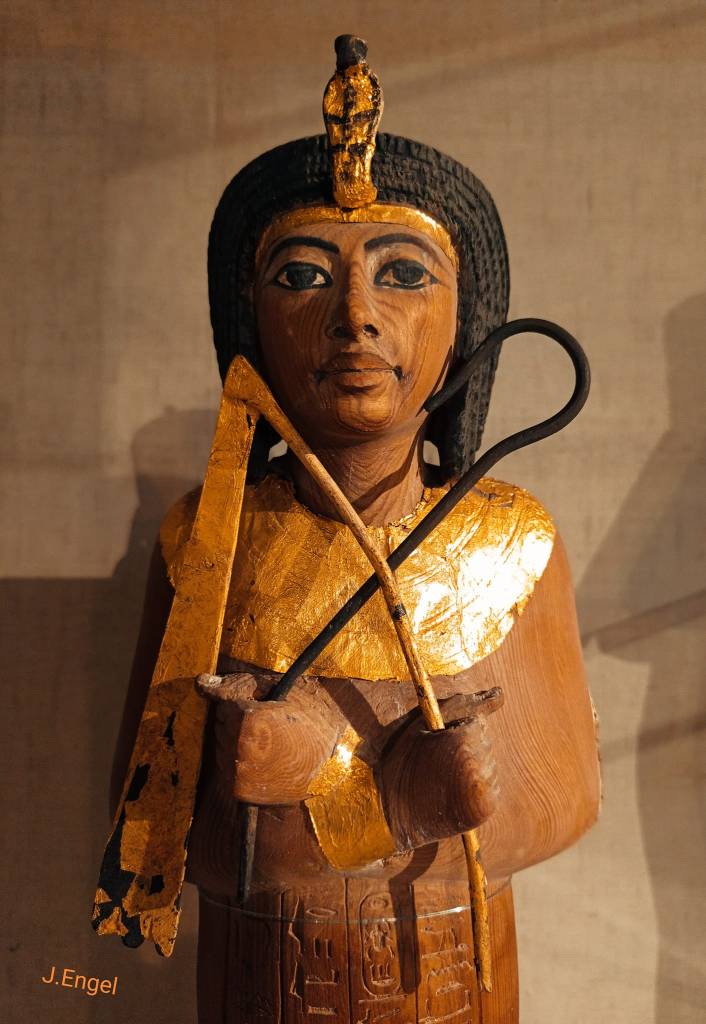
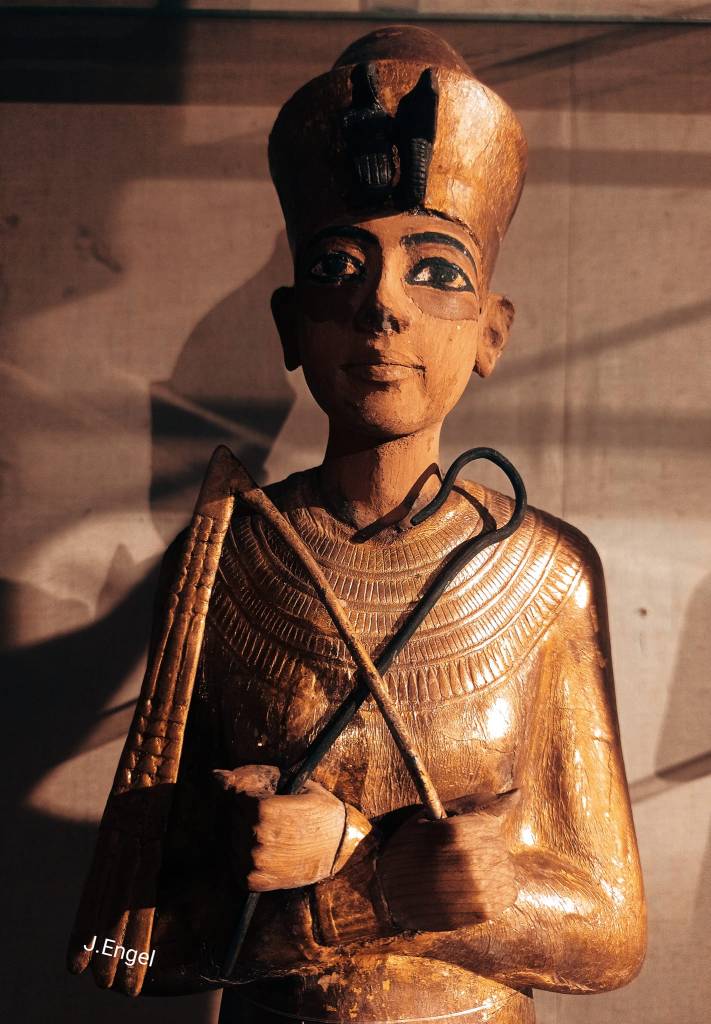
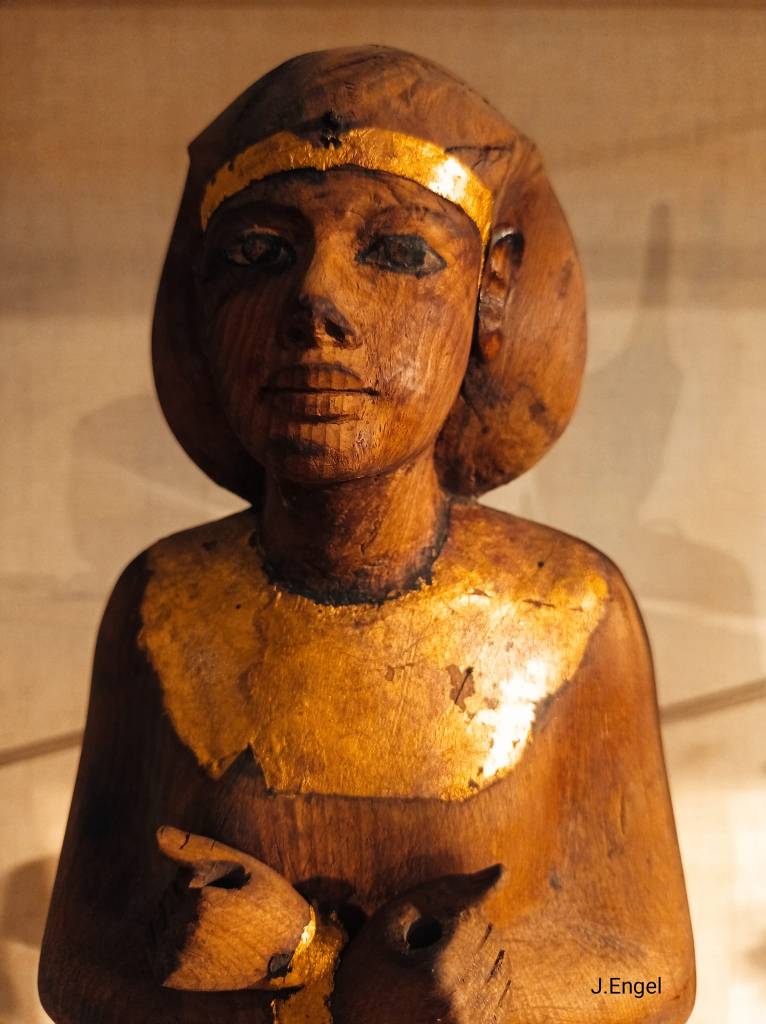
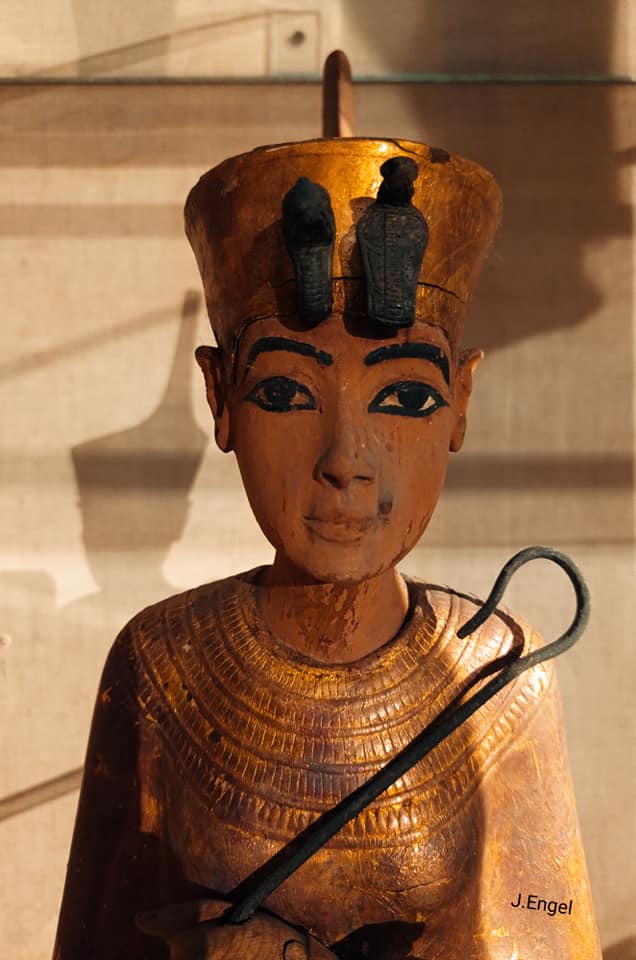
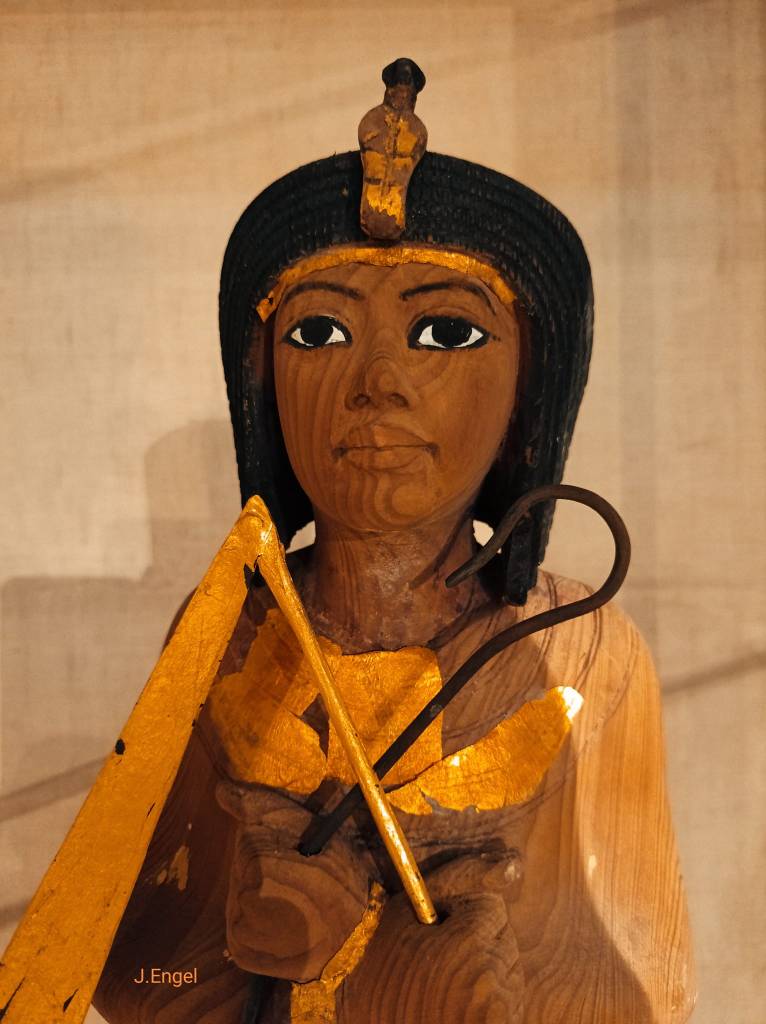
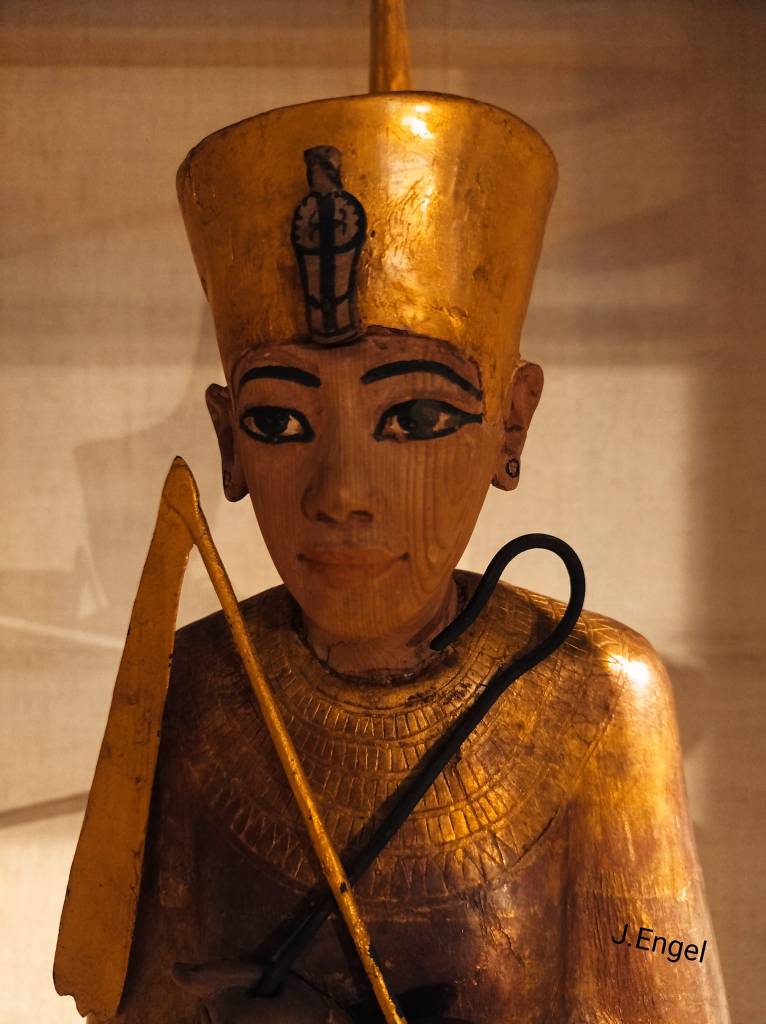
Some of Tutankhamun’s wooden gilded ushabties.
Egyptian Museum Caïro
By Jacqueline Engel

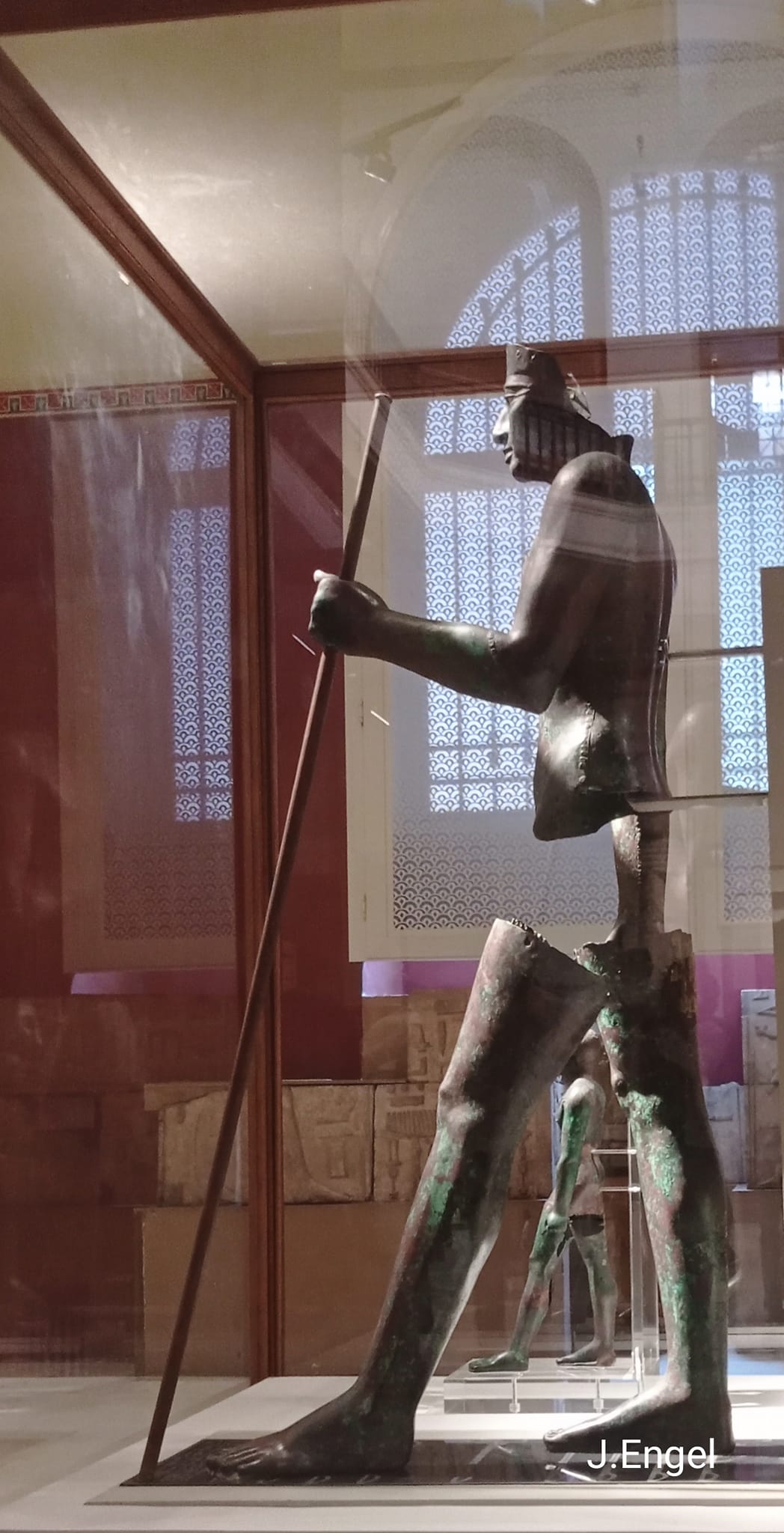
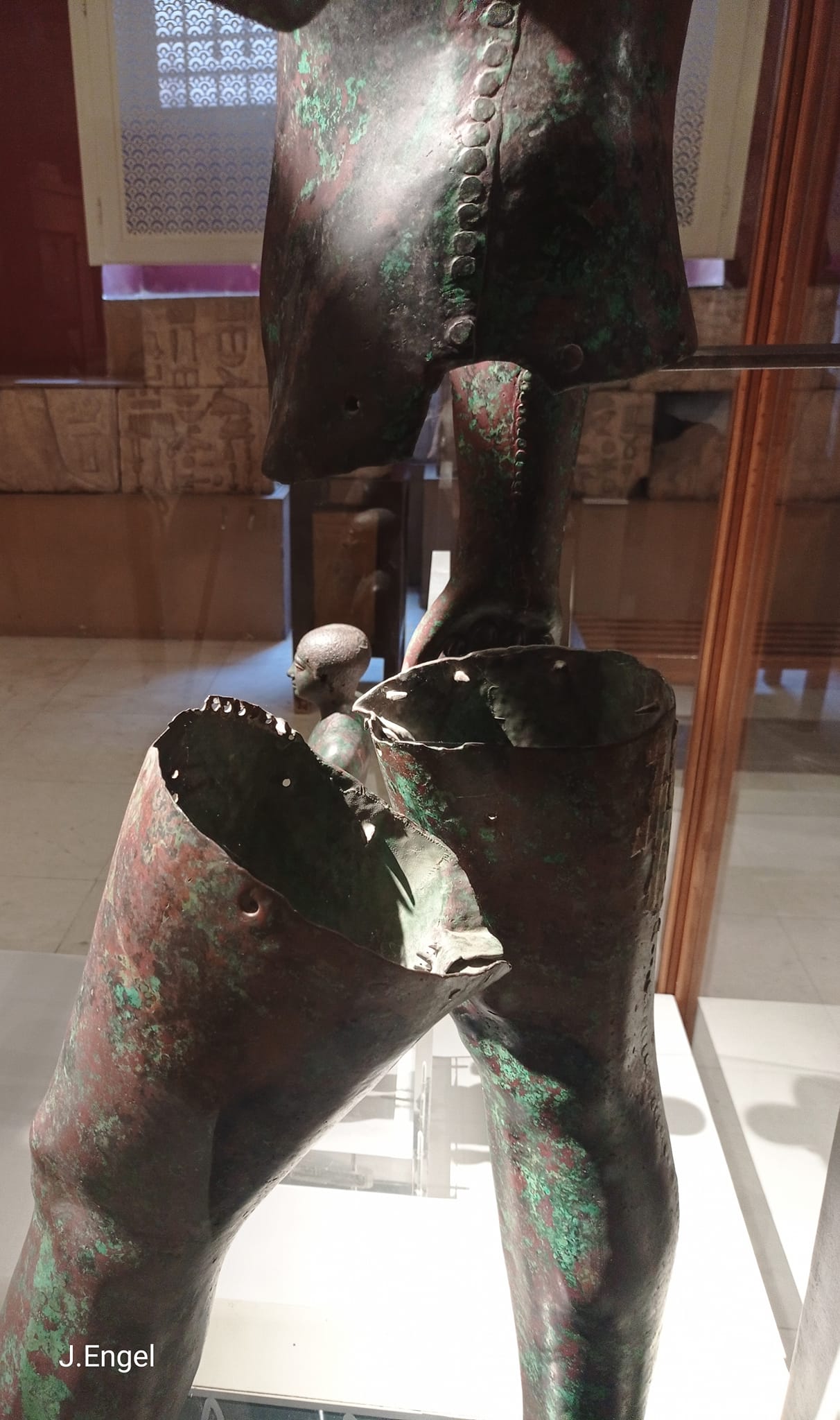
Two copper statues of Pepi I were found at Hierakonpolis, they are thought to depict the two royals symbolically “trampling underfoot the Nine bows,” a stylized representation of Egypt’s conquered foreign subjects.
6th dynasty, from the Temple of Horus at Hierakonpolis.
Egyptian Museum Caïro
 LA CIVILTA' EGIZIA