By Jacqueline Engel

Belonging to the priest Khema.
Middle Kingdom 12th Dynasty (1939-1760)
Tomb QH33
Qubbet el-Hawa
Tombs of the Nobles
West Bank Aswan.
Nubian Museum Aswan
Il sito web del Gruppo Facebook
By Jacqueline Engel
Belonging to the priest Khema.
Middle Kingdom 12th Dynasty (1939-1760)
Tomb QH33
Qubbet el-Hawa
Tombs of the Nobles
West Bank Aswan.
Nubian Museum Aswan
By Jacqueline Engel
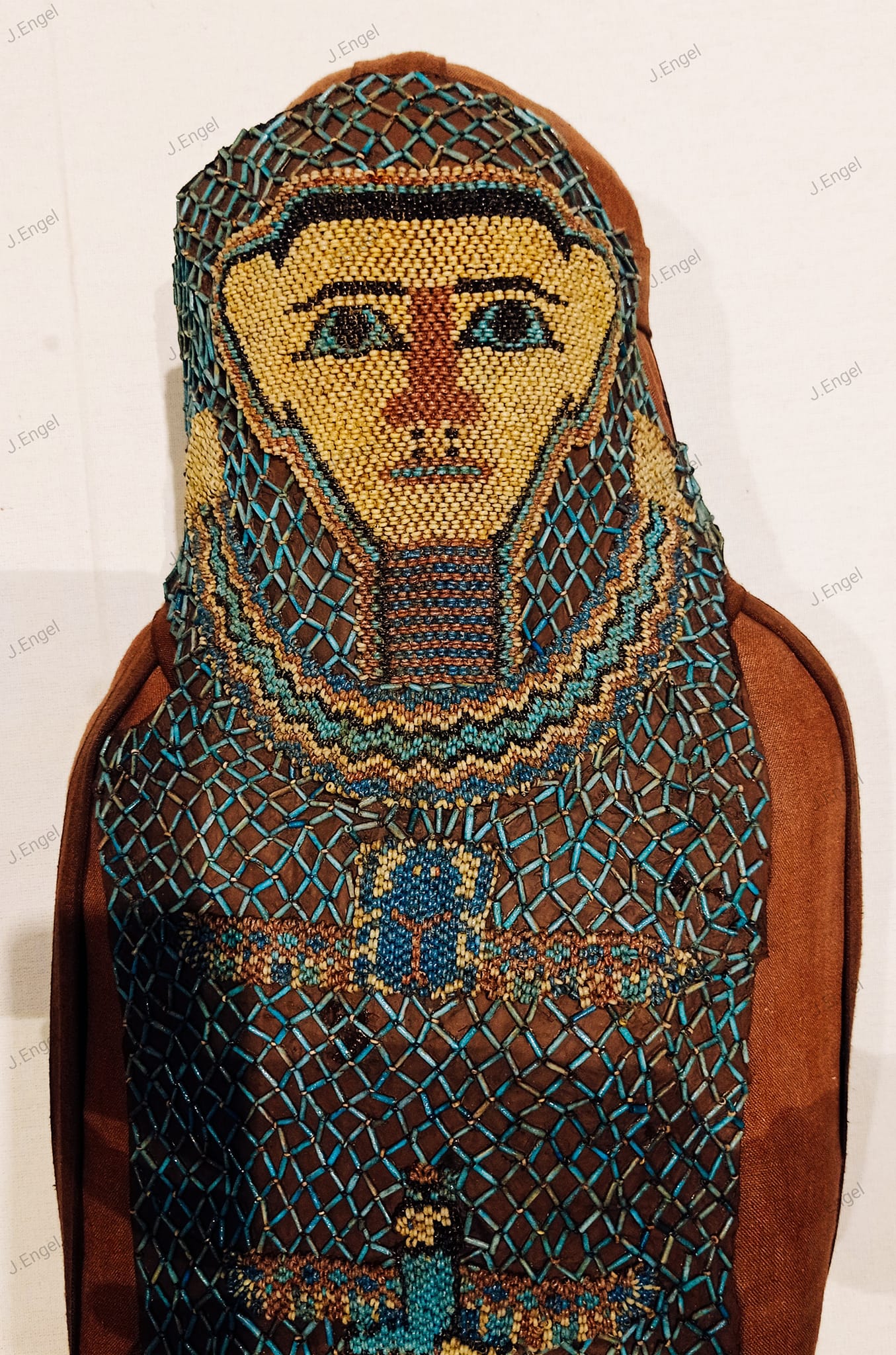
Mummy of Hor-Wdja, the Young, with faience bead net.
Late Period 26th Dynasty (ca.722-525) Tomb QH33
Qubbet el-Hawa
Tombs of the Nobles Westbank Aswan.
QH 33, was found to be oriented to the winter solstice.
By Jacqueline Engel

It was found in the Temple of King Ramses II at Abu Simble. It was dedicated to the god «Ra-Hor-Akhti», sun god. The elements of this shrine are associated with the religion of the Sun.

The group consists of:
A naoes with a scarab and a sun disk inside it, four monkeys and two obelisks.
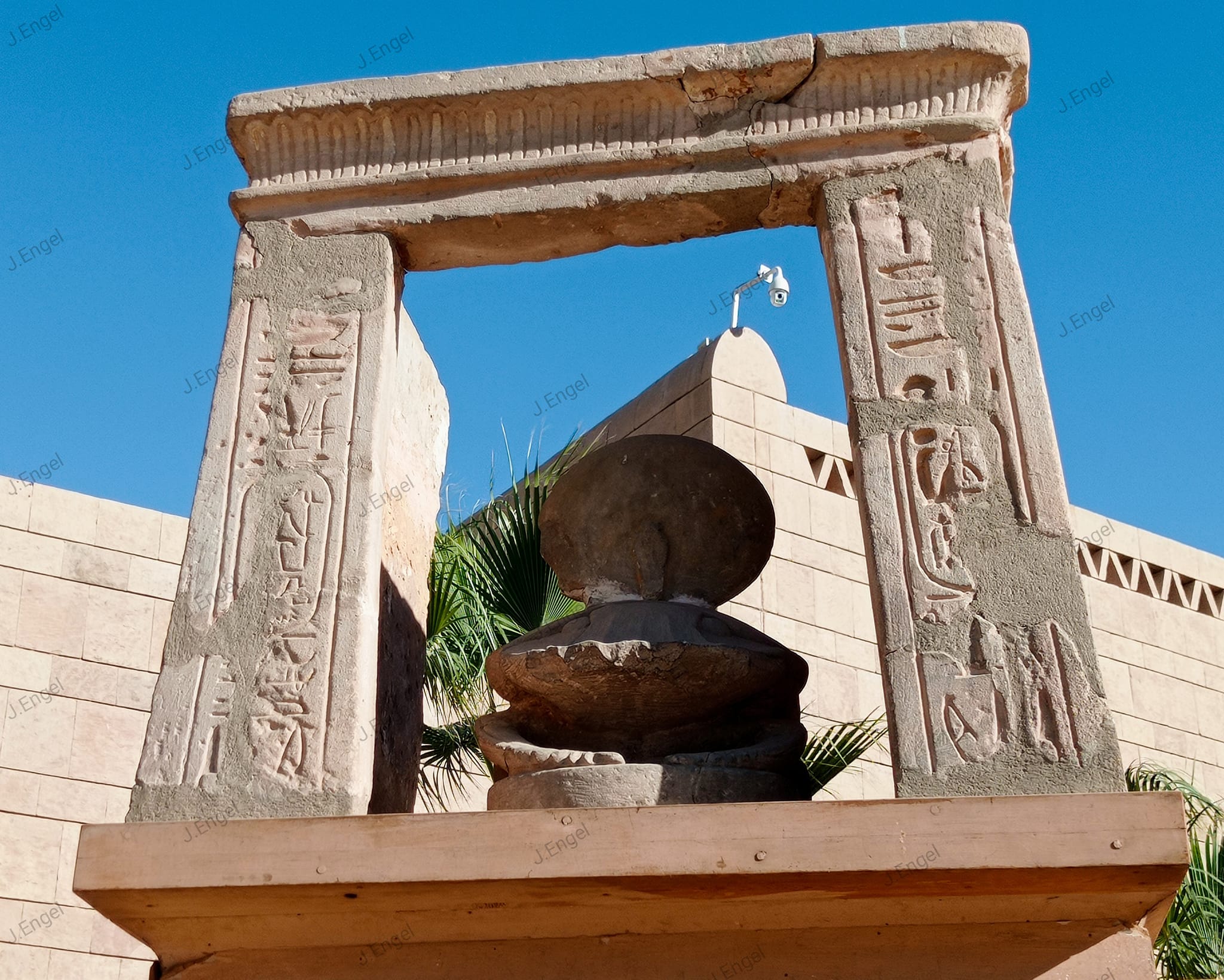
Sandstone-19th Dynasty-Abu Simbel.
Garden of the Nubian Museum Aswan.
By Jacqueline Engel

Hapi the scribe and the god Thoth his patron.
Pictured is a sandstone statue the Administrator of the Amun temple.
He is seated, reading from a papyrus roll.
New Kingdom, 19th Dynasty 1295 through 1186 BC.
The ancient Egyptians sanctified the Ibis bird and associated it with the moon, possibly because of the similarity of its curved beak with the lunar crescent.
The exquisite abilities of Ibis in locating earthworms had gained it a reputation of knowing hidden secrets.
It was thus appropriately seen as a symbol of Thoth, the Lord of wisdom and knowledge, the god of time and the moon.
He was also the patron of scribes, and the creator of letters and words.
Greco-Roman Period (332 BC-395 AD)
Tuna el-Gebel
Wood-bronze – Organic material
NMEC Cairo
By Jacqueline Engel

Her-weben-khet also known as Herytubekhet or Heruben, the Chantress of Amun, was daughter of Isetemkheb D, wife of the High Priest of Amun, Pinedjem II, and granddaughter of the High Priest of Amun, Menkheperra.
This papyrus is intended to be a part of her own abbreviated version of the Book of the Dead. It contains a set of spells to guide her through the underworld. It was written to be read from right to left, visually and textually. The papyrus shows the deceased with the deities in several scenes. In one, she presents offerings to Ptah-Sokar in his form as Osiris. In another she is purified by Re-Horakhty and Thoth.
“From the 18th Dynasty until the 22nd Dynasty, the title chantress (Smayt) became the most popular religious title for women… Chantresses of Amun were the most common priestesses, because Amun had been elevated to a state god during the early 18th Dynasty, and his cult was widespread and powerful. Chantresses could, however, serve many deities and institutions.

The title chantress was very rarely used in the late Middle Kingdom, but during the reign of Hatshepsut in the middle of the 18th Dynasty many elite women began to use it, recording the title on their monuments and in the tombs of the Theban necropolis.
By the reign of Ramesses II, the title was held by women of middle-class status as well. This popularity continued into the Third Intermediate Period, particularly in the Theban area. The title chantress of Amun was so ubiquitous in Thebes that it has been noted nearly every woman in Thebes held the title.
While that is exaggerated, it does reflect a definite increase in the number of women who wanted to affiliate themselves with the cult of Amun. Given the power of the Amun priesthood in the New Kingdom and Third Intermediate Period, it is not surprising and follows the general trend of women being associated with the most powerful and popular cults of their eras.”

— Women in Antiquity: Real Women Across the Ancient World, by Stephanie Lynn Budin, Jean Macintosh Turfa (#aff)
https://egypt-museum.com/book-of-the-dead-of-her-weben-khet/
Egyptian Museum Cairo
By Jacqueline Engel

A group of statues of the protective goddesses that were found in the tomb of king Amenhotep II were responsible for protecting the body of the king in his afterlife journey. They are “Wadjet” depicted as a cobra, “Nekhbet” the vulture, “Meretseger” in the form of a winged cobra, and the cows “Mehet-Weret” and “Hathor”.

These goddesses are among the earliest known to have been revered in ancient Egypt.

Wood
New Kingdom, 18th dynasty
Valley of the Kings, Thebes
NMEC National Museum of Egyptian Civilization, Fustat Cairo
By Jacqueline Engel

Sehel Island, Aswan.
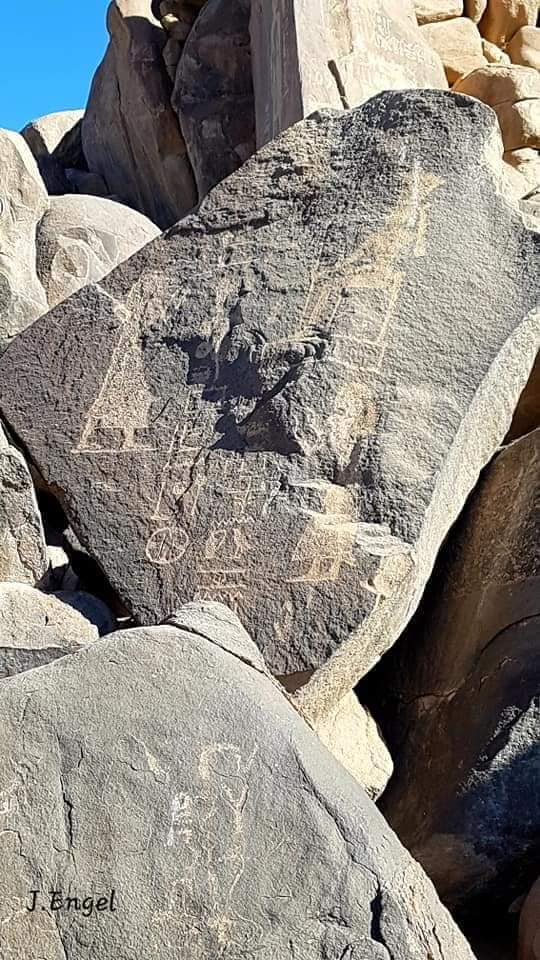
Sehel Island, is considered by the Egyptologists as a piece of Pharaonic diary of 550 stones engraved by ancient Egyptian kings, rulers, pilgrims, travellers, and patients.
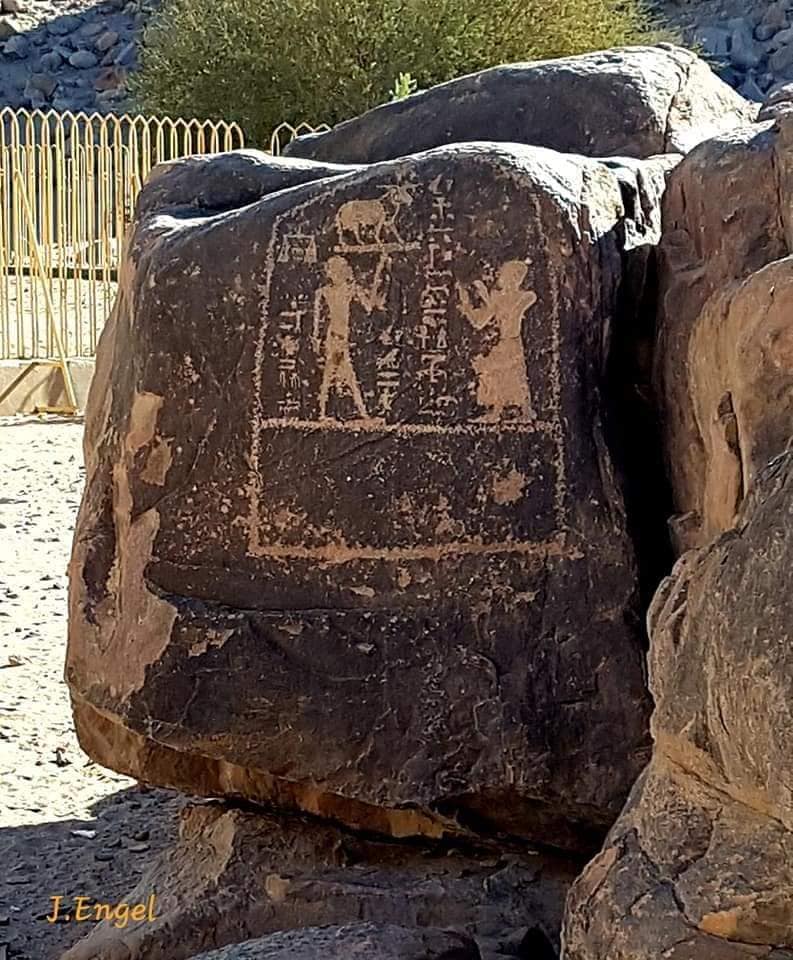
Whenever a king or priest passed by the island, he wrote his memory like ‘I am…son of…my mother is…’. The area has 550 engraved memories dating from the prehistoric period to Roman Greek era.
The engraved stories also served as a way of documenting tasks. “Any state official who was sent to get gold from the South used to engrave his mission on the stone.

Sehel was a place of worshipping the Goddess Anuket, one of the Elephantine triad; the stones could be classified into two categories: royal engravings and inscriptions by individuals.
Most engravings include the depiction of the triad, where travelers or patients asked for success in life or treatment from an illness.

The stones also include one of the most important engravings that prove that Senusret III (1878 BC to 1839 BC) decreed to dig and expand a canal in the western side of the Sehel Island, for his warships and to serve as a maritime trade passage.Sehel Island Aswan.
(Egypt Today)
By Jacqueline Engel
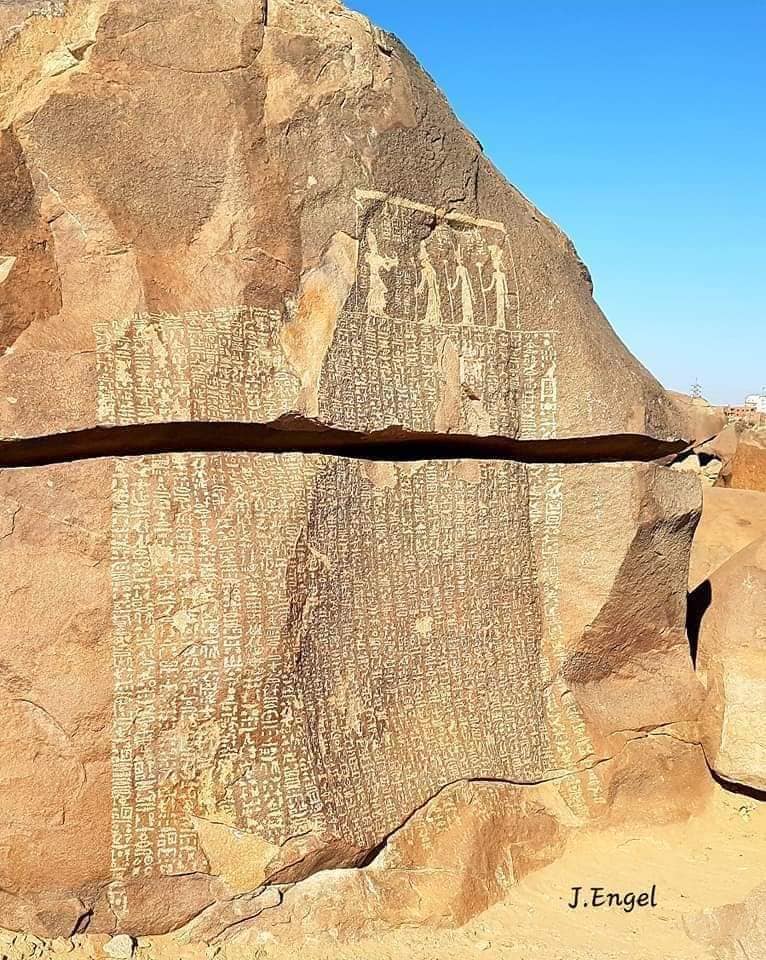
A piece of Pharaonic diary.
Sehel Island Aswan.
The famine story had been engraved on a granite stone in 250 BC during the era of Ptolemy V on the Sehel Island, Aswan. The Stela, which is 2.5 meters in height and 3 meters in width, includes 42 columns of hieroglyphic texts read from right to left.
The Stela had a natural horizontal fissure when the Ptolemies engraved the story on it.
Above the inscriptions, there were drawings depicting King Djoser’s offerings to the triad of the Elephantine deities (Khnum, Anuket, and Satis), which were worshipped in Aswan during the Old Kingdom.
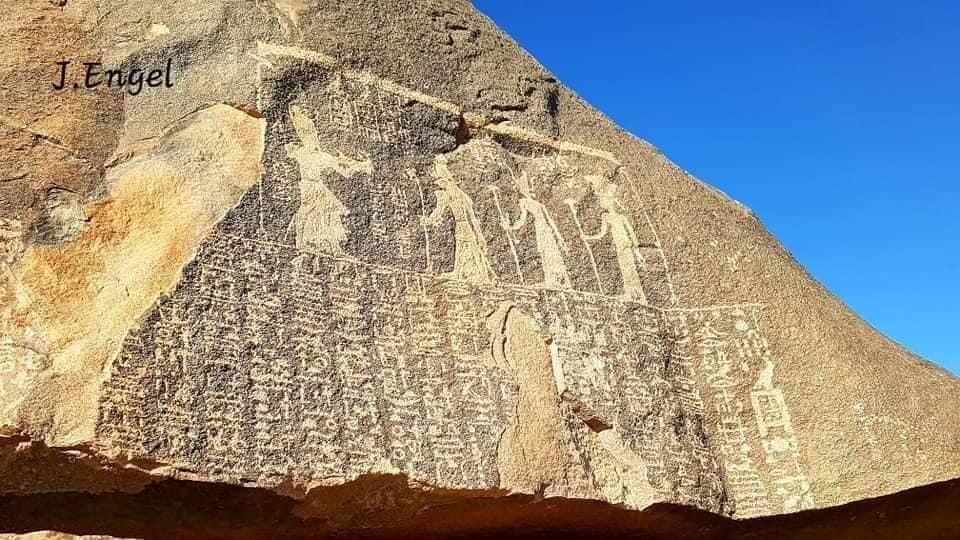
The story told on the stela is set in the 18th year of the reign of Djoser.
The text describes how the king is upset and worried as the land has been in the grip of a drought and famine for seven years, during which time the Nile has not flooded the farmlands.
The text also describes how the Egyptians are suffering as a result of the drought and that they are desperate and breaking the laws of the land.
Djoser asks the priest staff under the supervision of high lector priest Imhotep for help.
The king wants to know where the god of the Nile, Hapi, is born, and which god resides at this place.
Imhotep decides to investigate the archives of the temple ḥwt-Ibety (“House of the nets”), located at Hermopolis and dedicated to the god Thoth.
He informs the king that the flooding of the Nile is controlled by the god Khnum at Elephantine from a sacred spring located on the island, where the god resides.
Imhotep travels immediately to the location (Ancient Egyptian: jbw).
In the temple of Khnum, called “Joy of Life”, Imhotep purifies himself, prays to Khnum for help and offers “all good things” to him.
Suddenly he falls asleep and in his dream Imhotep is greeted by the kindly looking Khnum.
The god introduces himself to Imhotep by describing who and what he is and then describes his own divine powers.
At the end of the dream Khnum promises to make the Nile flow again.
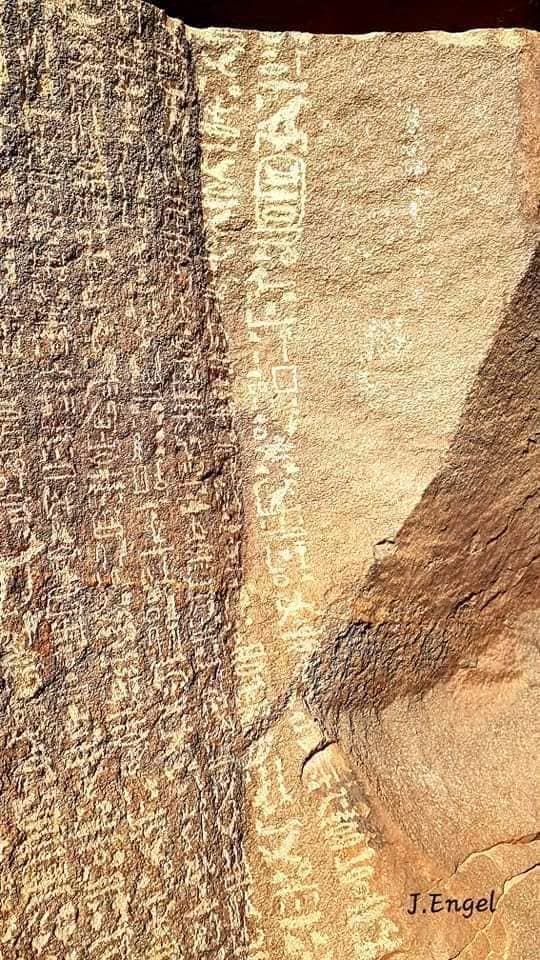
Imhotep wakes up and writes down everything that took place in his dream. He then returns to Djoser to tell the king what has happened.
The king is pleased with the news and issues a decree in which he orders priests, scribes and workers to restore Khnum´s temple and to once more make regular offerings to the god.
In addition, Djoser issues a decree in which he grants the temple of Khnum at Elephantine the region between Aswan and Tachompso with all its wealth, as well as a share of all the imports from Nubia.
(Egypt Today)
By Jacqueline Engel
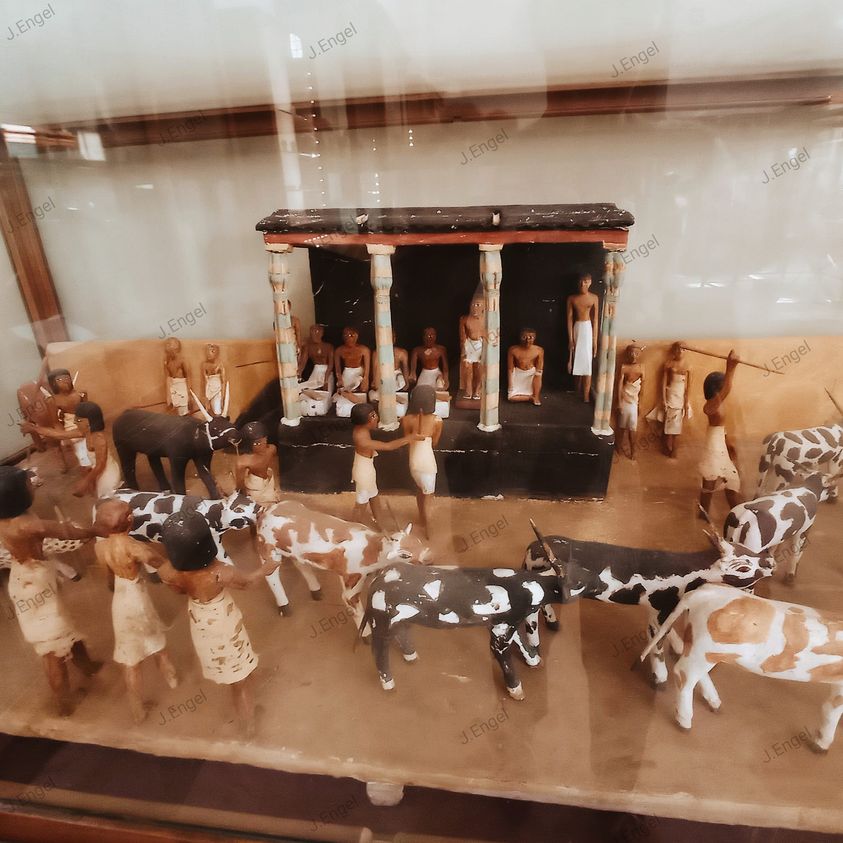
This large model shows a courtyard where the inspection of cattle took place.
Meketre, his son, and four scribes sit under a columned canopy with scribes and guards standing nearby.
Cattle are driven before them by several farmers and herdsmen in order to be counted for inspection purposes.
All men are wearing short kilts and the farmers who drive the cattle are wearing long wigs and holding sticks.
Middle Kingdom, 12th Dynasty, ca. 1981-1975 BC. Tomb of Meketre (TT280),
Sheikh Abd el-Qurna, West Thebes.
Egyptian Museum, Cairo. JE 46724
https://www.facebook.com/share/r/94qmegShZfh5WP8m/?mibextid=CYgPv5
By Jacqueline Engel
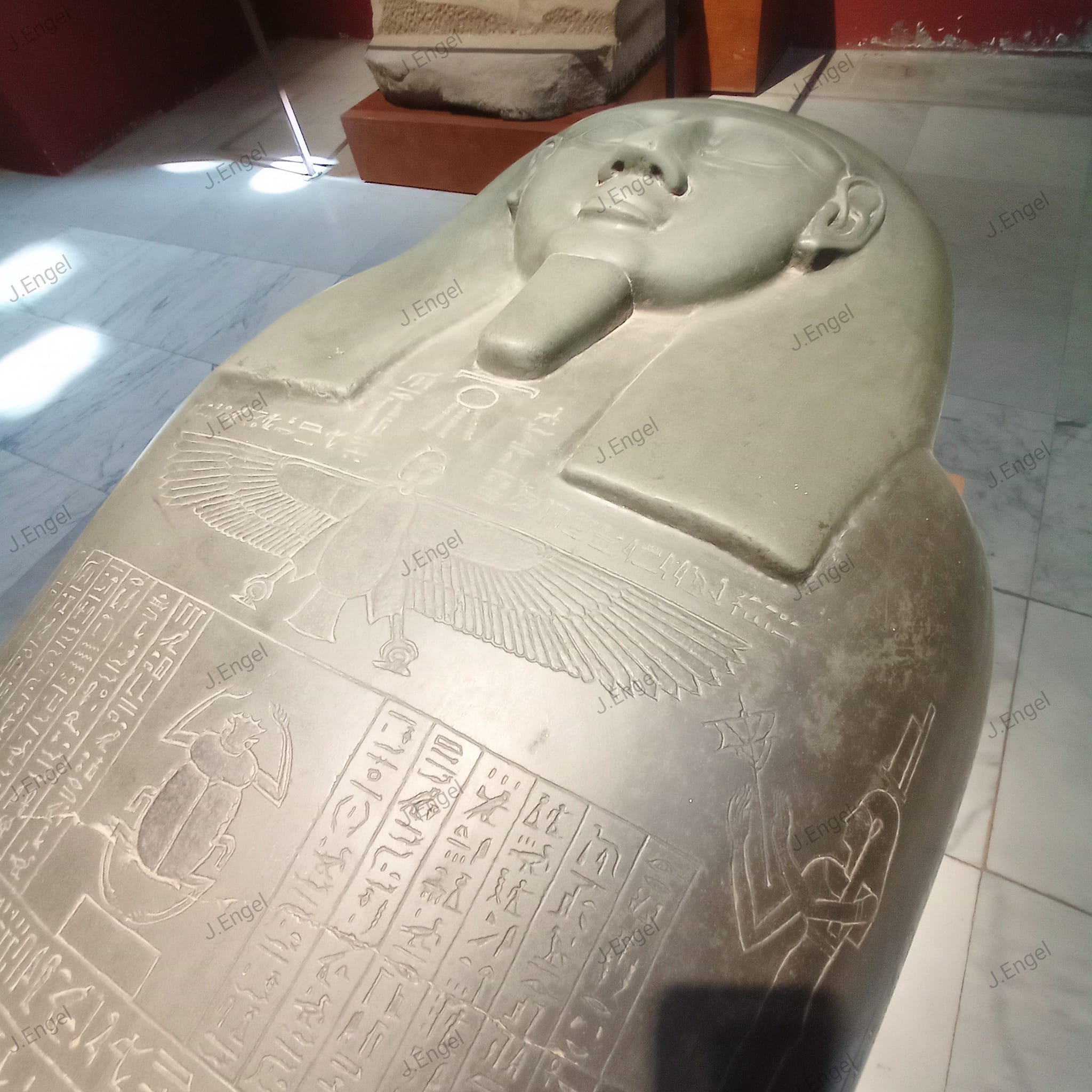
Imhotep was adviser to King Djoser in the third dynasty and he is credited with the design of the Step Pyramid in Saqqara, the earliest pyramid in Egypt.
For this and other achievements of wisdom and learning attributed to him, in later periods he became one of the only historical non-royal people to be divinized and to have a dedicated cult, which was particularly strong in the Memphite region.
Imhotep’s sarcophagus is an outstanding example of Egyptian craftsmanship.
The polished dark stone is finely carved, showing the deceased wearing a wig and divine beard.
The beard declares that Imhotep has entered the hereafter and has become assimilated with the god Osiris.
His tripartite wig, of a type worn by deities, reinforces his status as a divine being.


Ptolemaic period, 304-31 BC.
Upper Egypt.
Basalt
Egyptian Museum Cairo
https://www.facebook.com/share/r/w1aGqX3QonsoUFyH/?mibextid=CYgPv5
 LA CIVILTA' EGIZIA