Pictures

Serdab Statue of Ti

The Serdab Statue of Ti, Overseer of the Pyramids of NIUSERRE.

The mastaba of Ti was discovered by Mariette in 1865, and is the largest and one of the finest of the private tombs at Saqqara.

See also: https://laciviltaegizia.org/2021/03/06/la-mastaba-di-ti/

Ti was a mighty official during the 5th Dynasty, and he held the title “Overseer of the Pyramids of Niuserre” and “Overseer of the Suntemples of Sahure, Neferikare and Niuserre, as well as controller of the farms and stock that belonged to the royal family.

Egyptian Museum, Cairo.

Pictures

Pedestal with Flower Decoration

The inlays of polychrome faience and stone were a beautiful complement to the walls adorned with mosaics and the Egyptian alabaster floor. Differently patterned rosettes alternate with lotus blossoms and petals.

The stepped limestone platforms, decorated with inlaid flower motifs, probably came from the palace of Ramses III in Tell el-Yahudiye (Leontopolis).

Stone and Faience: New Kingdom – Ramesside Period: Tell el-Yahudiye (?).

Egyptian Museum Cairo

Pictures

Sphinx of Amenemhat III

The granite sphinx of Amenemhat III was discovered at Tanis (today San al-Haggar).

It shows Amenemhat III with a human face and a lion’s body, in other words, a perfect creature, as intelligent as a human being yet as strong as a lion.

Seven sphinxes of Amenemhat III were found in Tanis in the eastern Delta. They were thus called the Tanite sphinxes. They evoke the superhuman power of the king and emphasize his fearful appearance.

The vigorous face of the king is characterized by his prominent cheekbones, protuberant mouth and deeply furrowed cheeks, which create an effect of strength.

Instead of the traditional nemes headdress, his face is framed by a massive lion’s mane that increases the sense of his majesty.

Middle Kingdom, 12th Dynasty, reign of Amenemhat III, ca. 1860-1814 BC.

Gray granite, from Tanis.

Egyptian Museum, Cairo

Pictures

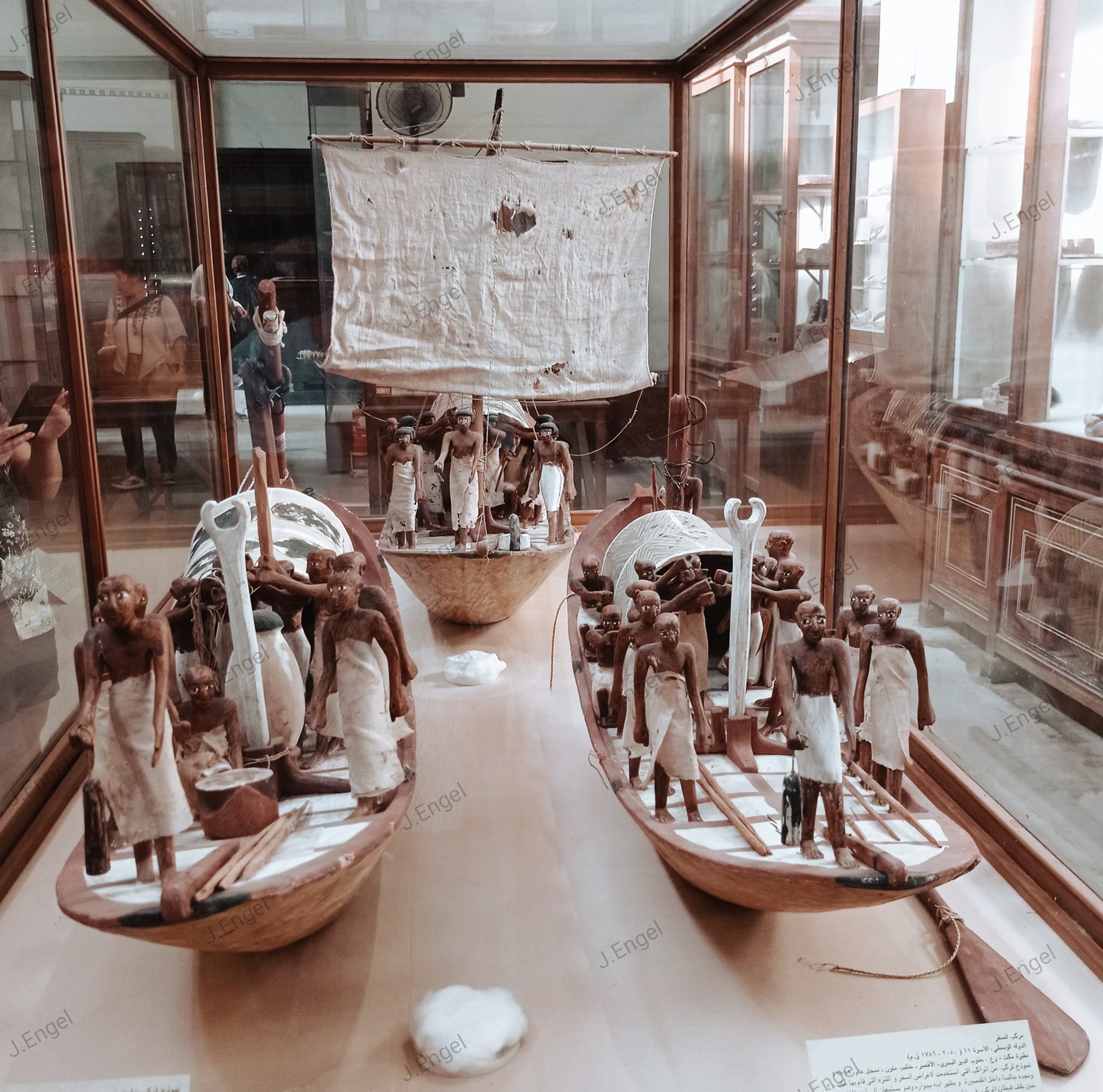
Three boats from the tomb of Meket-Re

Middle Kingdom, 11th dynasty, (2050 – 1786 B.C.) South of Deir al-Bahari, Luxor
Painted wood and linen.

Traveling boat (on the right)

A traveling boat used for several purposes by Meket-Re whose son is sitting beside him in the shade of the cabin .they are listening to a singer. The captain, his arms crossed humbly over his chest stands waiting for Meket-Re ‘s orders In the bow, the lookout holds a plumb in his right hand indicating the direction with his left hand mast and rigging of this boat are missing.

Kitchen boat (on the left)

The kitchen boat was to accompany Meket-Re on his river travels.
Jars of beer and wine, joints of meat hanging on ropes and two baskets, probably filled with bread are stored in the cabin.
A large jar is beside the now-missing mast; the ropes from the sail is still in the hands of the crew. On the deck a brazier is tended by seated man who holds a fan and blows up the fire.

Model of boat ( in the back)

A boat with a rectangular sail, the round roofed cabin is decorated in a perfect way and divided into two parts.
A shallow porch where Meket Re is sitting, smelling a lotus flower and listening to a singer in the first part, the second part consists a room with a bed in which a servant is waiting for orders.
The captain whose head is shaven standing on the right of the cabin with a staff in his hand.

Egyptian Museum Cairo

Pictures

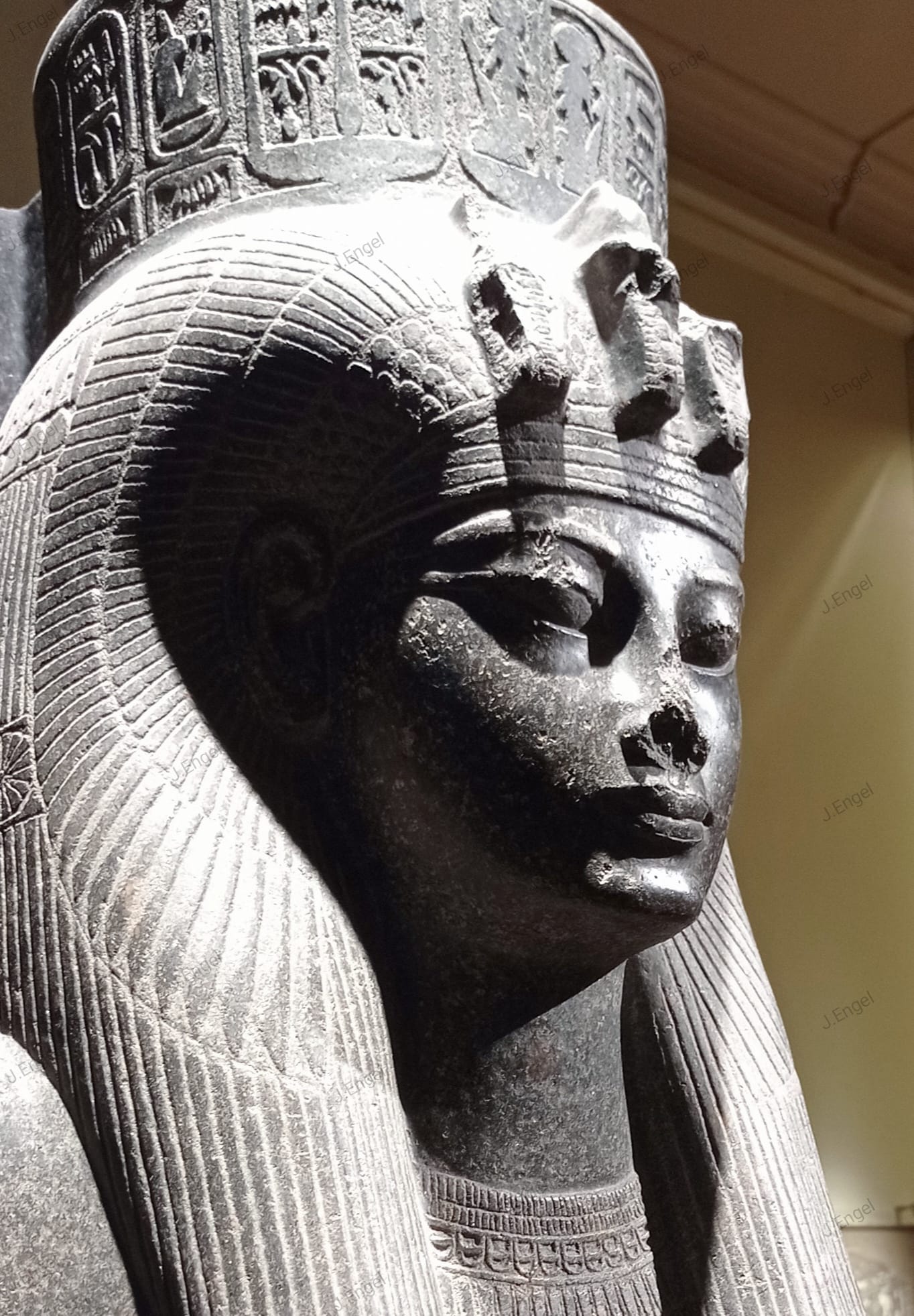
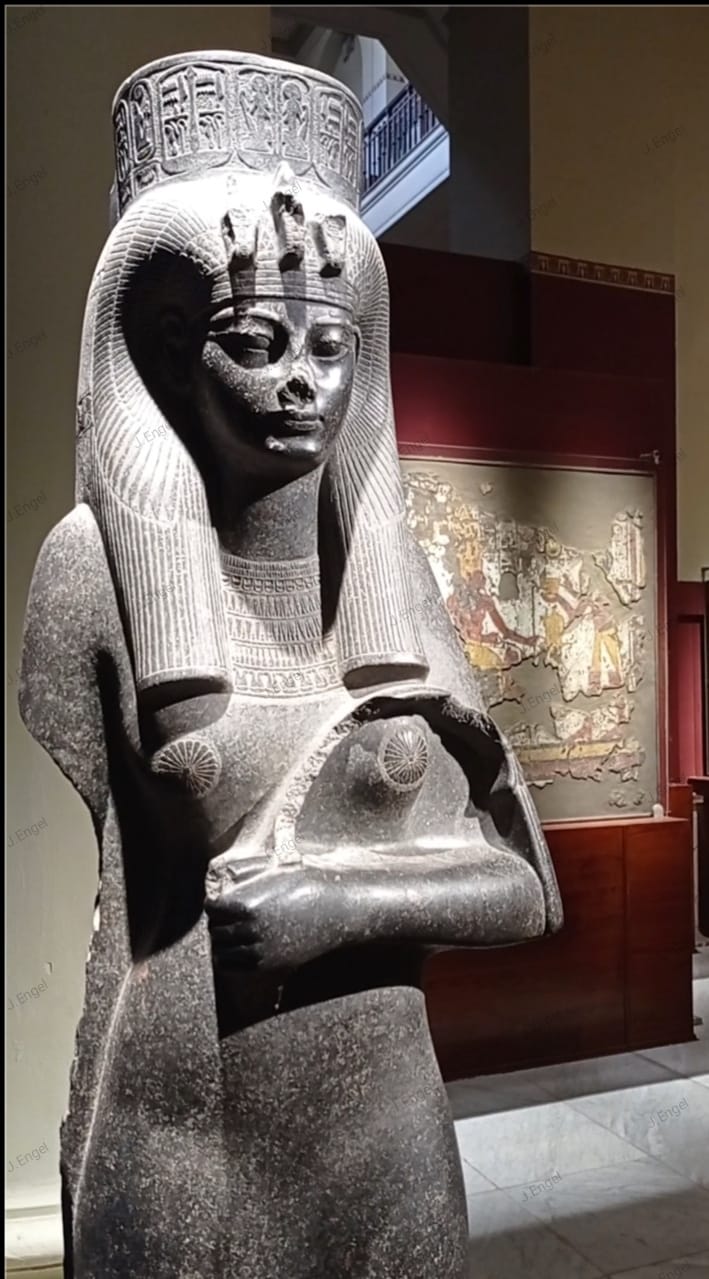
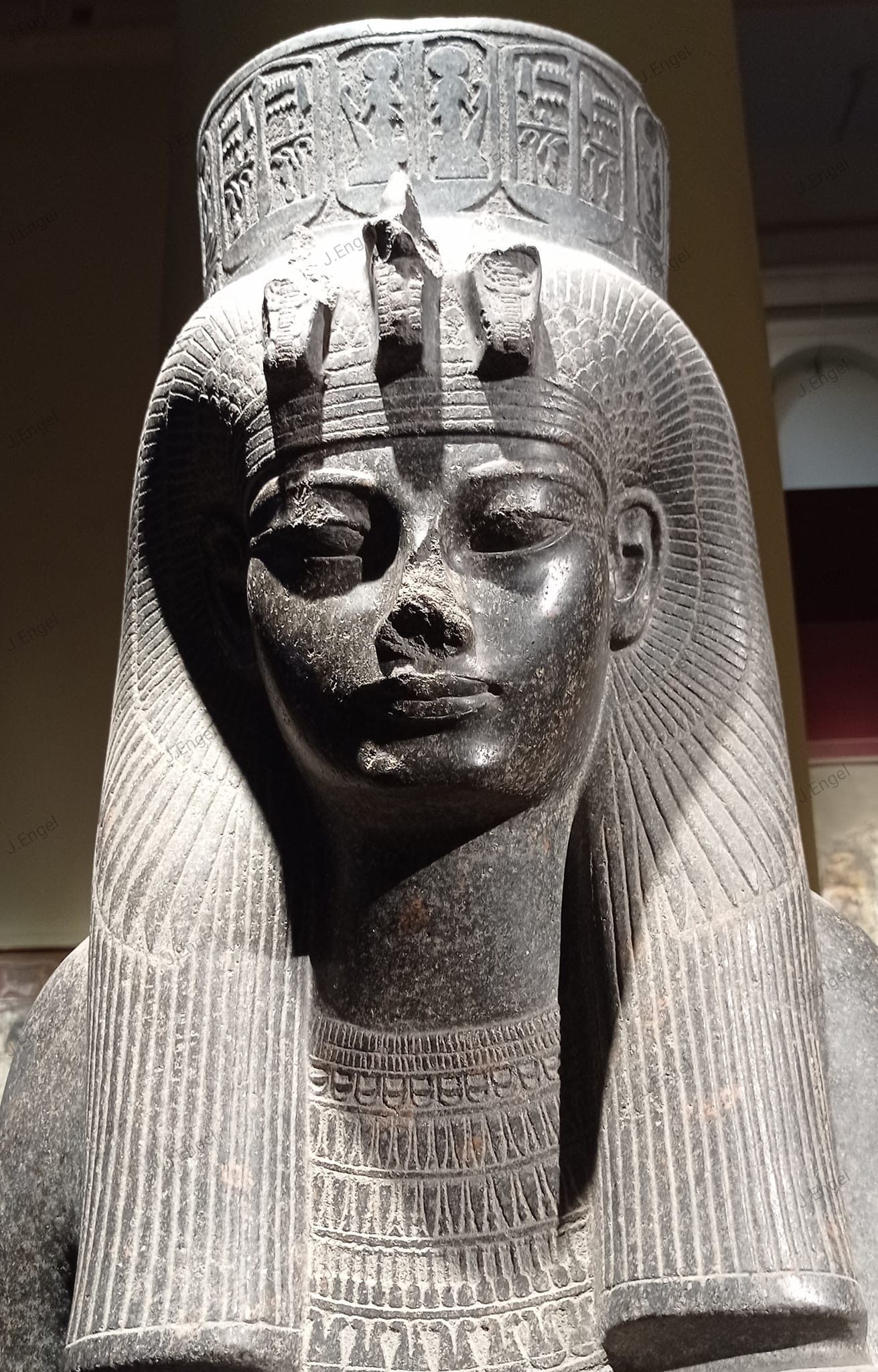
Statue of Queen Tiya

The Queen wears a vulture bonnet over her long wig, with the vulture’s bead flanked by erect cobra serpents.

Above it is a round crown base that is inscribed with the King’s birth and throne names in royal cartouches while alluding to the Sed festivals, that Amenhotep Ill celebrated.

Tiya holds in her left hand a flail, typical for Egyptian Queens.

Also, the particular iconography of the statue can probably be associated with the King’s renewal festivals in the last decade of his reign.

The inscription on the back pillar was added much later by Queen Henuttawy, wife of Pinudjem I (e. 990-969 BCE) when the statue was re-used.

The text contains the Queen’s names, titles, and honorary degrees.

Granodiorite, 18th Dynasty, last decade of the reign of Amenhoteg III ( 1360-1351 BCE) excaveted by Johns Hopkins University Baltimore with the Department of Egyptian Antiquities in 2006.

The temple of Mut in Kamak, JE. 99281

Egyptian Museum Cairo

Pictures

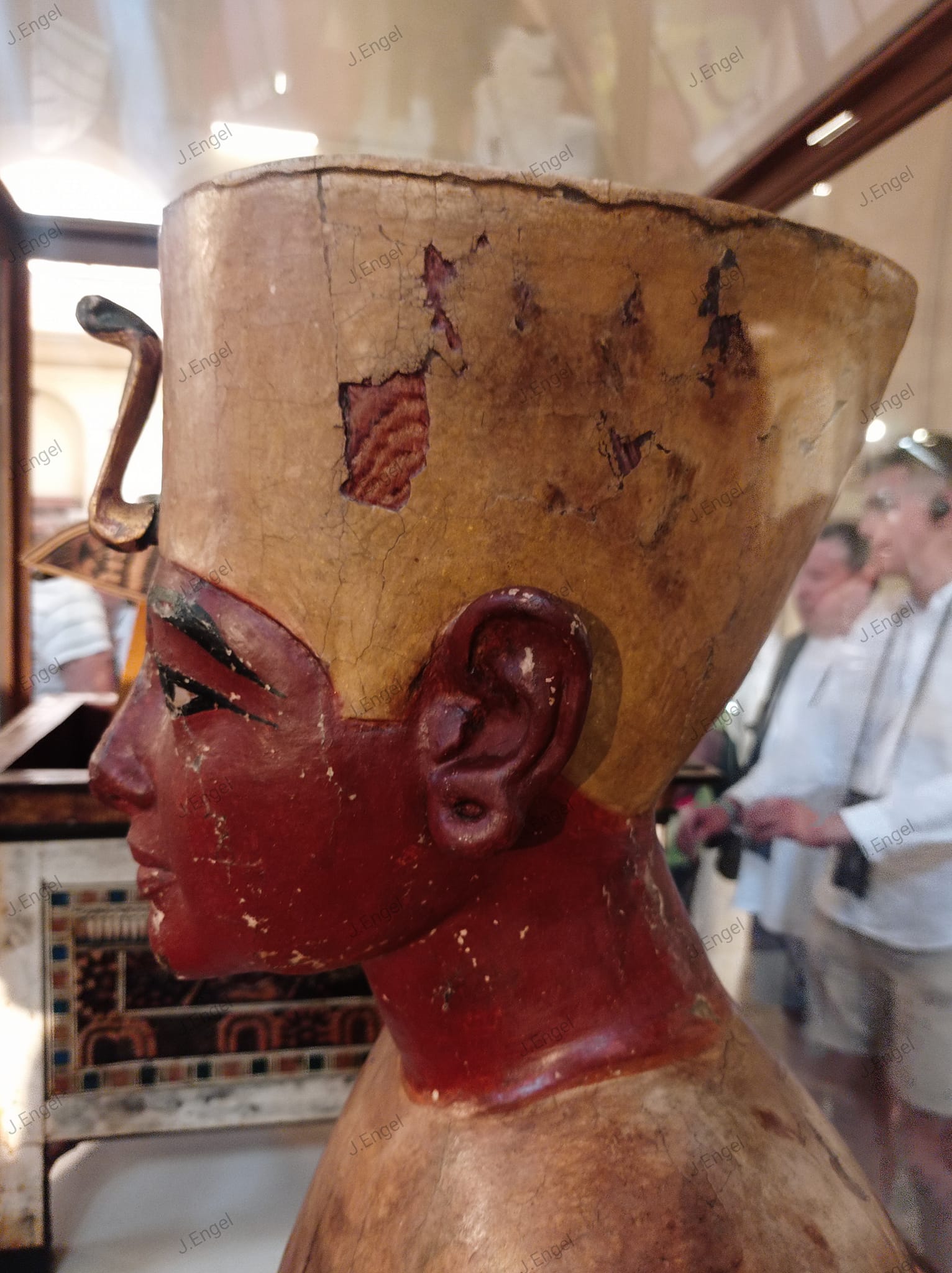
A life-size representation of King Tutankhamun.

This carved wooden statue, smoothed with gesso and then painted, is a life-size representation of the king.

Carter recorded that the figure was beneath one of the large ceremonial chariots in the southern end of the Antechamber.

The arms have intentionally been severed to just below the bicep, and the body extends to just below the hips.

Tutankhamun wears a simple white garment and a flat-topped crown with protecting uraeus, similar to a crown that Nefertiti often uses.

His ears are pierced, and his skin is painted a reddish brown in the convention typical for representing males.

Although Carter had suggested that the figure may have been a mannequin, similar to a clothes-dummy, which would hold the garments and jewelry of the king, it is difficult to find parallel pieces.

Other scholars have pointed out that this torso and several statues from the Middle Kingdom, which are somewhat similar in appearance, may all be related to the rebirth or resurrection of the king in association with his identification with the god Osiris.

In the tombs of the Old Kingdom, there are also busts similar to this one.

They are heads or torsos sculpted to look as if they were emerging from the floor or the wall.

They appear to be images of the ka (the corporeal twin and essential nature of the deceased) coming up from the burial chamber and entering the offering chapel through or near the false door, the place where offerings to the deceased could be made.

Because of these parallels it is likely that this enigmatic statue has a funerary, rather than a domestic purpose.

Egyptian Museum Cairo

Pictures

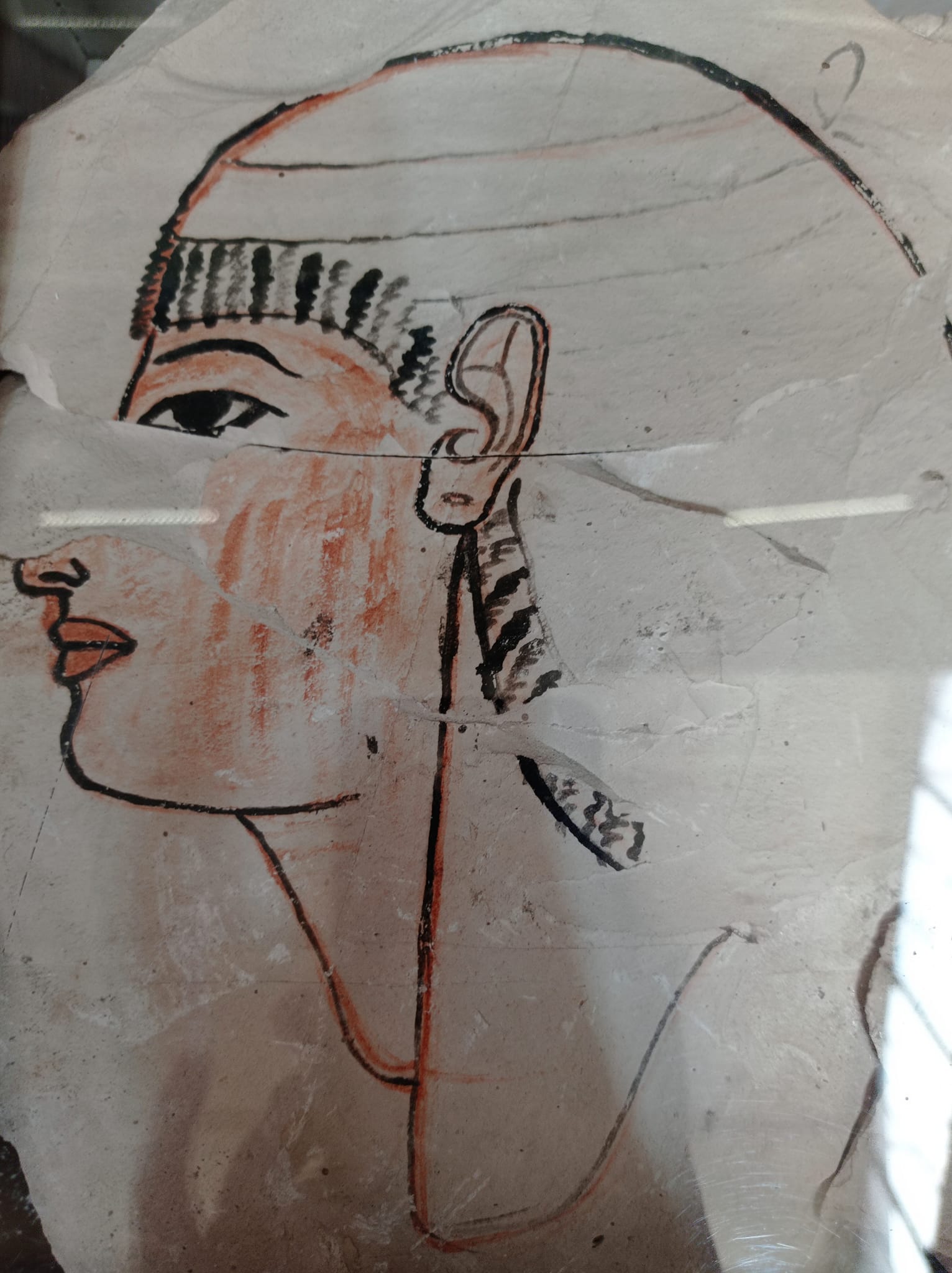
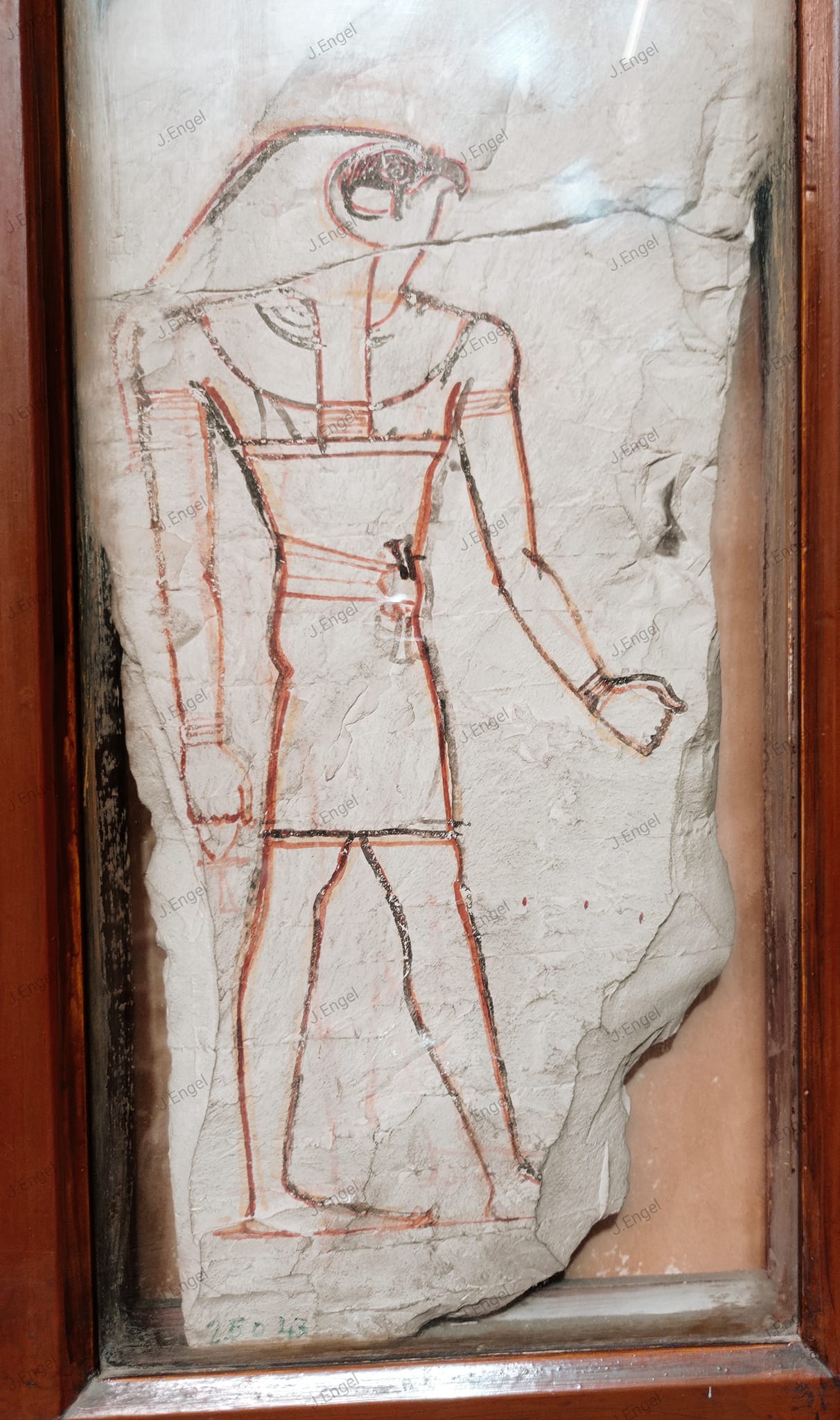
Ostraca of Limestone

Ostraca, or drawings and inscription on stone, of which the museum possesses a very large collection mostly from the Tombs of the kings at Thebes.

While the workmen were cutting the royal tombs, which sometimes penetrate the rock for more than 100 metres, the artisans who were out on duty amused themselves by collecting fragments of limestone at the entrance to the underground chambers, on which they drow pictures to suit their fancy, or inscribed poetry of their composition.

Places where limestone was broken up, either in making buildings or in destroying them, provided abundant writing material, as small pieces smooth on one side provided a good writing surface and were easily portable for writing exercises, which had not been moved, quite large pieces were often used. The great majority of limestone ostraca comes from Thebes.

Egyptian Museum Cairo

Pictures

Offering to the Buchis bull

This stela is dedicated by Ptolemy V to the bull Buchis, sacred to the war god Montu.

The central register shows Buchis with a gilded body and a sun disc with two plumes between his horns.

The king, dressed according to pharaonic custom, offers the bull the symbol of fields to ensure a prosperous agricultural season.

The god Montu flies over the bull in the form of a falcon.

The site of Armant in Upper Egypt, where this stela was discovered, includes a stone- built temple dedicated to the god Montu.

The catacombs where the sacred Buchis bulls were buried were in use for over 600 years from the Late Period to the Greco- Roman Period.

Ptolemy V, 205-180 BC Armant, Limestone

Egyptian Museum Cairo

Pictures

Detail of the Ka Statue of Tutankhamun.

For more details, please see:

https://laciviltaegizia.org/2023/02/28/le-statue-del-ka-di-tutankhamon/

This is one of two statues that stood guarding the entrance of the burial chamber.

The king is wearing the khat headdress and is shown with black skin, the colour of Nile mud that flooded and gave it fertility every year.

Black signified resurrection and the continuity of life.

18th dynasty, from the tomb of Tutankhamun – KV62·

Egyptian Museum, Cairo

Pictures

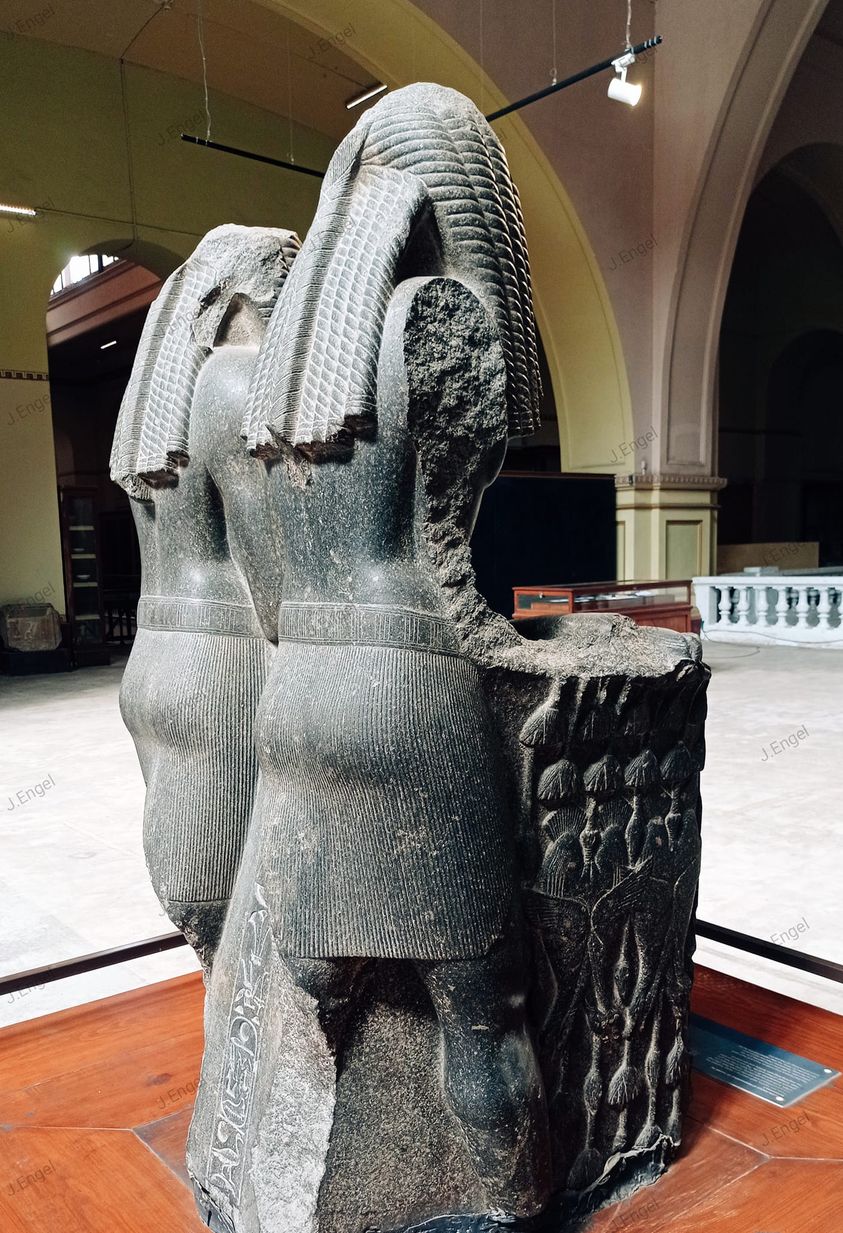
Double statue of Amenemhat III reused by Psusennes I

These two figures, each wearing a heavy, braided wig and a broad beard with parallel stripes, bear offerings of fish, birds and aquatic plants.

They represent the pharaoh Amenemhat III in the form of the Nile god Hapi, bringer of food and life. The statue associates the reigning King with fertility and abundance.

12th Dynasty, reign of Amenemhat III (about 1859-1813 BC: reused in the 21st Dynasty in the reign of Psusennes (about 1039-991 BC) Tanis/San el Hagar.

The inscriptions engraved on front and back were added later, in the time of Psusennes I.

In the 21st Dynasty, Psusennes I had the monument transported to Tanis, his new capital and the burial place of the kings of that period.

Grey granite JE 18221 – Egyptian Museum Cairo