Pictures

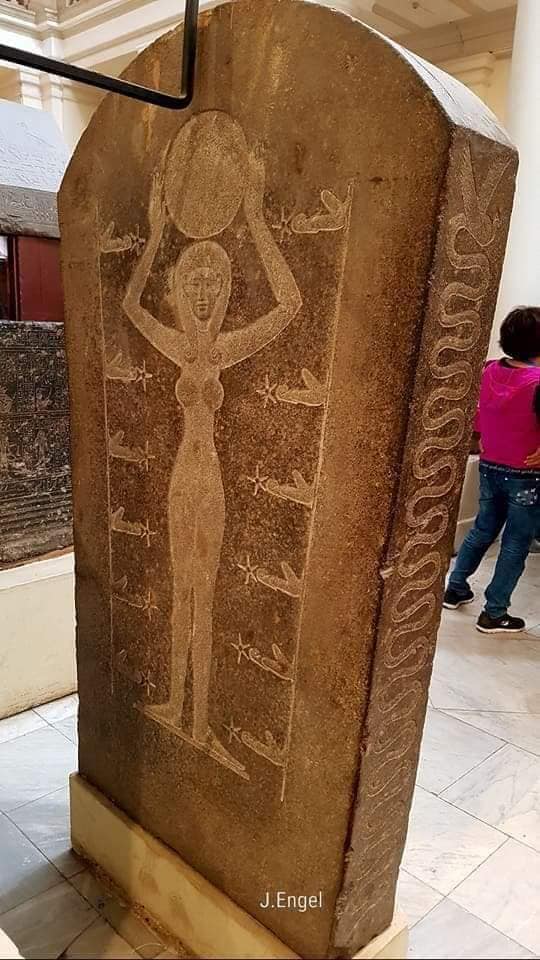
The goddess Nut as a starry sky

By Jacqueline Engel

The goddess Nut as a starry sky.

In the lid of the mummy box of Peftjaoeneith, the goddess Nut is depicted in her nocturnal form.

Her black skin is strewn with stars.

She swallows the red evening sun and gives birth to the crescent moon.

On either side are the twelve hours of the day (right with solar disk) and of the night (left with a star).

In this cycle of sun, moon and stars, the dead also hopes to be included.

See also: IL SARCOFAGO DI PEFTJAOENEITH

Wood.

Origin unknown.

Late Period. 26 Dyn. 664-525 BC Egypt

RMO LEIDEN.HOLLAND
Pictures

Sphinx of the ram of Amun

By Jacqueline Engel

Oh Great God, swift one. Who comes to him who calls. Watch my sister for me, the woman born in the same womb as me. Do for her as I have done for you. Spontaneous miracles that cannot be denied. Elevate her children and make them prosper, even as you did for me.”

From Taharqa’s prayer to Amun, at his temple in Kawa

Granitic gneiss sphinx of the ram of Amun protecting figure of King Taharqo between folded front legs; the rectangular base, which has been partially restored, is inscribed with a continuous horizontal register of hieroglyphs.

Napatan Kushite

690BC-664BC

Kawa, Temple Sudan.

Height: 106 centimetres (max)Length: 163 centimetres (base)Width: 63 centimetres (base)

British Museum London.

Picture made in RMO LEIDEN Holland.

Exibition “gods of Egypt”

Pictures

Coronation of Ramesses III

By Jacqueline Engel

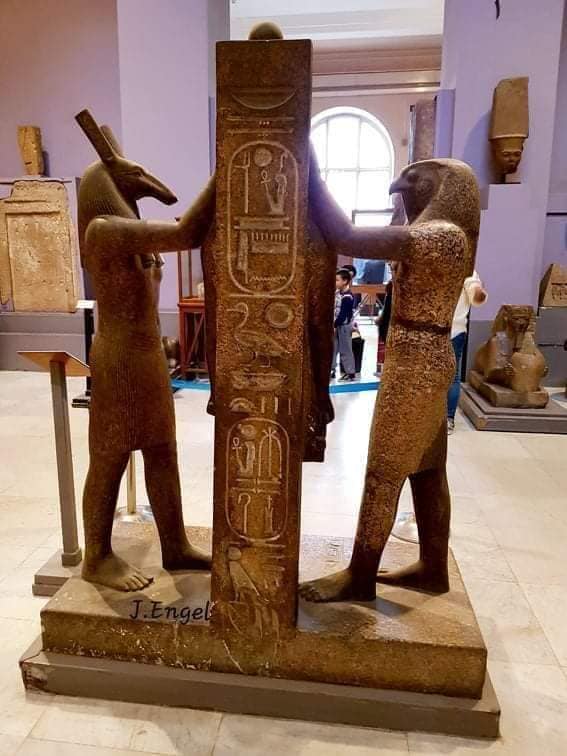
Coronation of Ramesses the Third by the gods Horus and Seth.

For the text translation of the inscription, see HERE

The group represents King Ramesses the Third, the god Horus and the god Seth. The three statues are standing and are all approximately the same height.

The statue of the king is between the other two, which are represented in profile.

Ramesses the Third is wearing the white crown of Upper Egypt with the royal cobra on the front, a wide collar of many rows, and the royal pleated kilt, the shendyt, with a long belt hanging down to the bottom of it.

He is holding the ankh sign of life in his right hand and the roll of power in his left hand. His left leg is forward.

The statues of the gods, Horus and Seth, are in the same posture with the left leg forward; they are each holding the ankh, and wearing the Egyptian pectoral and the shendyt kilt.

Each god has placed one hand on the crown of the king, performing the Coronation of Ramesses the Third.

The Egyptian Museum Caïro

Pictures

Relief of Imn-Hat

By Jacqueline Engel

SEE ALSO: https://laciviltaegizia.org/2023/06/06/la-stele-di-amenemhat/

Relief of Imn-Hat seated with his wife & son in front of an offering.

His sister Hepy stands at the far right.

Thebes, c2050-c1786 BC.

Middle Kingdom Period.

The Egyptian Museum Cairo.

Pictures

Statue and block statue of the Mayor of Thebes, Montuemhat

By Jacqueline Engel

Tombe TT 034 ASSASIEF
26TH DYNASTY (664–525 BC)
The Egyptian Museum Cairo

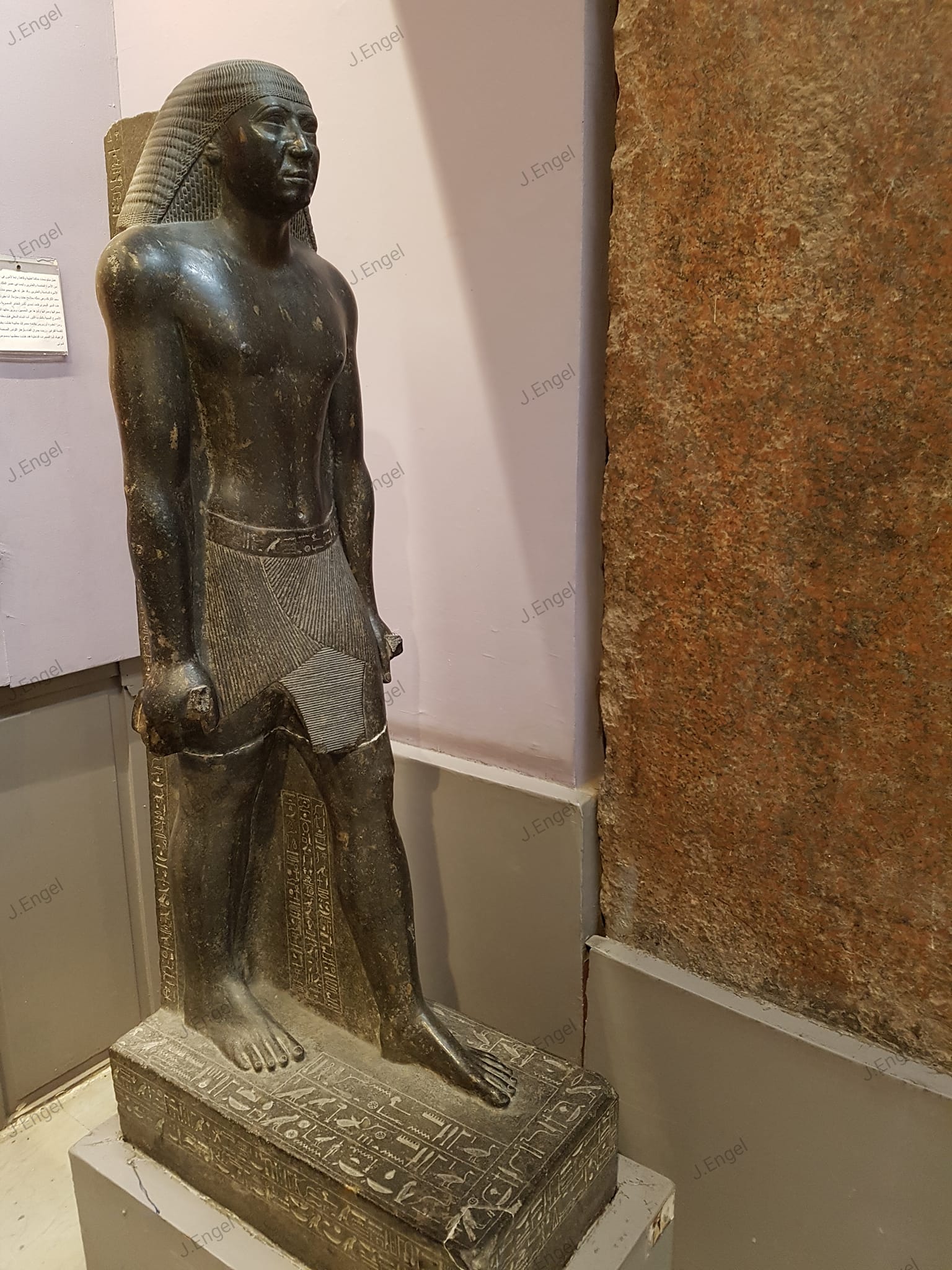
This statue portrays the nobleman Montuemhat, who played an important role in the clergy of Amun-Re at Karnak and in the administration of Thebes.

It shows him as a middle-aged man in the usual striding pose. Although the body was rendered in the traditional artistic style, well built and proportioned, his wrinkled facial features reveal his advanced age.

His head is covered with a heavy wavy wig that falls upon the shoulders. He wears the pleated Shendyt kilt, fastened with a belt on which his name and titles are engraved. This kind of kilt and engraved belt were mostly reserved for royal personalities before the Late Period.

The statue stands on a base inscribed with the offering formula and the name and titles of Montuemhat.

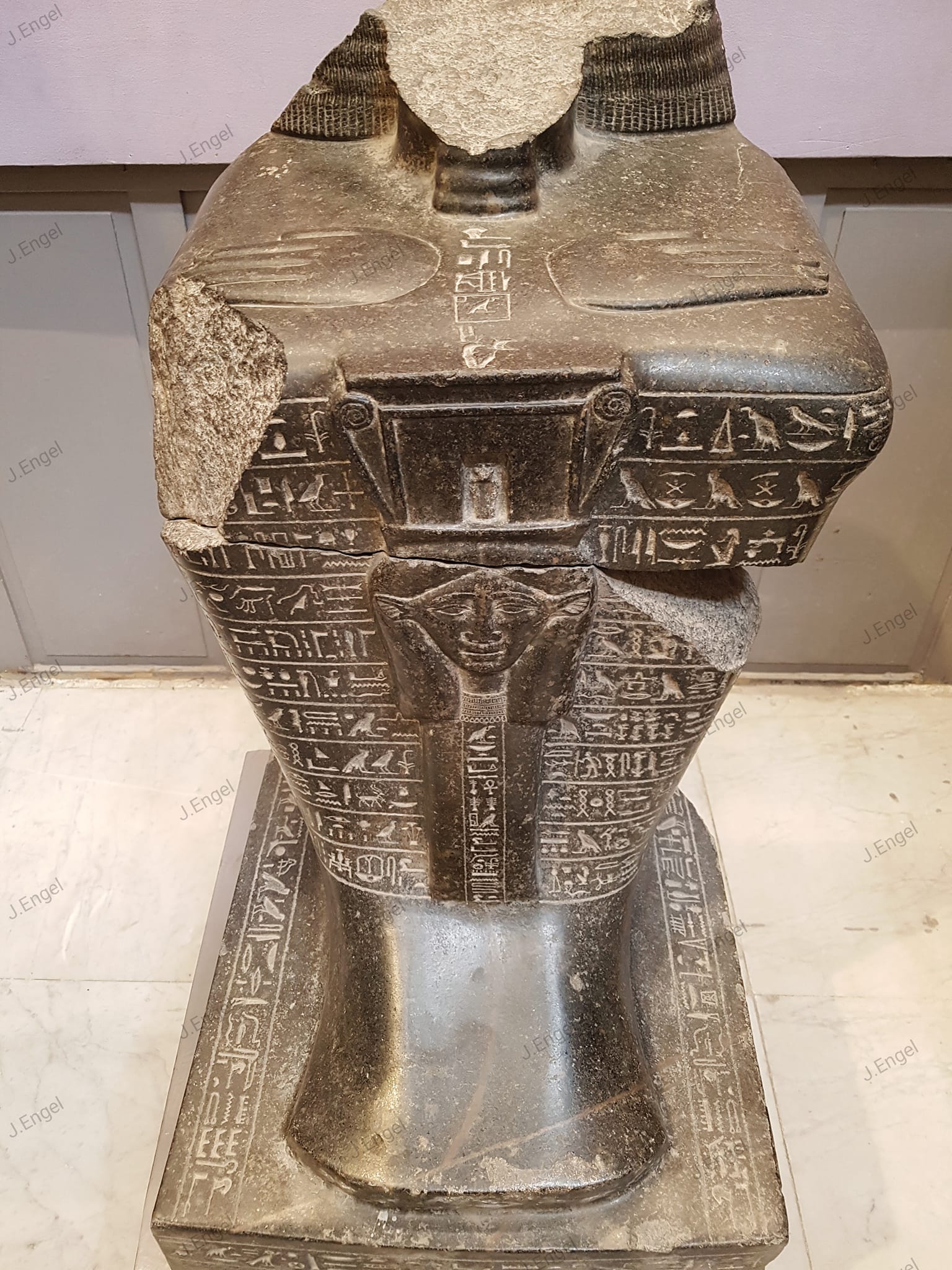
Block Statue of Montuemhat

This masterpiece, a life-size block statue of Montuemhat, the Fourth Prophet of Amun and Mayor of Thebes, was found broken into two parts.

Block statues provided surface areas on which text was inscribed, and the text on this statue lists Montuemhat’s titles.

Egyptian Museum Cairo

Pictures

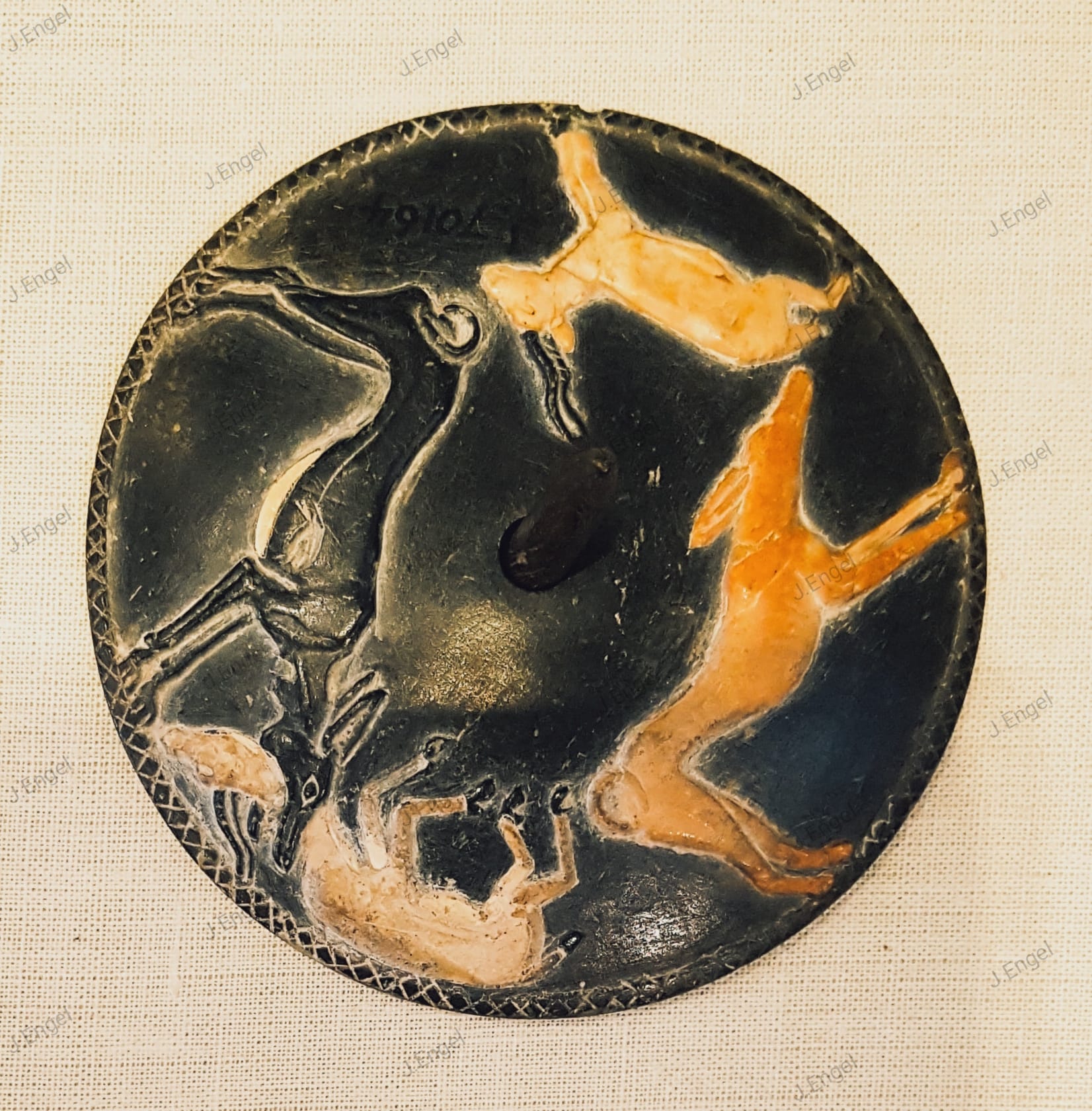
Disc from the Tomb of Hemaka.

By Jacqueline Engel

1st Dynasty (2920-2770 BC) Reign of Den.

Soap stone (black Steatite)
inlaid with pink-veined alabaster.
Hunting scene.
Cairo Antiquities Museum
Black Steatite
Diameter 8.7 CM; Thickness 0.7 CM
Saqqara, Tomb of Hemaka

Hemaka was an important official during the long reign of the First Dynasty Egyptian pharaoh Den.
Radiocarbon dating research undertaken during the 1950s suggested a date for Hemaka lifetime ca. 3100 BC.
One of Hemaka’s titles was that of “seal-bearer of the king of Lower Egypt”, effectively making him chancellor and second in power only to the king.

Pictures

Statue of Harwa

By Jacqueline Engel

Statue of Harwa, steward of Amenardis, the Divine wife of Amun.

His face deeply seamed to express a life with a lot of experience, a realism typical of Kushite art.
Schist 25 Dyn. Karnak.

Nubian museum Aswan.

Pictures

Sarcophagus of Dwarf Djeho

By Jacqueline Engel

The Granite Sarcophagus of Dwarf Djeho.

30th Dynasty. Saqqara, Egypt.

Egyptian Museum Caïro.

Djeho shared a tomb with his master Tjaiharpta, which indicates the favored position he had with his patron.

Djeho is depicted naked in profile, possibly life-sized (4 ft or 120 cm).

It was found by Quibell in 1911.

On the sarcophagus’ lid, the biography tells us that Djeho was a dancer in burial ceremonies connected to the Apis and Memphis bulls.

Pictures

INNER CHEST OF TANETCHARU

By Jacqueline Engel

Tanetcharoe’s inner coffin is painted with great attention to detail.
The coffin is decorated with standing figures of gods and offering formulas.

WOOD
THEBES
22 DYNASTY (CA 800 BC)
RMO Leiden Holland