By Jacqueline Engel
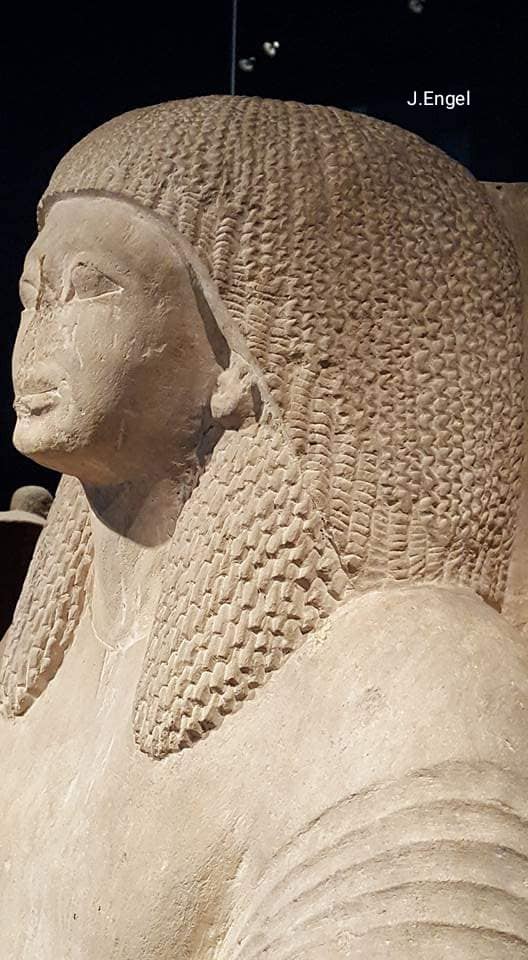


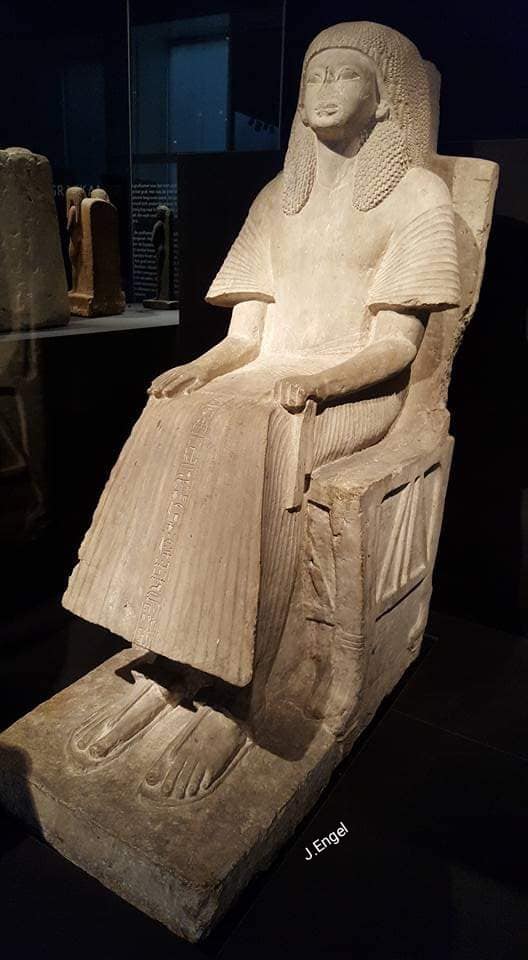

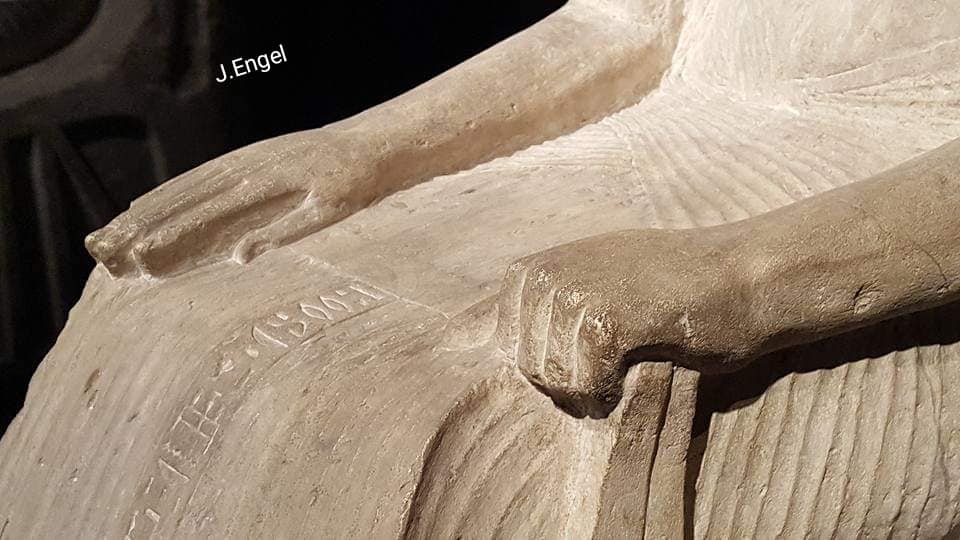

Statue of Ptahmes mayor of Memphis in the time of Ramses II. 19 Dyn
Limestone
RMO museum Leiden. Holland.
Il sito web del Gruppo Facebook
By Jacqueline Engel
Statue of Ptahmes mayor of Memphis in the time of Ramses II. 19 Dyn
Limestone
RMO museum Leiden. Holland.
By Jacqueline Engel

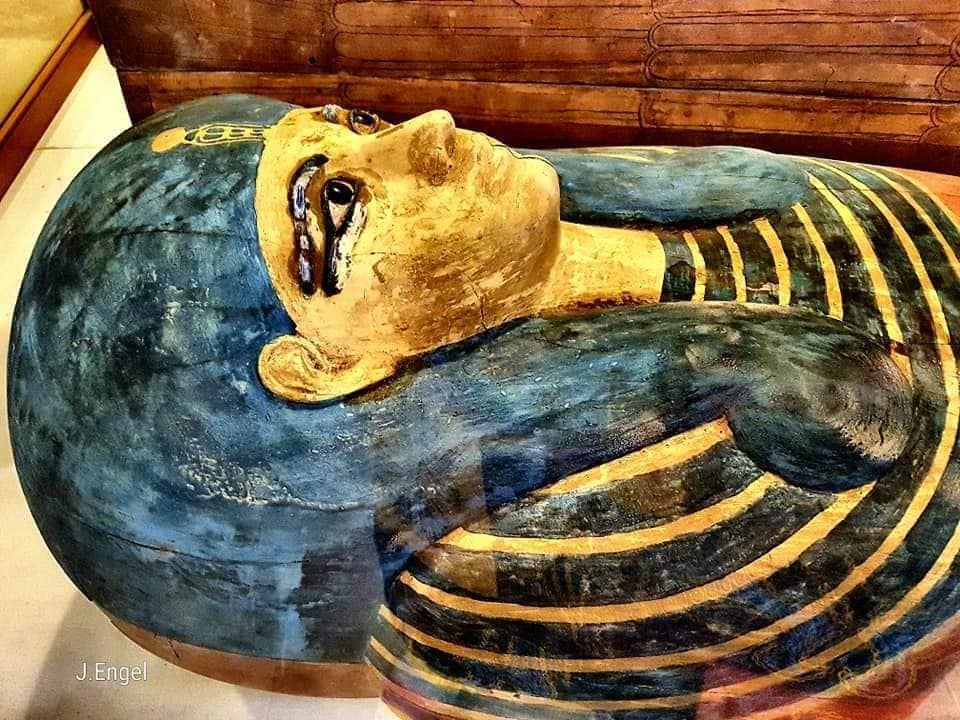
Ahmose-Meritamun (or Ahmose-Meritamon) was a Queen of Egypt during the early Eighteenth dynasty of Egypt.
She was both the sister and the wife of Pharaoh Amenhotep I.
She died fairly young and was buried in tomb TT358 in Deir el-Bahari.
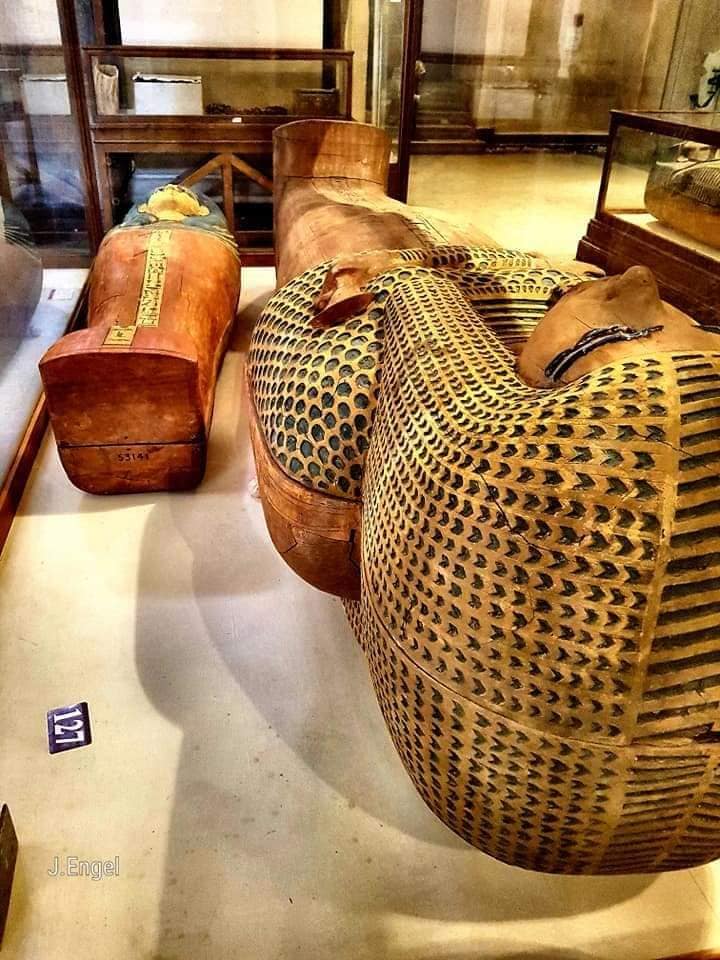
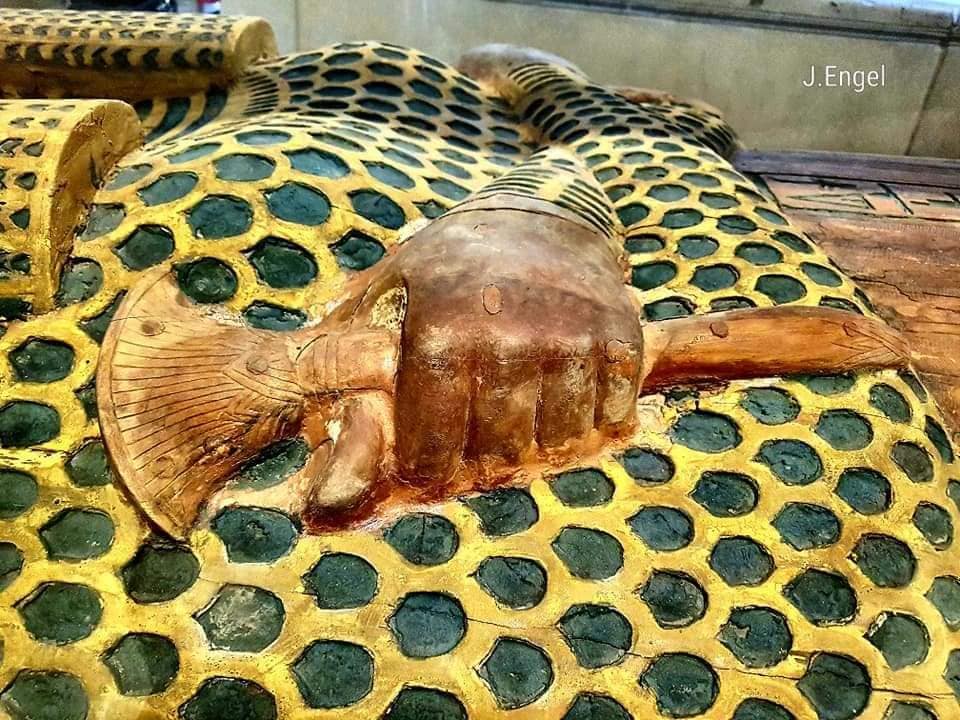
Ahmose-Meritamun was the royal daughter of Ahmose I and Ahmose Nefertari, and became the Great Royal Wife of her brother Amenhotep I, pharaoh of Ancient Egypt in the eighteenth dynasty.
Meritamun took over the role of God’s Wife of Amun from her mother Ahmose Nefertari.
Other titles recorded for Meritamun include:

The title king’s mother (mwt-niswt) is also recorded in later sources, even though she was never the mother of a king.
By Jacqueline Engel
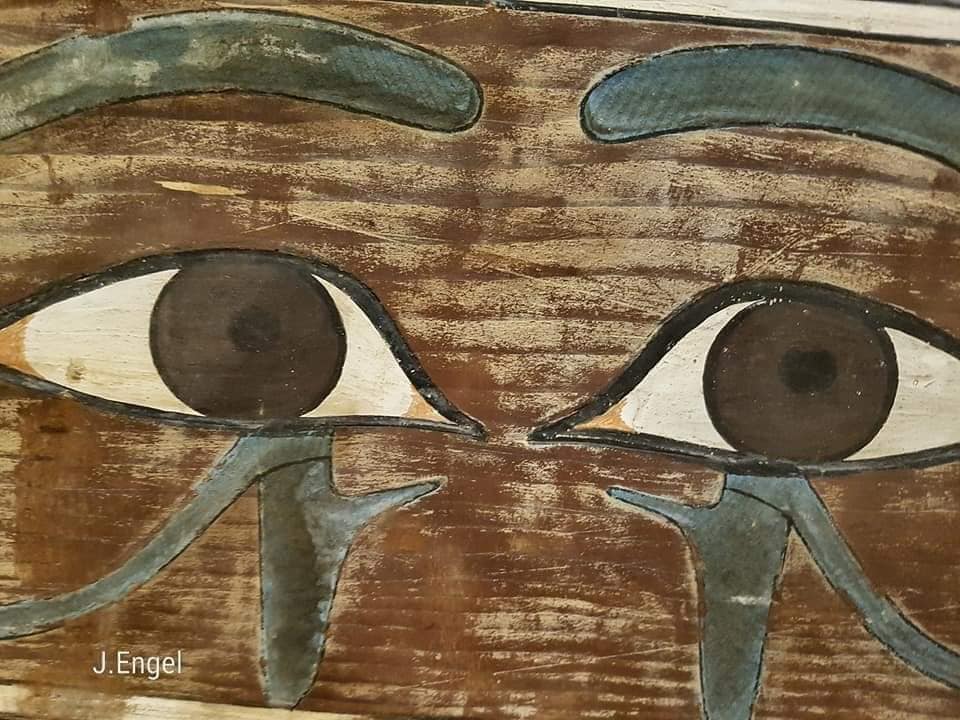
This is one of the most magnificent inscribed and painted sarcophagi from the Middle Kingdom.
It is made for the General Sepi of the fifteenth nome of Upper Egypt.

The exterior sides of the wooden sarcophagus are decorated with painted hieroglyphs depicting the names, titles, and offering formula.
Two Udjat eyes are located at the top of the false door that is depicted on the side, to which the mask of the anthropoid coffin is turned.

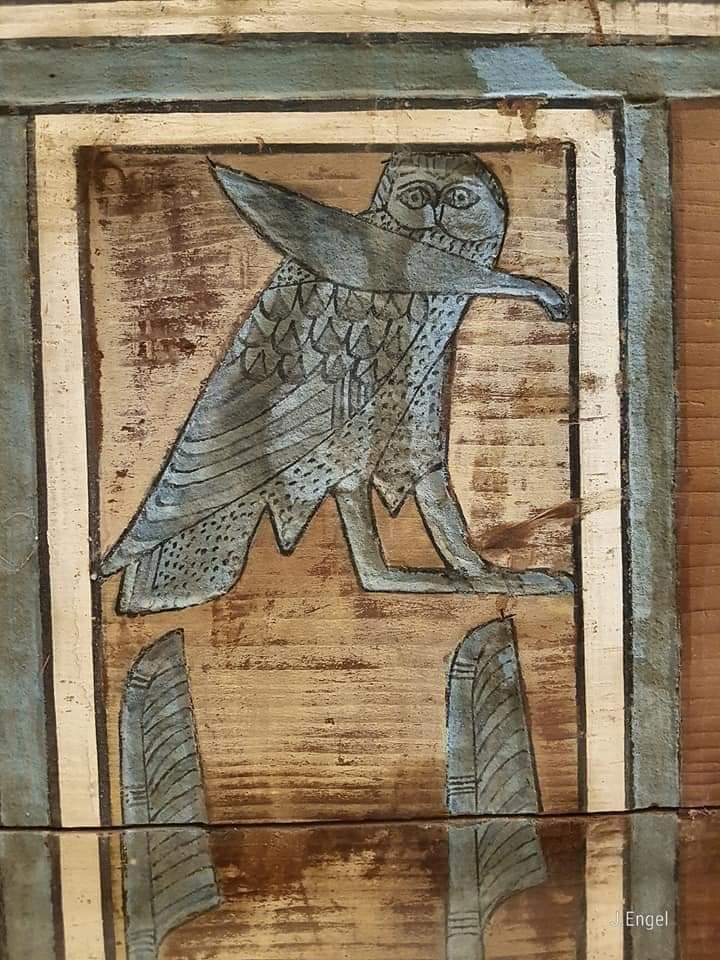

The interior decoration is entirely painted and contains a series of spells in cursive hieroglyphs taken from the Coffin Texts and from the Book of the Two Ways that contained a map of the underworld.
By Jacqueline Engel

His mask was part of the mummy-shaped coffin of gilded wood.
The round face of the king is surmounted by the uraeus, the royal cobra, which is attached to the forehead.
The cobra’s long sinuous body descends from the headdress and coils round itself before raising its head.
It is made of solid gold with inlays of red stone and blue turquoise.
The pupils, the eyebrows, and the outlines of the eyes are bronze.
21st dynasty, from Tanis
Egyptian Museum Caïro
By Jacqueline Engel

Silver Coffin of King Psusennes the First and Shesgonq II with head of funary God Sokar.
Tanis collection in the Egyptian Museum Caïro.
Psusennes I, himself, was interred in an “inner silver coffin” which was inlaid with gold (https://laciviltaegizia.org/2022/03/25/la-bara-dargento-di-psusennes-i/)
Since “silver was considerably rarer in Egypt than gold,” Psusennes I’s silver “coffin represents a sumptuous burial of great wealth during Egypt’s declining years.”
Psusennes I (Greek Ψουσέννης) was the third pharaoh of the 21st Dynasty who ruled from Tanis between 1047–1001 BC.
Psusennes is the Greek version of his original name Pasibkhanu or Pasebakhaenniut (Ancient Egyptian: pꜣ-sbꜣ-ḫꜥ(j)-n-njwt), which means “The Star Appearing in the City” while his throne name, Akheperre Setepenamun, translates as “Great are the Manifestations of Ra, chosen of Amun.”
He was the son of Pinedjem Iand Henuttawy, Ramesses XI’s daughter by Tentamun. He married his sister Mutnedjmet.
Silver coffin of Shesgonq II with head of funary God Sokar (https://laciviltaegizia.org/2022/03/04/sheshonq-ii/).
Tanis collection in the Egyptian Museum Caïro.
Heqakheperre Shoshenq II or Shoshenq IIa was a pharaoh of the 22nd dynastyof Egypt.
He was the only ruler of this Dynasty whose tomb was not plundered by tomb robbers.
His final resting place was discovered within an antechamber of Psusennes I’s tomb at Tanis by Pierre Montet in 1939.
Montet removed the coffin lid of Shoshenq II on March 20, 1939, in the presence of king Farouk of Egypt himself.
It proved to contain a large number of jewel-encrusted bracelets and pectorals, along with a beautiful hawkheaded silver coffin and a gold funerary mask.
The gold facemask had been placed upon the head of the king.
Montet later discovered the intact tombs of two Dynasty 21 kings—Psusennes I and Amenemope a year later in February and April 1940 respectively. Shoshenq II’s prenomen, Heqakheperre Setepenre, means “The manifestation of Ra rules, the chosen one of Ra.”
By Jacqueline Engel
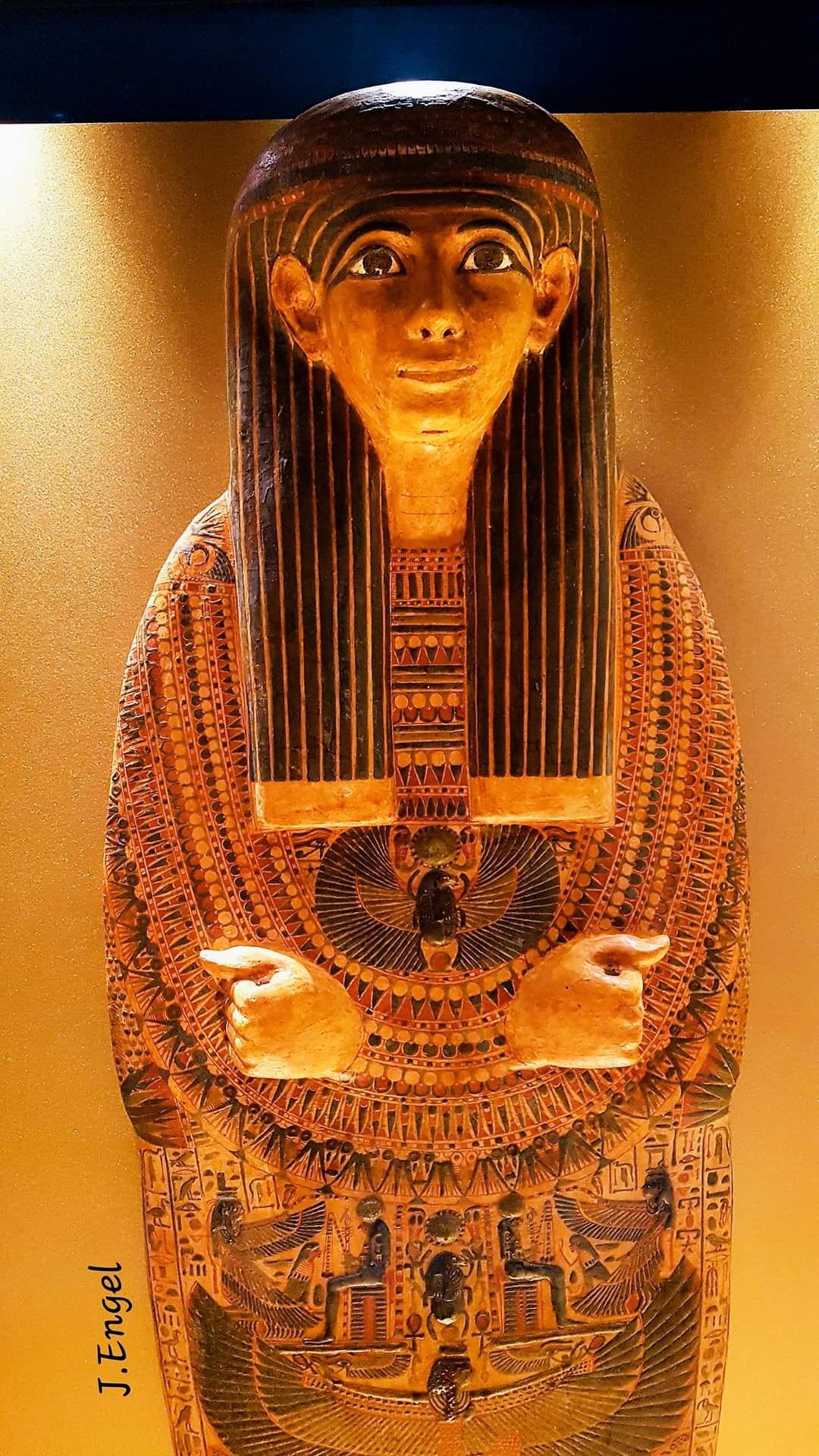
This flat lid lay on the mummy of the Amon priest Amenhotep.
The goddess of heaven Nut, spreading her wings protectively over the dead. (Click the picture open to see her)
Nut also helps the dead to be reborn: he is considered her own son Osiris.
Shelf cover; wood;
Thebes;
Third Intermediate Period, 21st Dynasty (1076-944 BC)
RMO Leiden Holland
By Jacqueline Engel
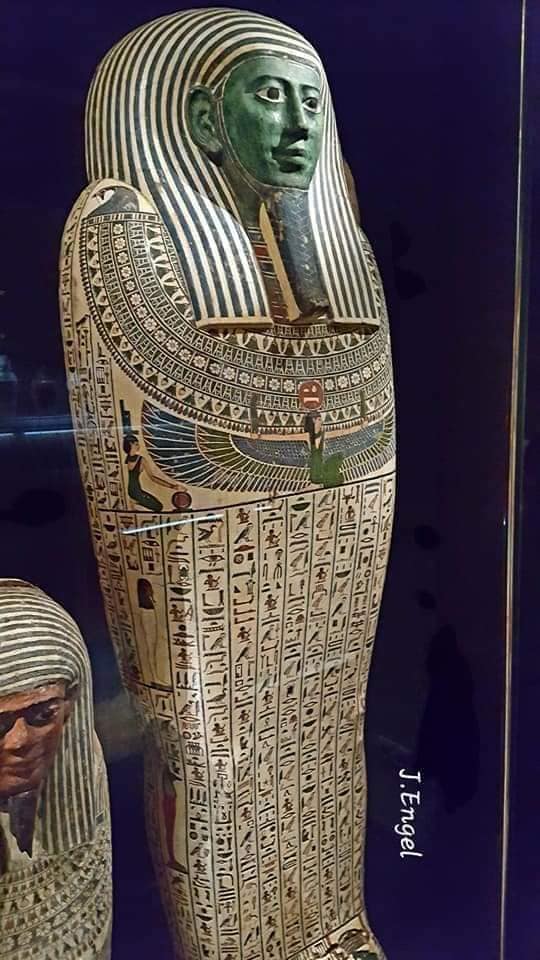
The mummy box of Peftjaoeneith is one of the most beautiful in the collection of the National Museum of Antiquities.
The box is made of unusually thick and heavy wood and is beautifully painted in many colors.
In wood-poor Egypt, this coffin will have cost a fortune.
But Peftjaoeneith was also someone with an important function: inspector of the temple domains.
The lid shows various gods figures and texts from the death book.
On the inside of the lid is the sky goddess Noet, with a black body strewn with stars. On the side are pictures of the twelve hours of day and night.
Many images and signs on mummy boxes refer to the resurrection after death.
For example, Peftjaoeneith is depicted with a green face, the color that symbolizes plant growth and new life. The wig and the beard also refer to the fact that the deceased, like the god Osiris, has already conquered death.


Around the shoulders of the coffin is a beautiful flower collar, with many well-kept details.
An important element in these types of collars on mummy boxes is the lotus flower, also a sign of resurrection.




 LA CIVILTA' EGIZIA