Pictures

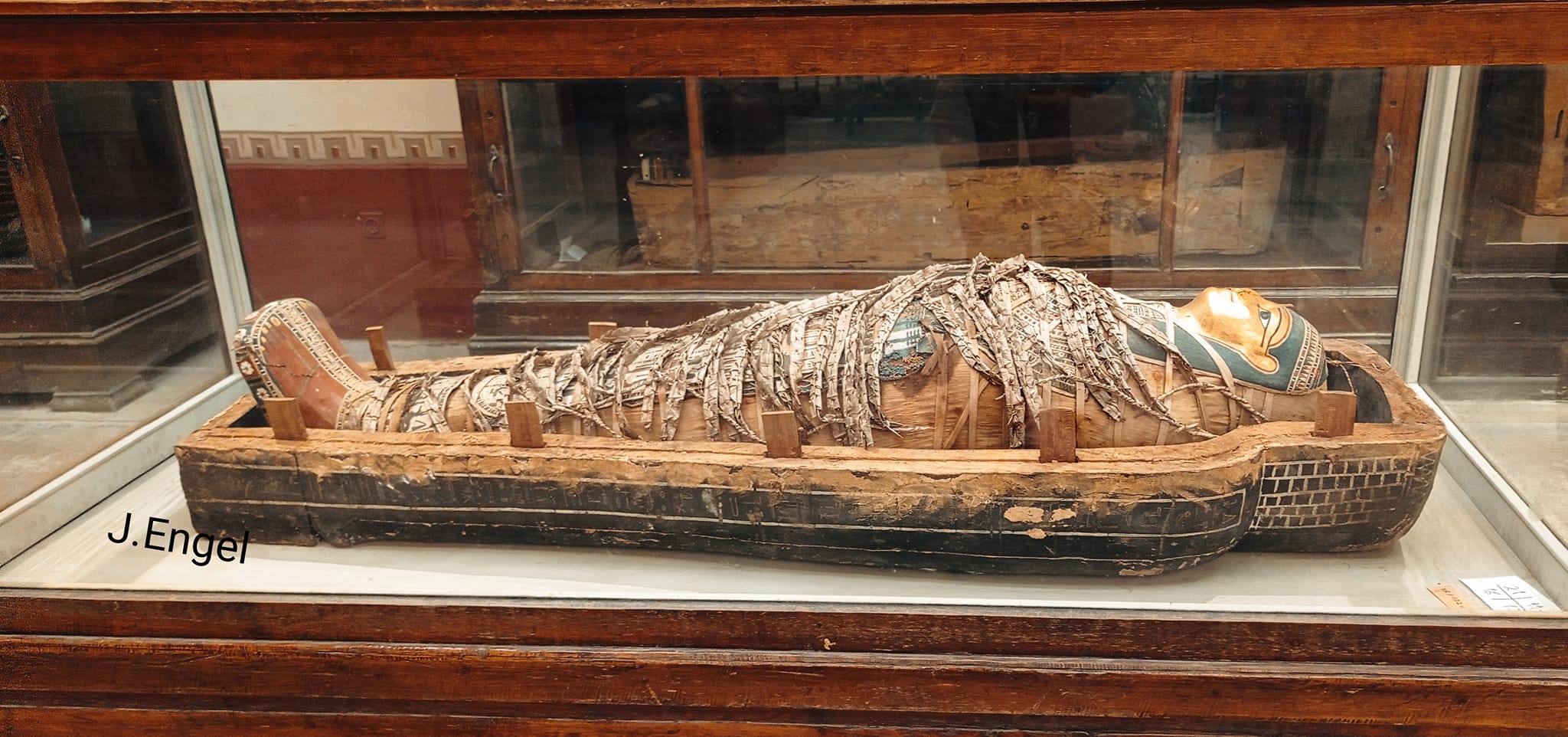
Queen Ahmose-Merytamun

By Jacqueline Engel

The Discovery of the Tomb of Queen Ahmose-Merytamun (TT 358)

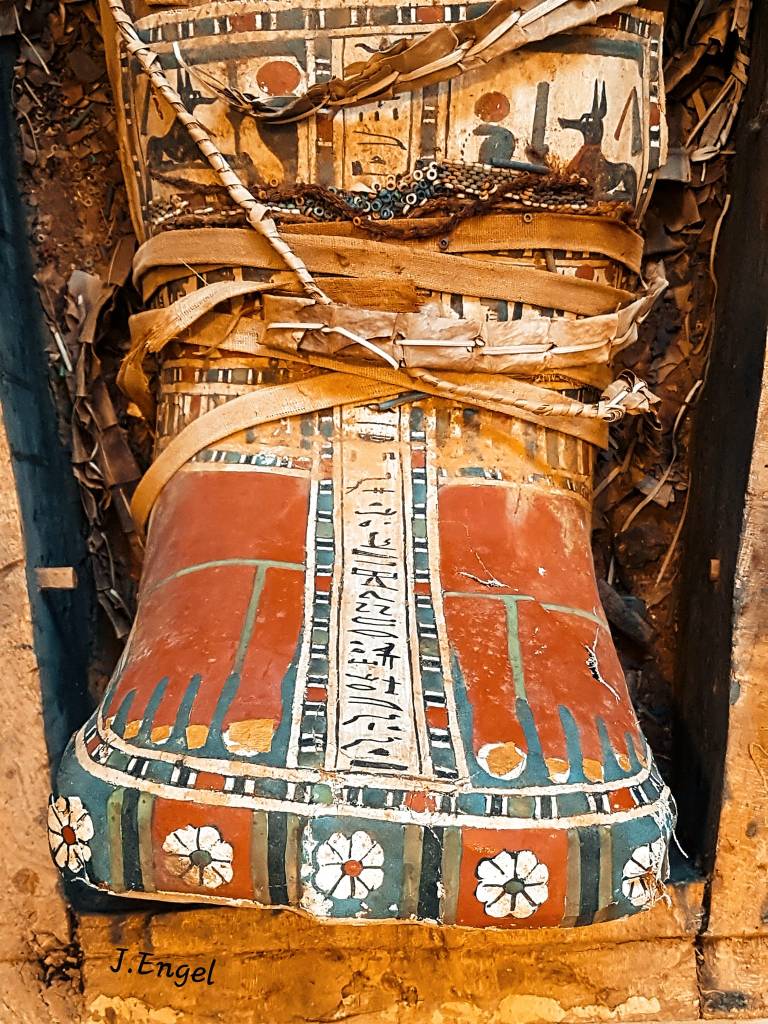
Ahmose-Merytaman (Ahmose-Beloved-of-Amun”) was the sister and queen of Amunhotep (about 1525-1504 BC).

Her tomb, cut in the bedrock at Deir el-Bahari on the west bank at Luxor, was discovered by the American archaeologist Herbert Winlock in 1929.

Fifty years after Ahmose-Merytaman’s burial, part of the temple of Hatshepsat was built over the entrance to her tomb. Even so, robbers found it and looted her burial.

In the 21st Dynasty (about 1050 BC), priests restored her coffins and mummy, leaving an offering of flowers at the foot of the coffin when they finished their work. At about the same time, another woman was buried elsewhere in the tomb. Ahmose-Merytaman originally had three coffins. The outermost one was broken up by robbers. The middle is on display here, while the inner coffin, which is about 60% the size, is now in the National Museum of Egyptian Civilization.

Egyptian Museum Caïro
Back to Jacqueline’s pictures

Pictures

Inner coffin of a mummy

By Jacqueline Engel

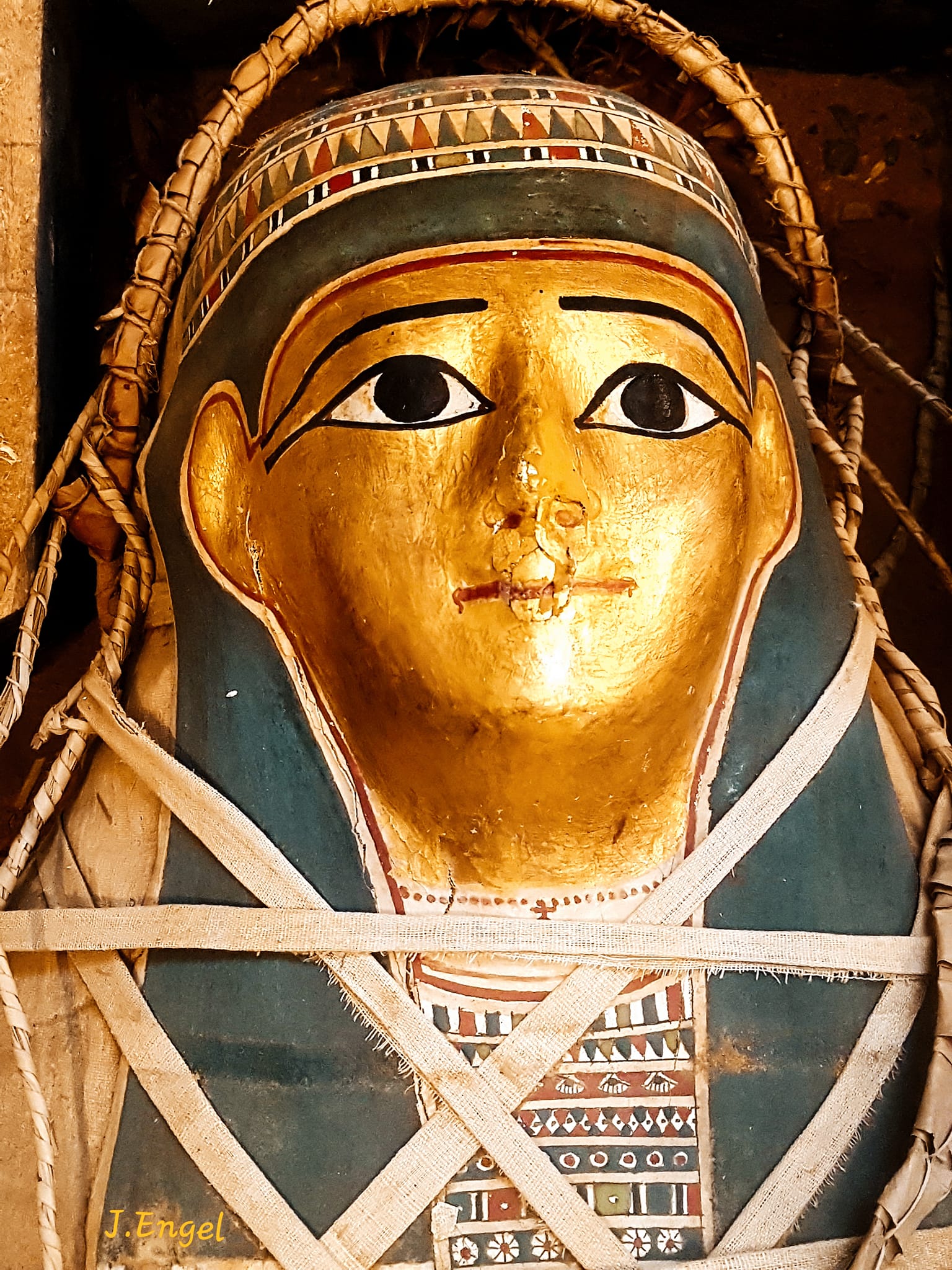
Inner coffin of a mummy.


With mummy mask, decorated and wrapped in with linen, strings made of folded leaves and faience beads.

The innermost coffin had a depiction of the dead so their soul would know what body to return to.

Egyptian Museum Caïro.

Back to Jacqueline’s pictures

Pictures

Funerary stela of Semerkhet

By Jacqueline Engel

King Semerkhet ruled at the end of the 1st Dynasty as King Den’s successor.
His name means ‘companion of the divine community and is written inside a rectangular frame called a serekh.
This ornamental vignette combines a palace façade with an aerial view of the royal courtyard.
On top of the frame sits the Horus-falcon, the god associated with kingship.

The royal tombs of the 1st and 2nd Dynasties were marked with stone slabs, or stelae, bearing the name of the deceased.
Funerary stelae herald the beginning of a long tradition of marking elite burials and commemorating the deceased.

1 Dynasty (King Semerket), about 28077-2800 BC. Abydos (Umm El Qaab) Schist JE 318

Text and location Egyptian Museum Caïro

Back to Jacqueline’s pictures

Pictures

King Akhenaten with his Wife Kiya (?)

By Jacqueline Engel

Statue of King Akhenaten with his Wife Kiya (?)

Although this statue is unfinished, it is one of the masterpieces of this period.
It depicts King Akhenaten holding his second wife Kiya (?) on his knee.
The king seats on a stool wearing the blue crown (Khepresh), while his wife wears a wig and has her head turned affectionately towards her husband. This statue portrays a moment that was represented only in the Amarna period.

Limestone;
New Kingdom, 18th Dynasty, reign of Akhenaten;
Tell Al-Amarna, Tuthmosis Workshop;
JE.44866.

Egyptian Museum Caïro
Back to Jacqueline’s pictures

Pictures

False door of Ika

By Jacqueline Engel

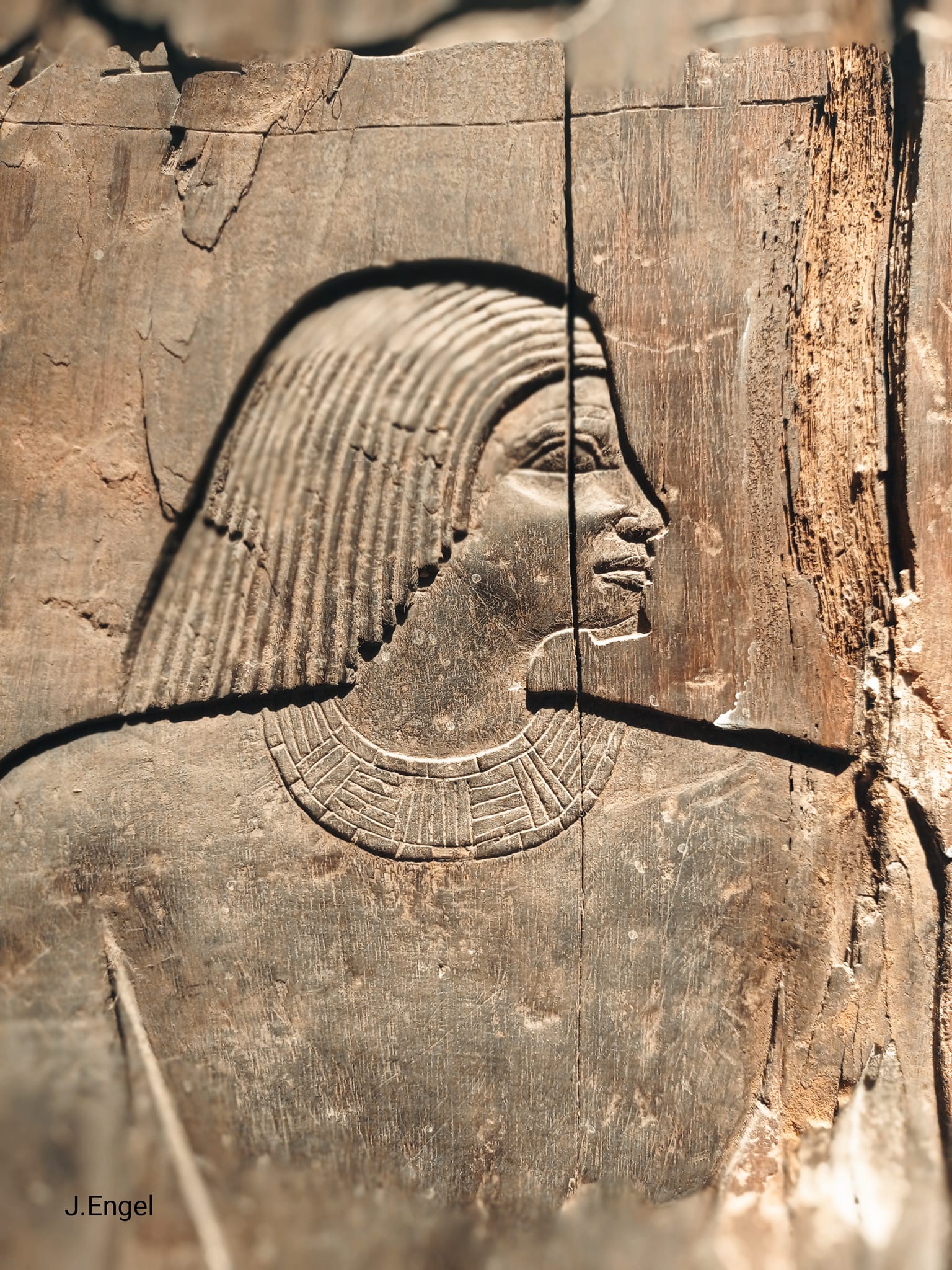
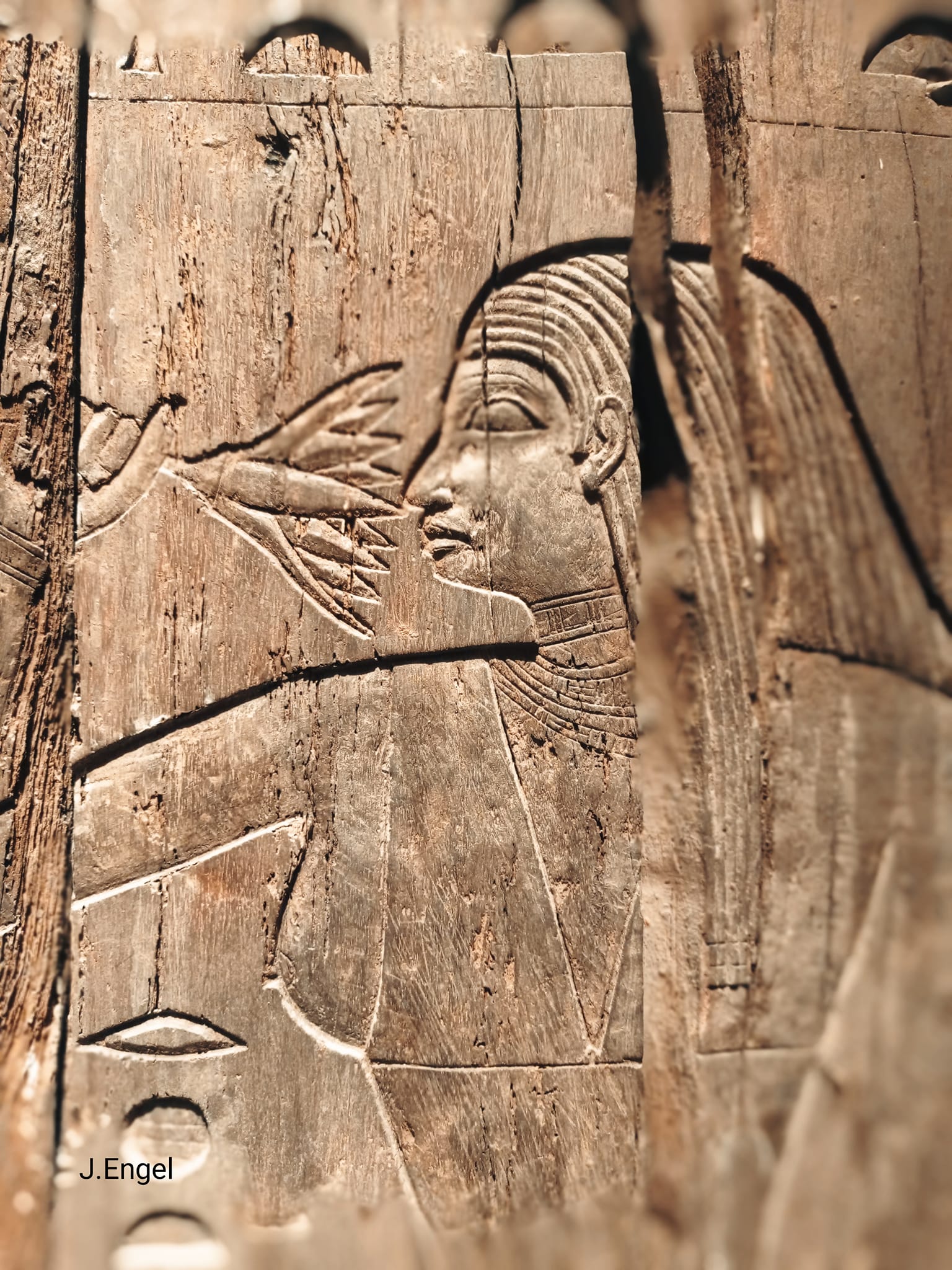
False door of the wab-priest Ika and his wife Iymerit, priestess of Hathor.

This unique false door was found by the Egyptian Antiquities Service at Saqqara in 1939.

It is made of 14 separate pieces of acacia wood that were assembled and fastened together with wooden nails and leather thongs.

The door jambs contain the standing figures of Ika (left) and Iymerit (right), who is smelling a lotusflower, a symbol of rebirth and regeneration.

5th Dynasty (King Unas), about 2353-2323 BC, Saqqara, wood, JE 72201

The Egyptian Museum Caïro
Back to Jacqueline’s pictures

Pictures

Vessel from a high official’s tomb

By Jacqueline Engel

This unusually shaped object comes from the tomb of Sabu, a high official serving the 1st Dynasty kings Den and Adjib.
It might have been used for royal or religious ceremonies, either as part of an offering tray or as support for a vessel or basket.
It may have consisted of two parts, but only one has survived.
1st Dynasty, about 2960-2770 BC,
Saqqara (tomb of Sabu),
schist, JE 71295

(Information of) the Egyptian Museum Caïro

Back to Jacqueline’s pictures

Pictures

Jewelry of Queen Ahhotep

By Jacqueline Engel

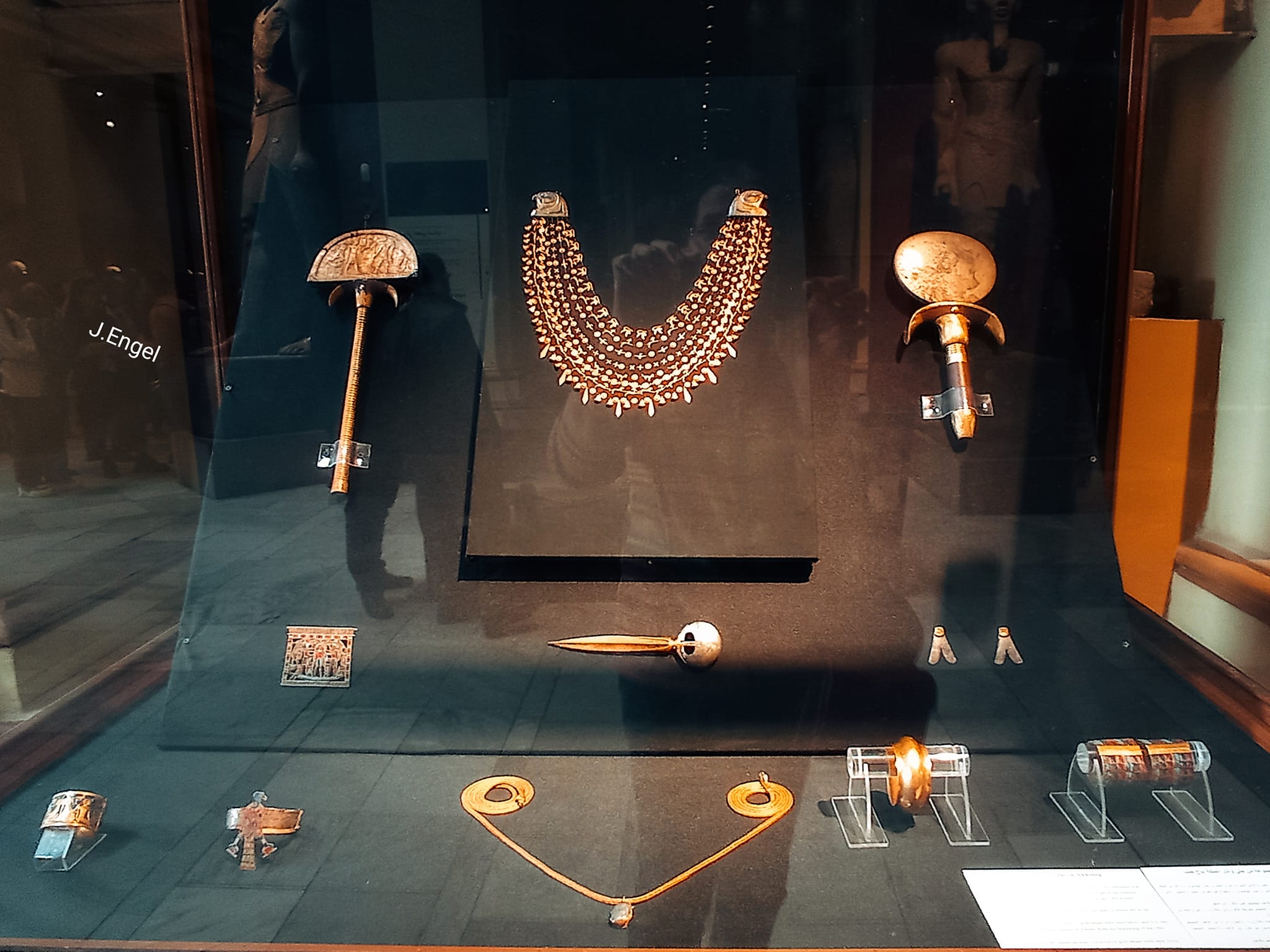
Queen Ahotep is the wife of King Seqennere II, who started the liberation war against the Hyksos, and the mother of both King Komose and King Ahmose, who managed to expel Hyksos from Egypt and establish the 18th dynasty.

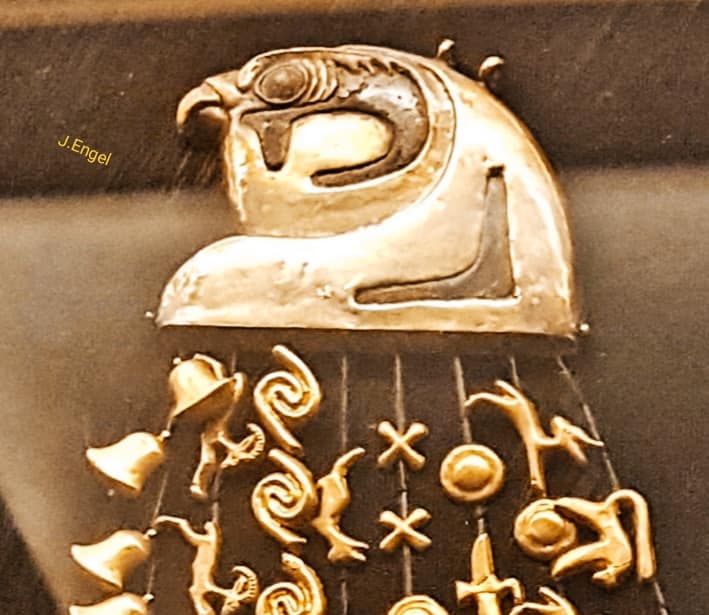
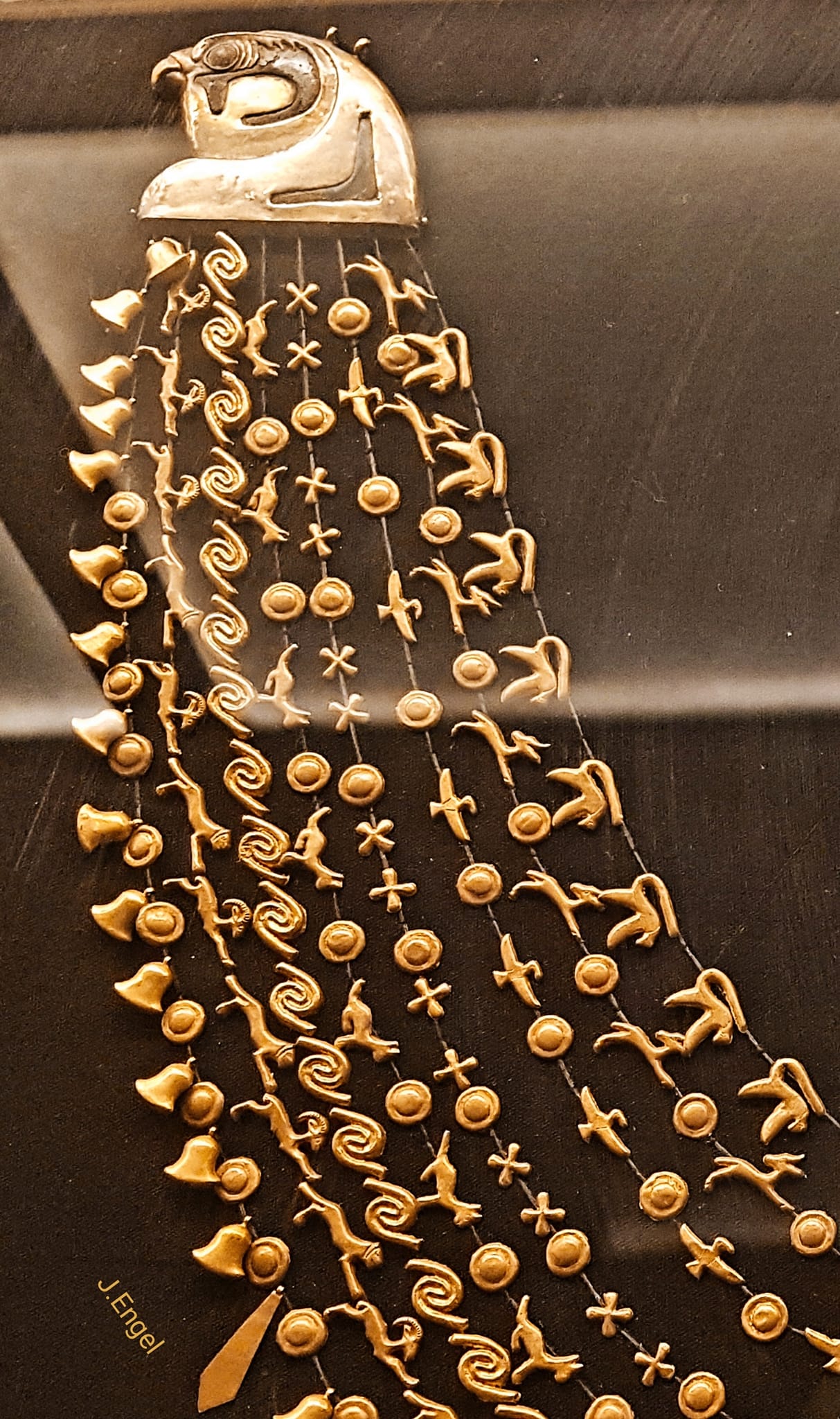
A wide collar of Queen Ahhotep of gold, the ends of which are in the shape of a falcon’s.

A chain of gold with a scarab of gold inlaid with lapis lazuli, and it is one of the most beautiful pieces of jewelry from the beginning of the 18th Dynasty.

Bracelets for the queen include a bracelet of gold inlaid with lapis lazuli, un arm bracelet of gold inlaid with carnelian, lapis lazuli, turquoise and colored glass, bracelets of gold beads and semi-precious stones and a broad gold bracelet.

Minor of gold and bronze and handle of cedar wood inlaid with gold.

A fan handle made of wood covered with gold with scenes of King Seqennere II.

Text and Location Egyptian Museum Caïro

Back to Jacqueline’s pictures

Pictures

Hierakonpolis mask

By Jacqueline Engel

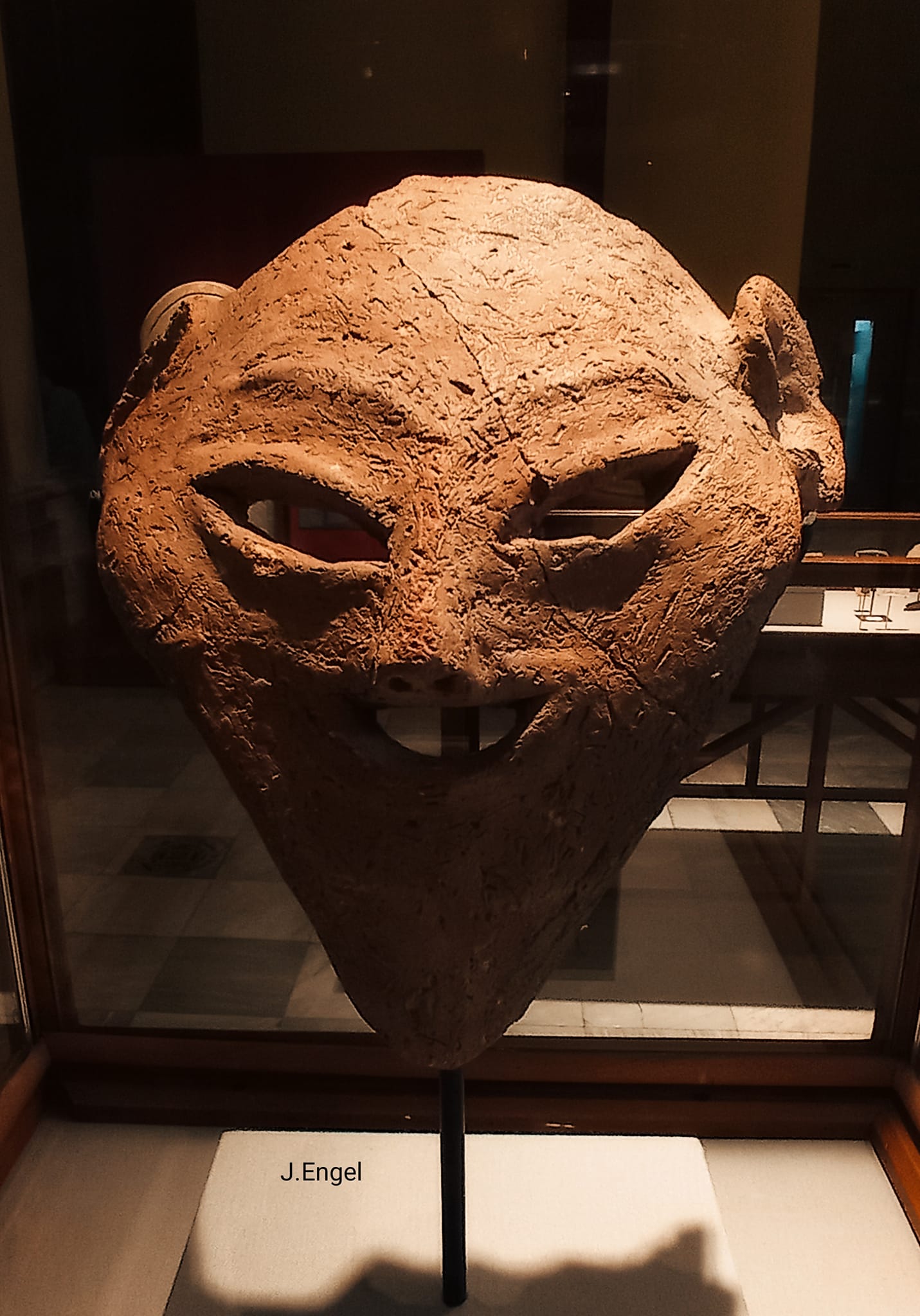
This is Egypt’s earliest known mask.

Made in pottery with the eyes and mouth cut out, it is curved to fit over the head and could be attached behind the ears by passing a string through holes.

It was probably used in funerary rituals – either as a mask for the deceased or to be worn by the person performing the ritual.

Naqada II, about 3650-3300 BC, Hierakonpolis

(Elite Cemetery KH6), pottery, JE 99152

Back to Jacqueline’s pictures

Pictures

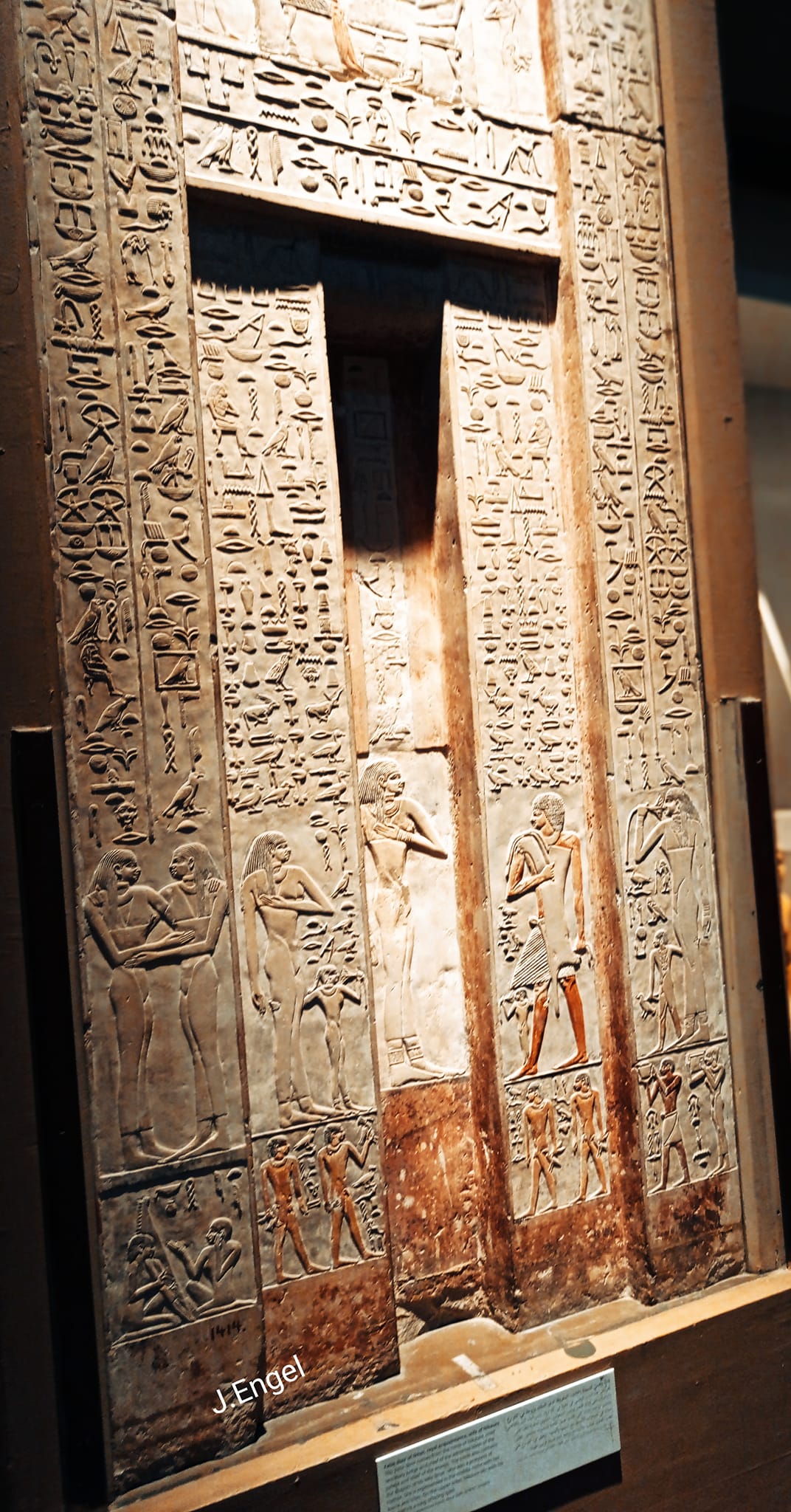
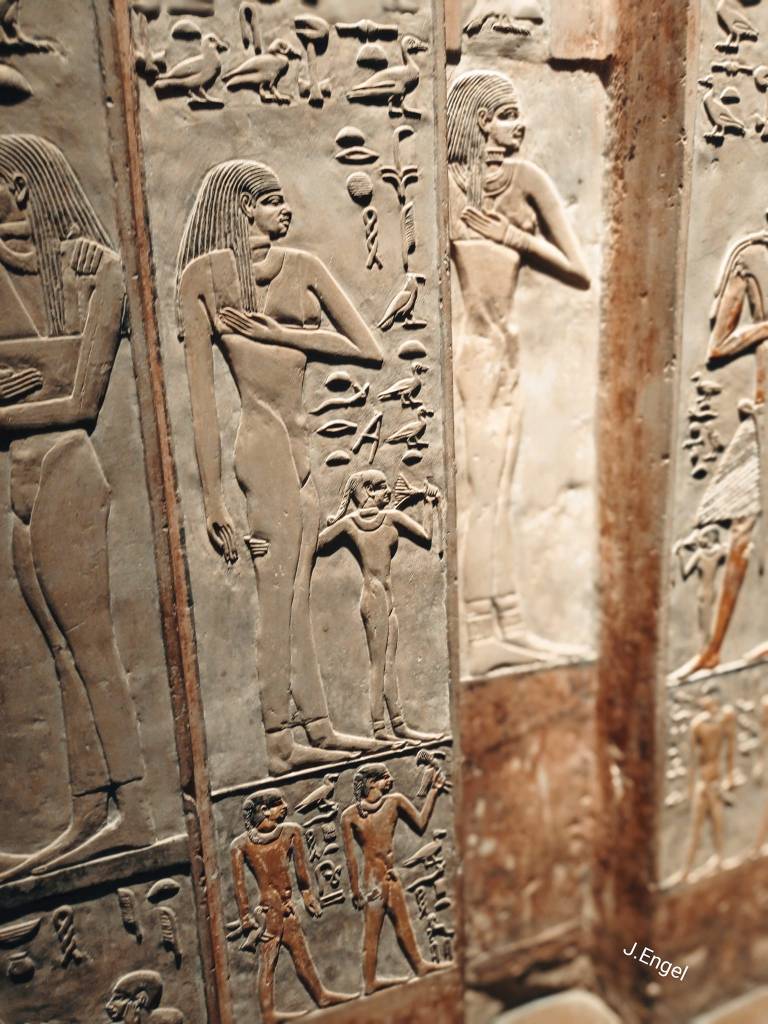
False door of Ikhat

By Jacqueline Engel

False door of Ikhat, royal acquaintance, wife of Nikaure

This false door comes from the tomb of Nikaure, chief secretary judge and chief of the administration of the palace and chief of the envoys.

The tomb also contains the chapels of his wife Ikhat, who was a priestess of Hathor.

She is represented in the middle niche with her name and titles.

5th Dynasty (King Neferirkare Kakai),

about 2446-2438 BC,

Saqqara limestone, CG 1414

Egyptian Museum Caïro.

Back to Jacqueline’s pictures

Pictures

Seated statue of King Neferefre

By Jacqueline Engel

This statue was found broken in several fragments in 1984-85 among the remains of the pyramid temple of the king at Abusir.

The king is represented sitting on a throne and wearing a short wig, but the uraeus cobra, most likely crafted in a different material, is missing.

The falcon-god Horus spreads his wings in a protective gesture behind the king’s head.

5th Dynasty (King Neferefre), about 2431-2420 BC, Abusir, (pyramid complex of King Neferefre, mortuary temple),

limestone, pigment.

Egyptian Museum Caïro

Back to Jacqueline’s pictures