Pictures

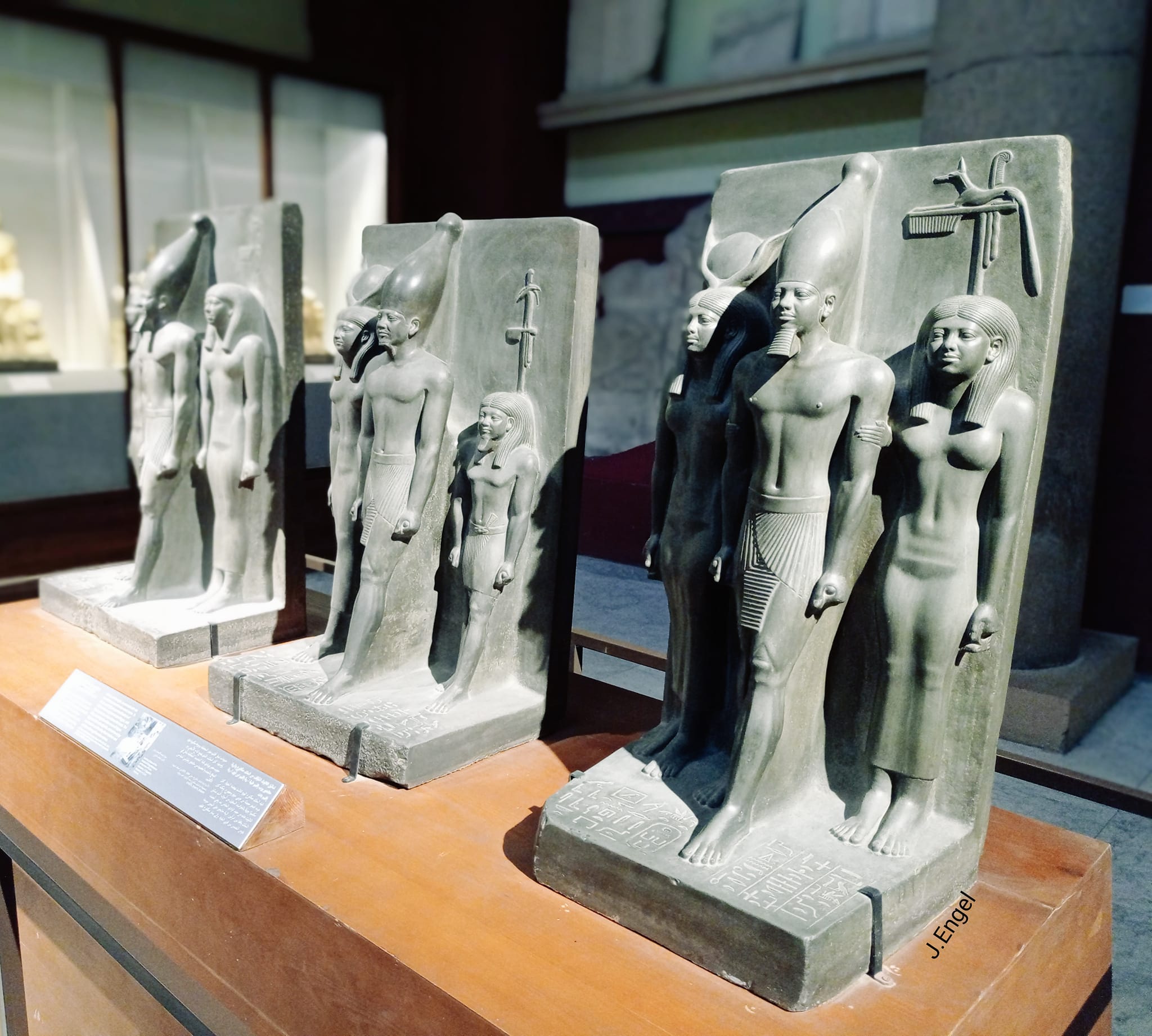
Triads of King Menkaura

By Jacqueline Engel

Triads of King Menkaure, the goddess Hathor and the Theban-nome god/ the Jackal-nome goddess/ the Bat-nome goddess.

King Menkaure built the third pyramid at Giza plateau.

This was smaller than Khufu and Khafre’s pyramids but partly cased with granite, transported all the way from Aswan.

These triad statues come from his valley temple and show the king standing between two female figures.

The goddess Hathor, on his right, is crowned with the sun disc between the two cow’s horns.

Holding hands with Hathor.

To Menkaure’s left are personifications of different nomes (provinces) of Egypt, with their symbols written above the head.

The king, wearing the white crown of Upper Egypt and the shendyt-kilt, wished to enjoy resurrection and fertility from Hathor and endless offerings from the nomes.
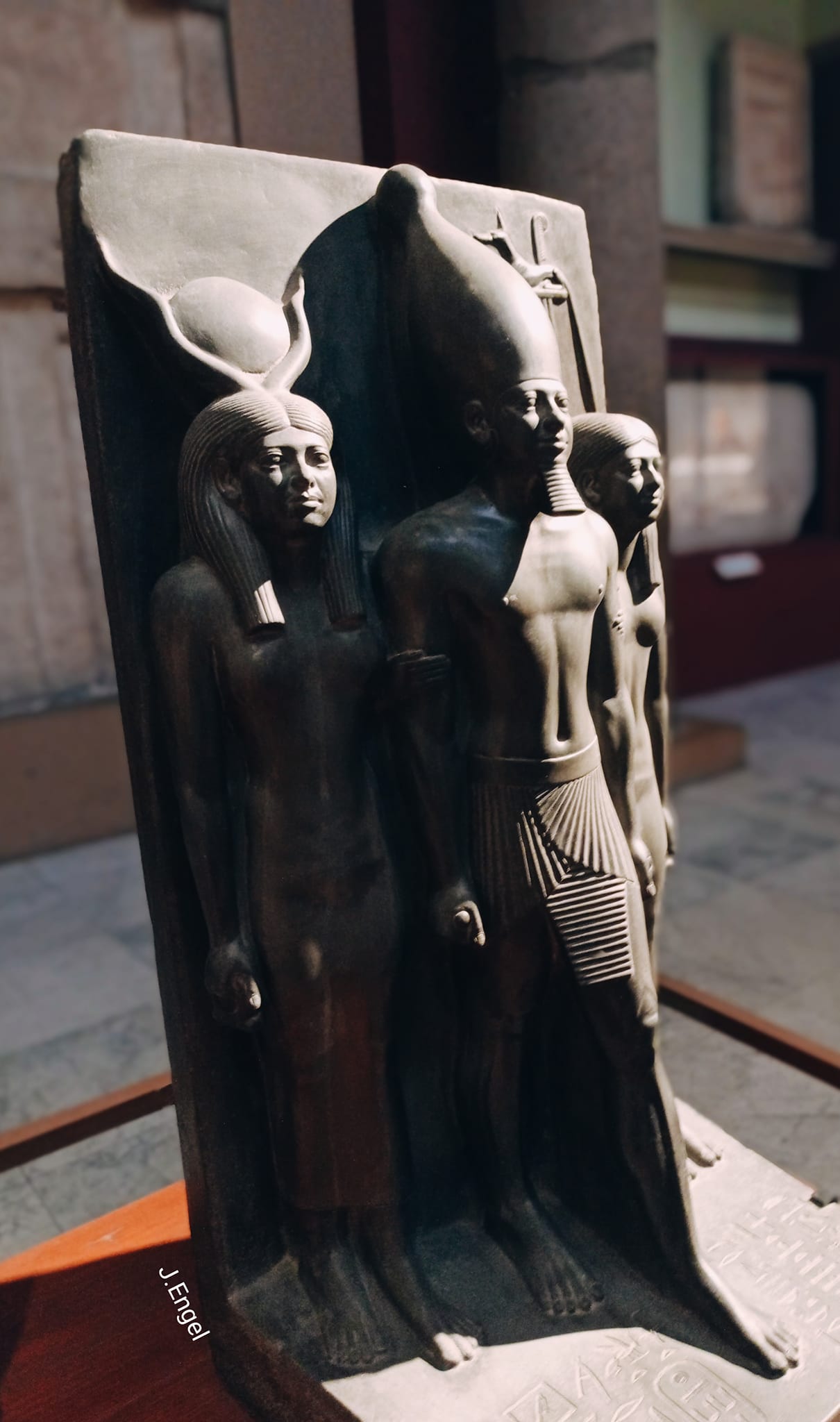
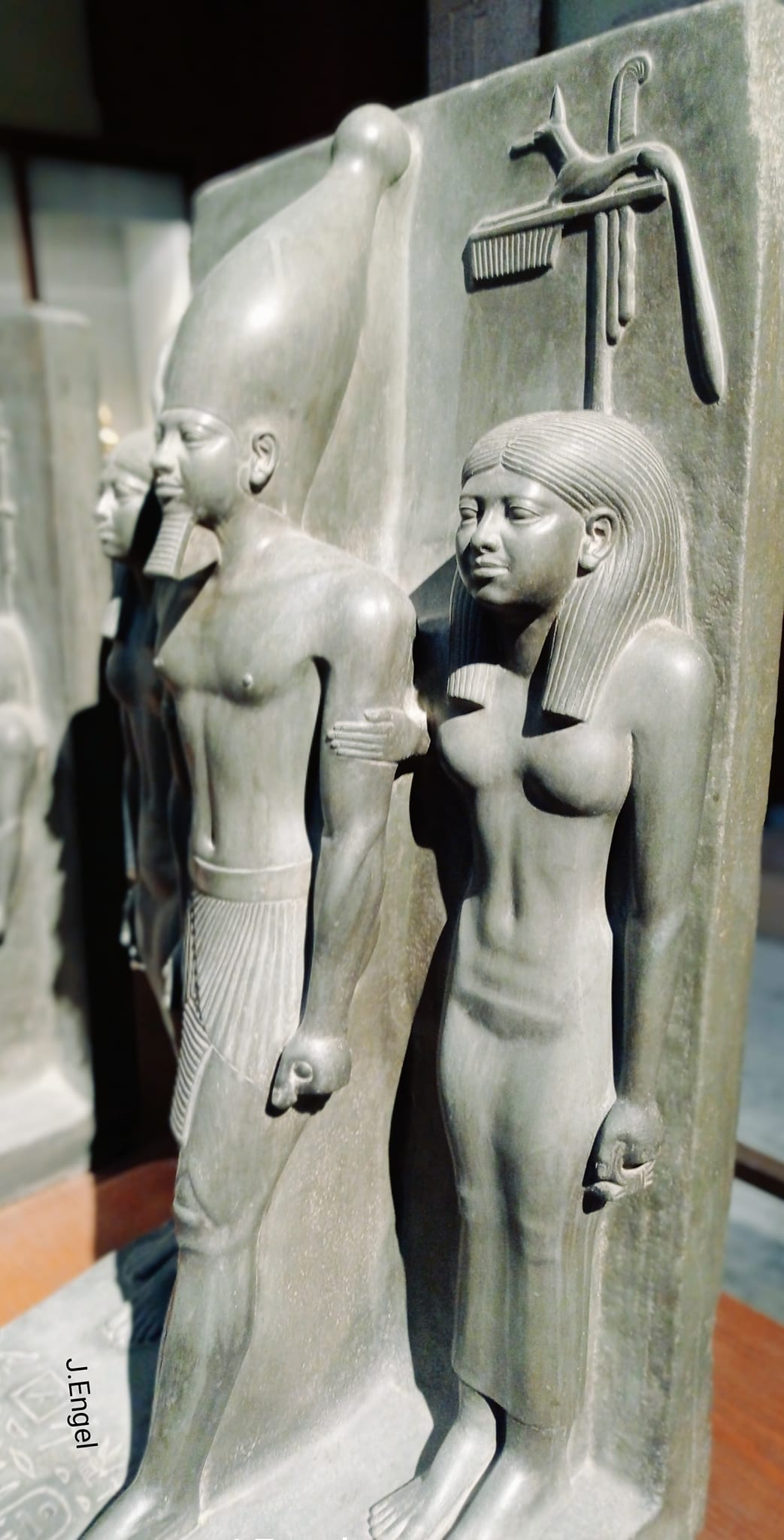
The four triads of Menkaure when discovered at Giza in 1908. Photograph by George Andrew Reisner. Harvard University-Boston Museum of Fine Arts Expedition.
The fourth triad is in Boston.

4th Dynasty (King Menkaure, about 2490-2472 BC, Giza (pyramid complex of Merikaure, valley temple) grywacke.

(Text Egyptian Museum Caïro)

Egyptian Museum Caïro

Back to Jacqueline’s pictures

Pictures

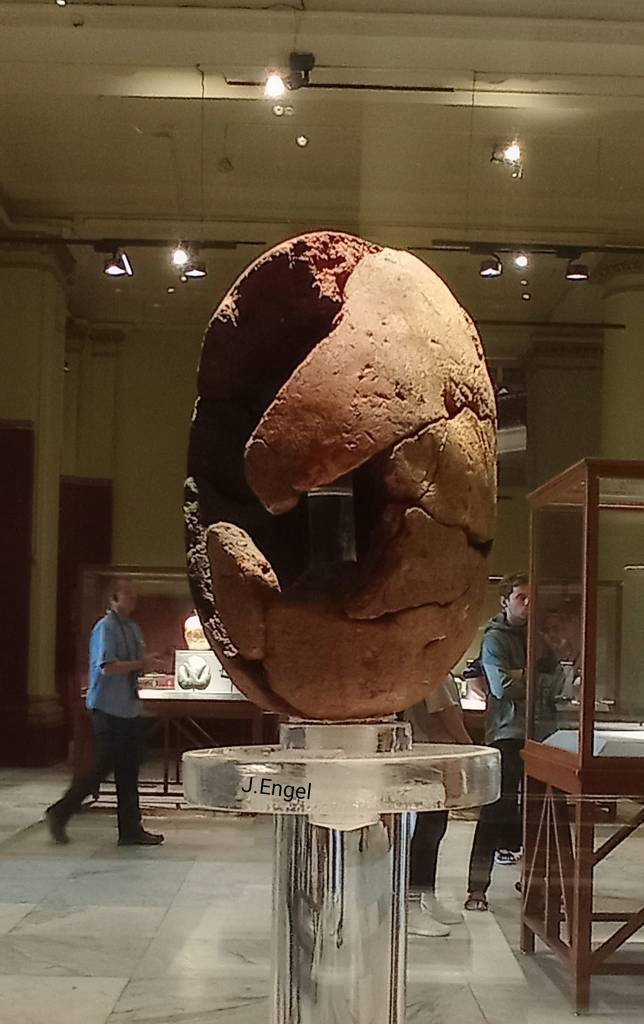
Merimde head

By Jacqueline Engel

This clay head is one of the earliest known representations of a human from ancient Egypt. Traces of colour show that it was once painted.

The holes on the chin and on the top of the head may have originally held hair and a beard.

The hole in the bottom probably attached the head to a piece of wood so that it could be used in rituals.

The head comes from Merimde Beni Salama, the earliest human settlement in Egypt.

It is one of the few Neolithic sites known in the Egyptian Delta, dating to around 5500-4000 BC.

Neolithic.

Merimde Beni Salama,

painted pottery JE97472

Egyptian Museum Caïro

Back to Jacqueline’s pictures

Pictures

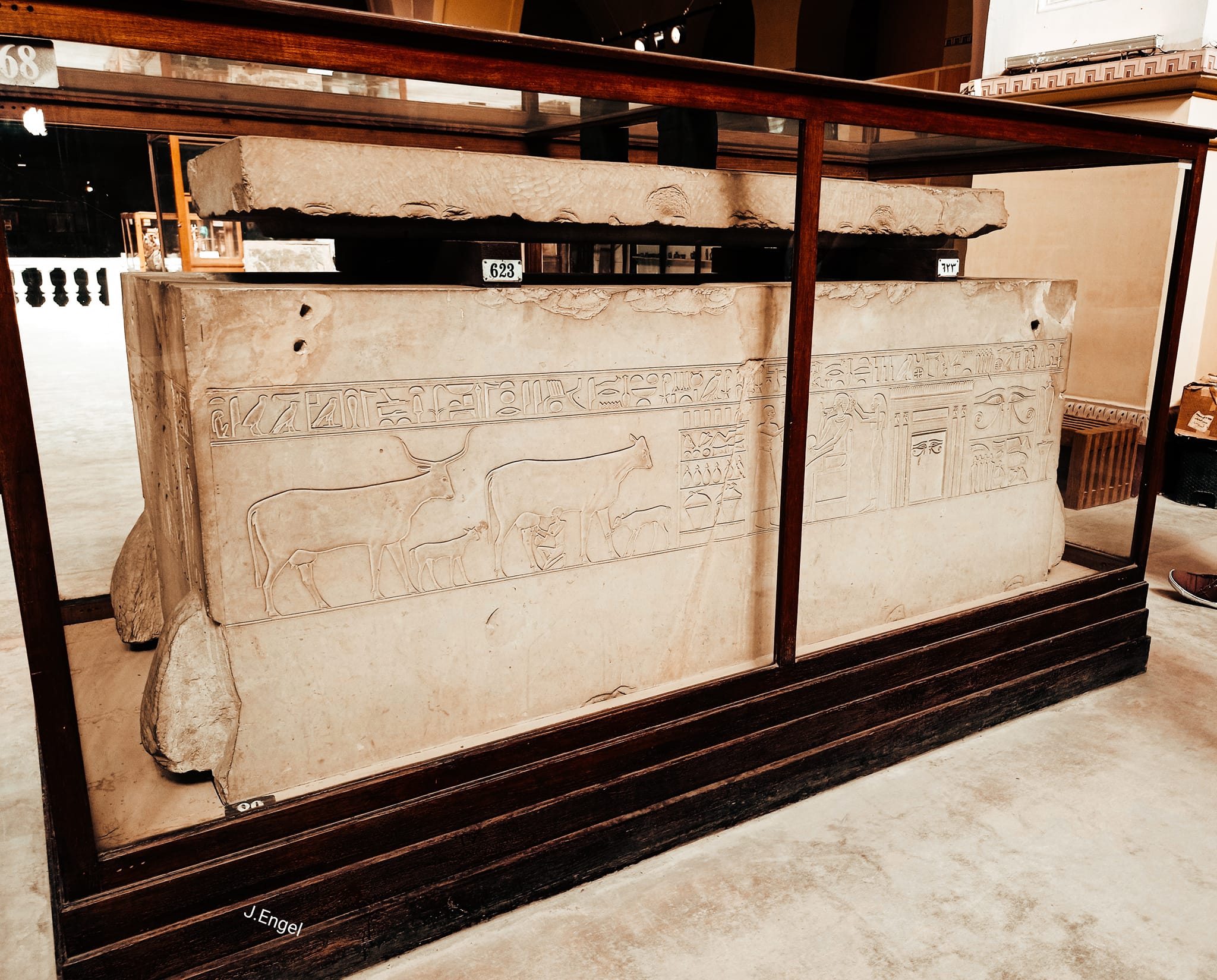
Sarcophagus of Queen Kawit, Wife of Mentuhotep II

By Jacqueline Engel

Limestone
Middle Kingdom,11th Dynasty (around 2050 BC)
Egyptian Museum Caïro
Dimensions:
Height: 119 cm
Length: 262 cm
Width: 119 cm

It is made of colored limestone and is 119 cm in height with a length of 262 cm.

It was initially discovered in Thebes in Deir el-Bahari through excavations of the Metropolitan Museum in 1920.

Sarcophagus of Queen Kawit (detail)
Egyptian Museum Cairo+

The representations around the sarcophagus of Kawit were meant to perpetuate activities of a princess of the palace.
Her sarcophagus was one of the most noteworthy in terms of the bas-relief sculpture in the Theban court. Here we find a new provincial style liberated from the constrains of register divisions.
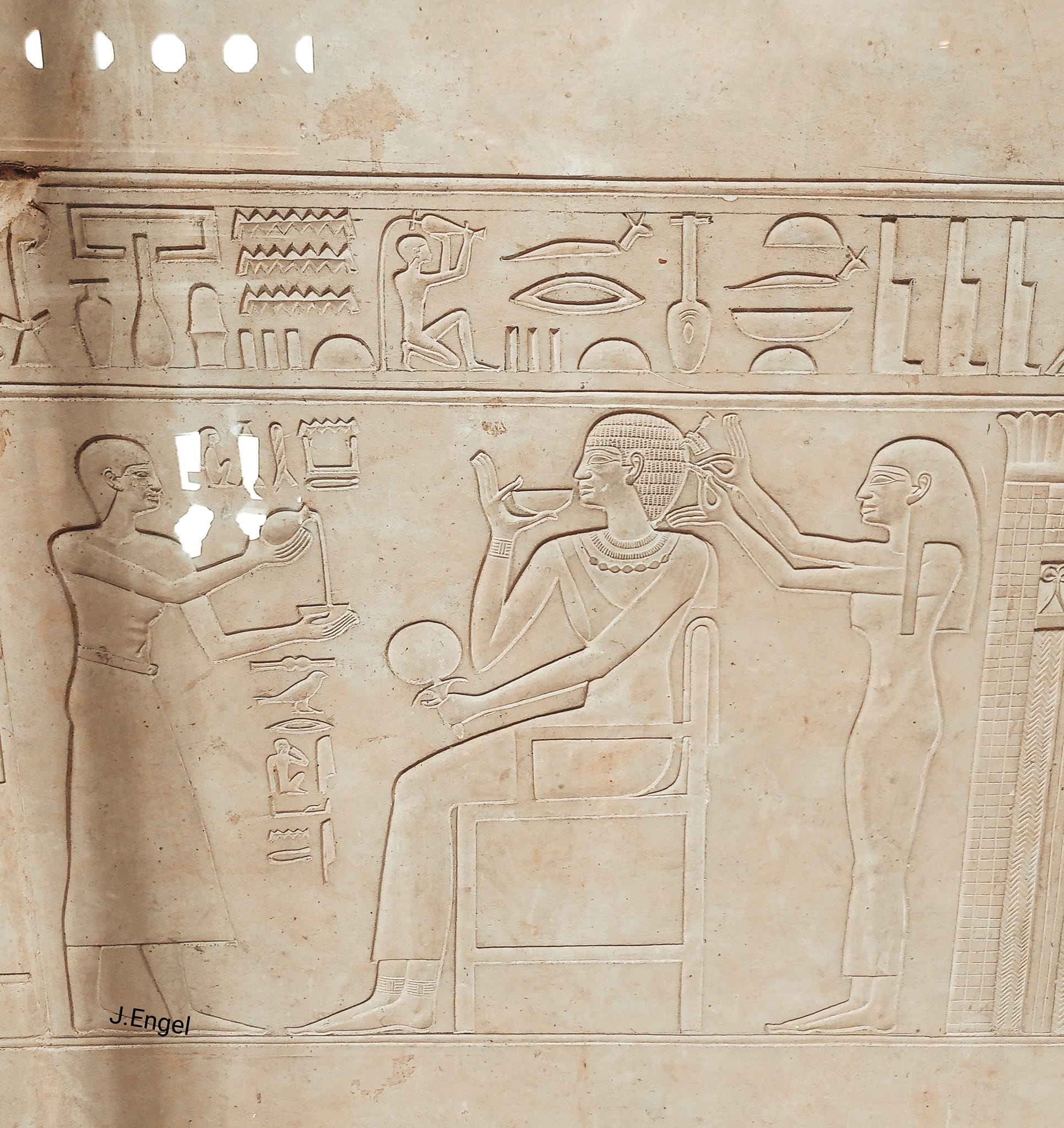
The elongated bodies and the coarse facial features reflect the Theban ideal of feminine beauty.

Kawit is busy with her toilet, seated on a high back armchair drinking milk with one hand while the other holds a mirror. One of her servants arranges the locks of her mistress’s wig with dainty fingers.

On the other side, Kawit is sniffing a bouquet of lotus blossom, while her servant offers her an unguent vessel and fans her.

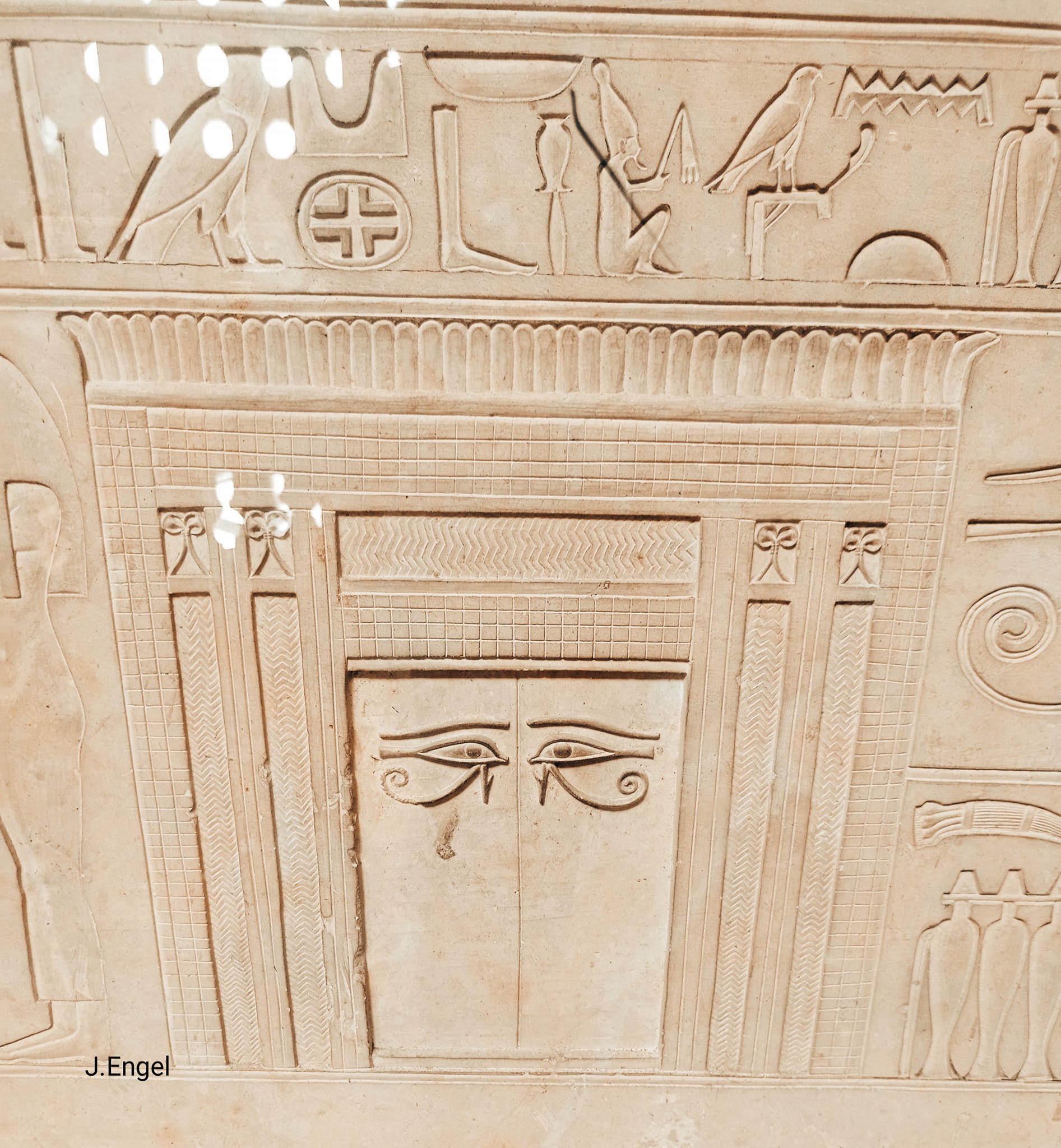
On the side of the mummy’s head there is a palace facade with the central doors decorated with udjat eyes to permit the deceased to communicate with the world of living.

A cow whose calf remains bound to her foreleg, provides milk. A tear flows from its eye as if the cow suffered pain when losing milk destined to her calf.

Back to Jacqueline’s pictures

Pictures

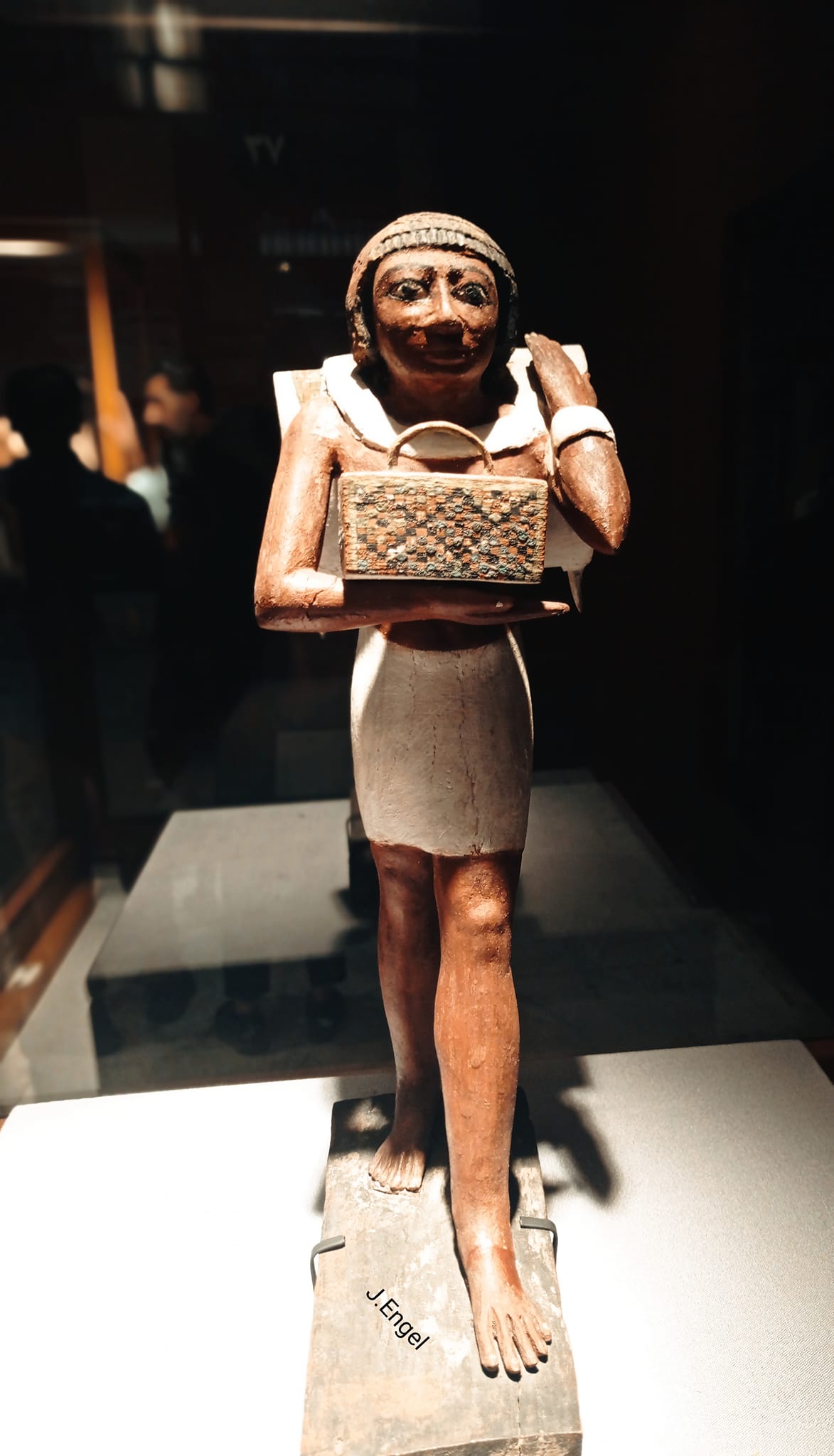
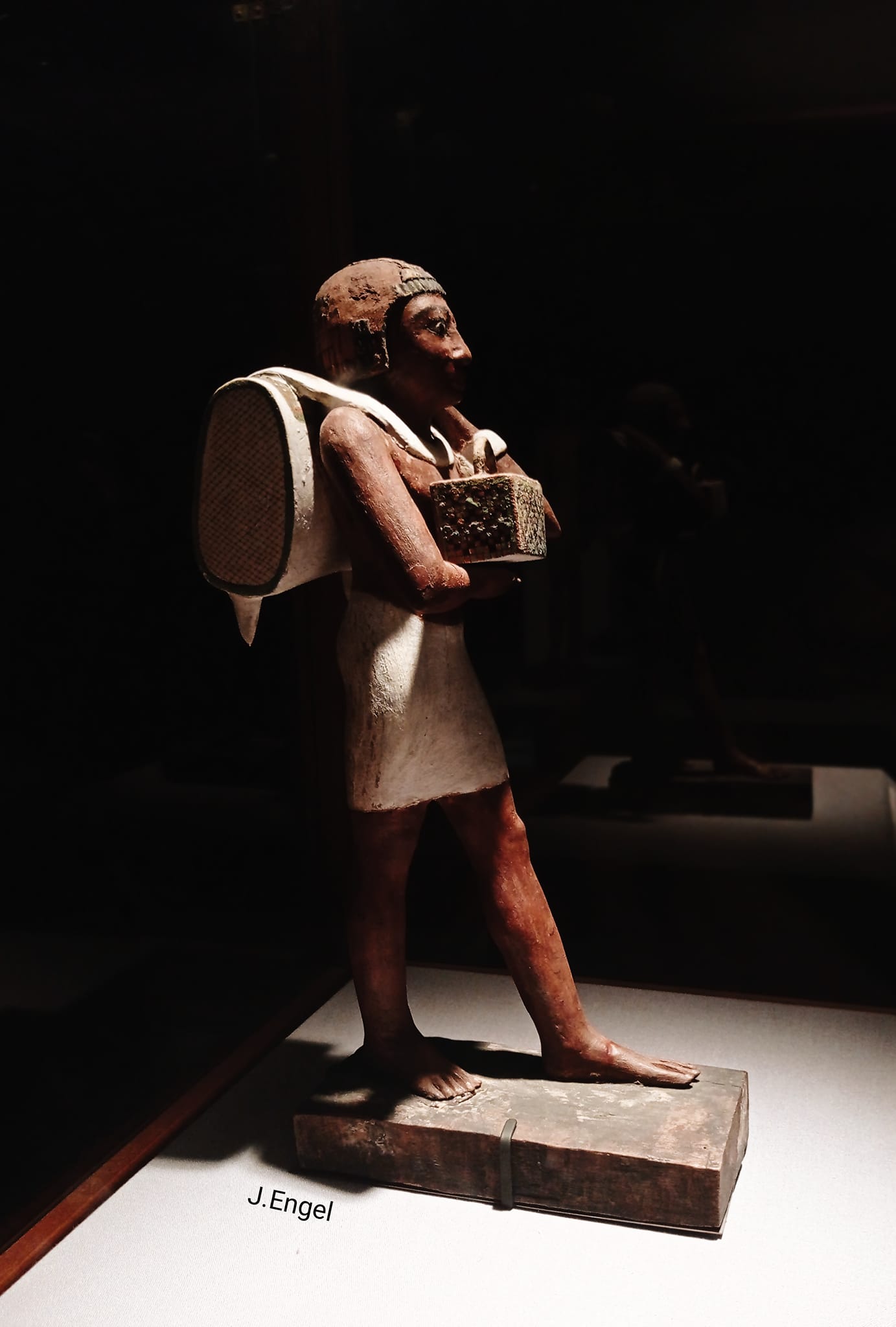
Servant statue of Niankhpepikem

By Jacqueline Engel

Niankhpepikem was overseer of Upper Egypt, chancellor of the king of Lower Egypt, overseer of prophets.

Here he is shown carrying a backpack, the earliest representation of this type of bag.

In his tomb at Meir, in a hole in the burial chamber, were hidden the largest number of servant figures so far found in an Old Kingdom tomb.

6th Dynasty (King Pepi I Meryre),

about 2289-2255 BC,

Meir, wood, pigment, JE 30810

Egyptian Museum Caïro

Back to Jacqueline’s pictures

Pictures

Funerary stela of Meretneith

By Jacqueline Engel

Meretneith may have been the first ruling queen in Egyptian history.

This stela was found in her tomb at Abydos, located close to the tombs of King Djet, probably her husband, and King Den, perhaps her son.

Her name means ‘Beloved of (the goddess) Neith’ and is written with a hieroglyph depicting crossed arrows, the emblem of the goddess Neith, and the hoe-sign, meaning ‘beloved of..

When Meretneith’s tomb was built in the middle of the 1st Dynasty, the cemetery of Umm el-Qaab at Abydos had already been in use for over 1000 years.

By marking the tomb with a monumental stela, Meretneith was following well- established traditions.

1st Dynasty (King Djet, about 2880-2873 BC. Abydos (Umm l-Qaab limestone, JE 34550

Egyptian Museum Caïro
Back to Jacqueline’s pictures

Pictures

Fragment of the Libyan palette

By Jacqueline Engel

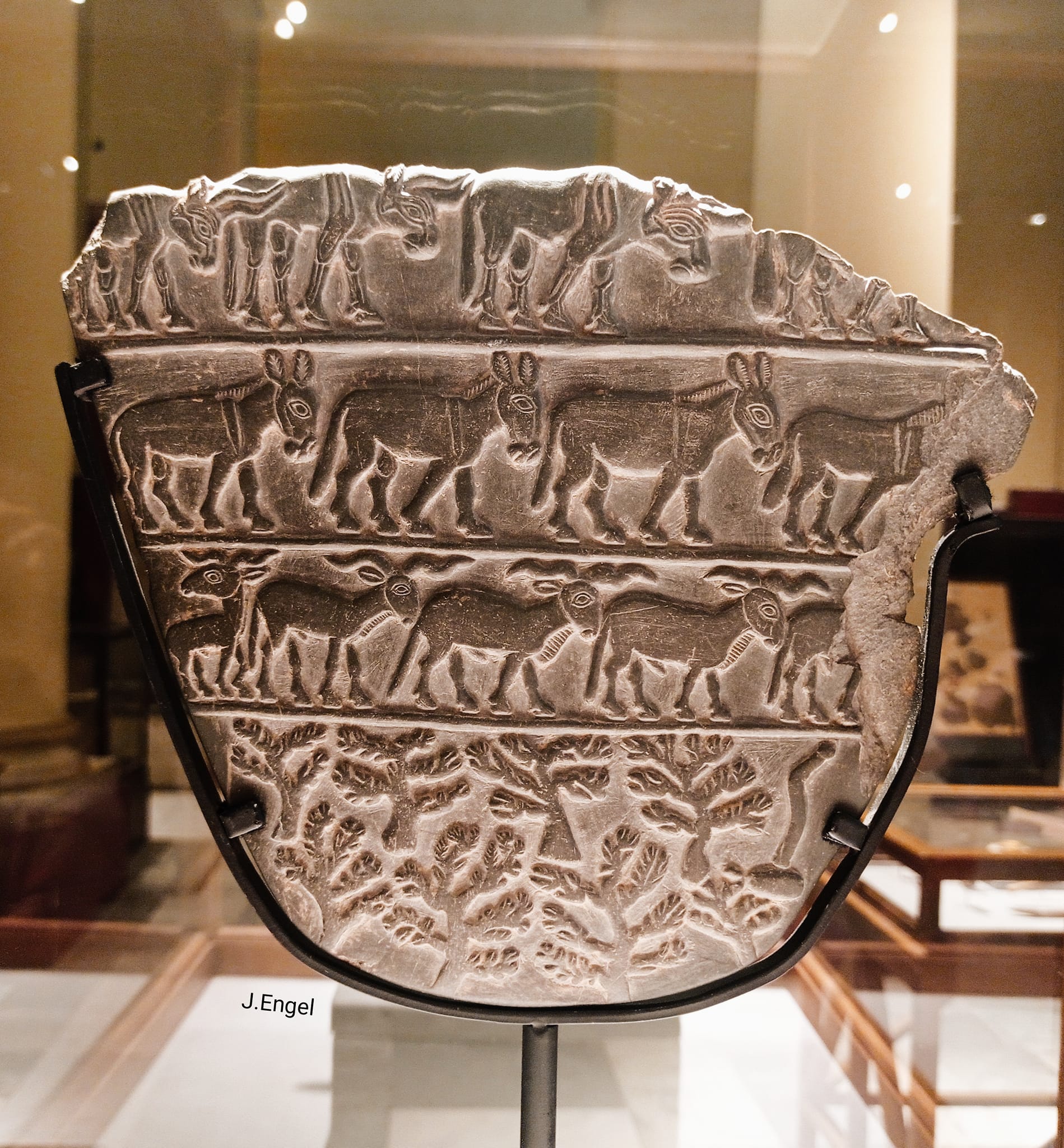
This is a fragment of a much larger ceremonial palette celebrating the payment of tributes by the peoples of an area in modern Libya.

On this side, three registers of domestic animals are represented above a row of olive trees.

The ancient Libyans were famous for high quality olive oil.

The hieroglyph of the throwstick on an oval means ‘[ancient] Libya’ or ‘Western Delta’ and ‘region’, ‘place’ or ‘island.

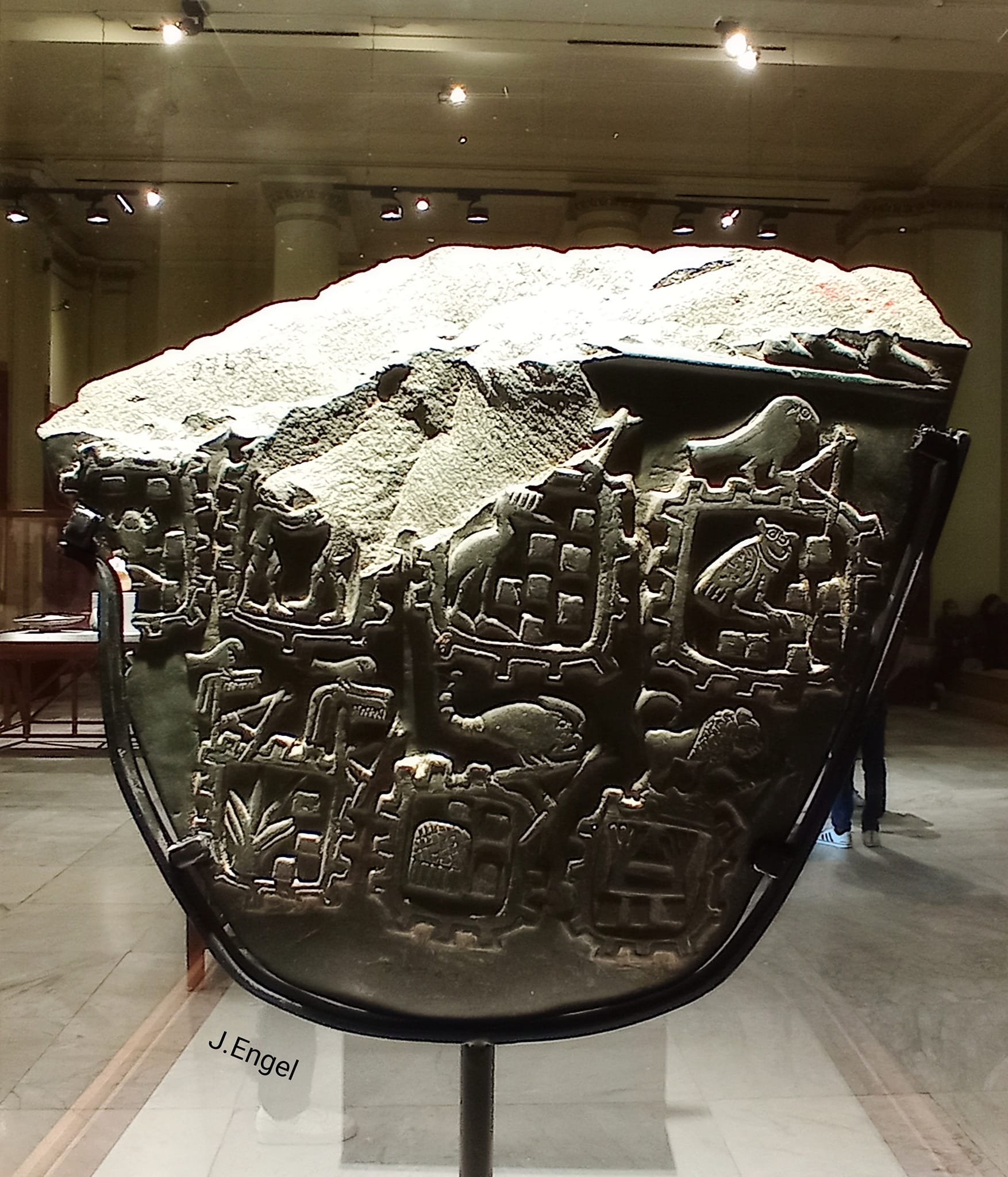
The opposite side of the Libyan Palette shows the feet of some persons above a register line. Under the register, seven fortified towns are depicted, with the name of each town written within the wall. Above each town, an animal grasps its wall with the mr (hoe) hieroglyph.

Günter Dreyer has interpreted this scene as a scene of destruction and the animals, or animal standards, as royal names.

However, other scholars have suggested that the animals represent royal armies or symbols.

Another completely different interpretation is that the scene represents the foundation of these cities.

Naqada III, about 3300-2960 BC, Abydos, schist, JE 27434

Egyptian Museum Caïro
Back to Jacqueline’s pictures

Pictures

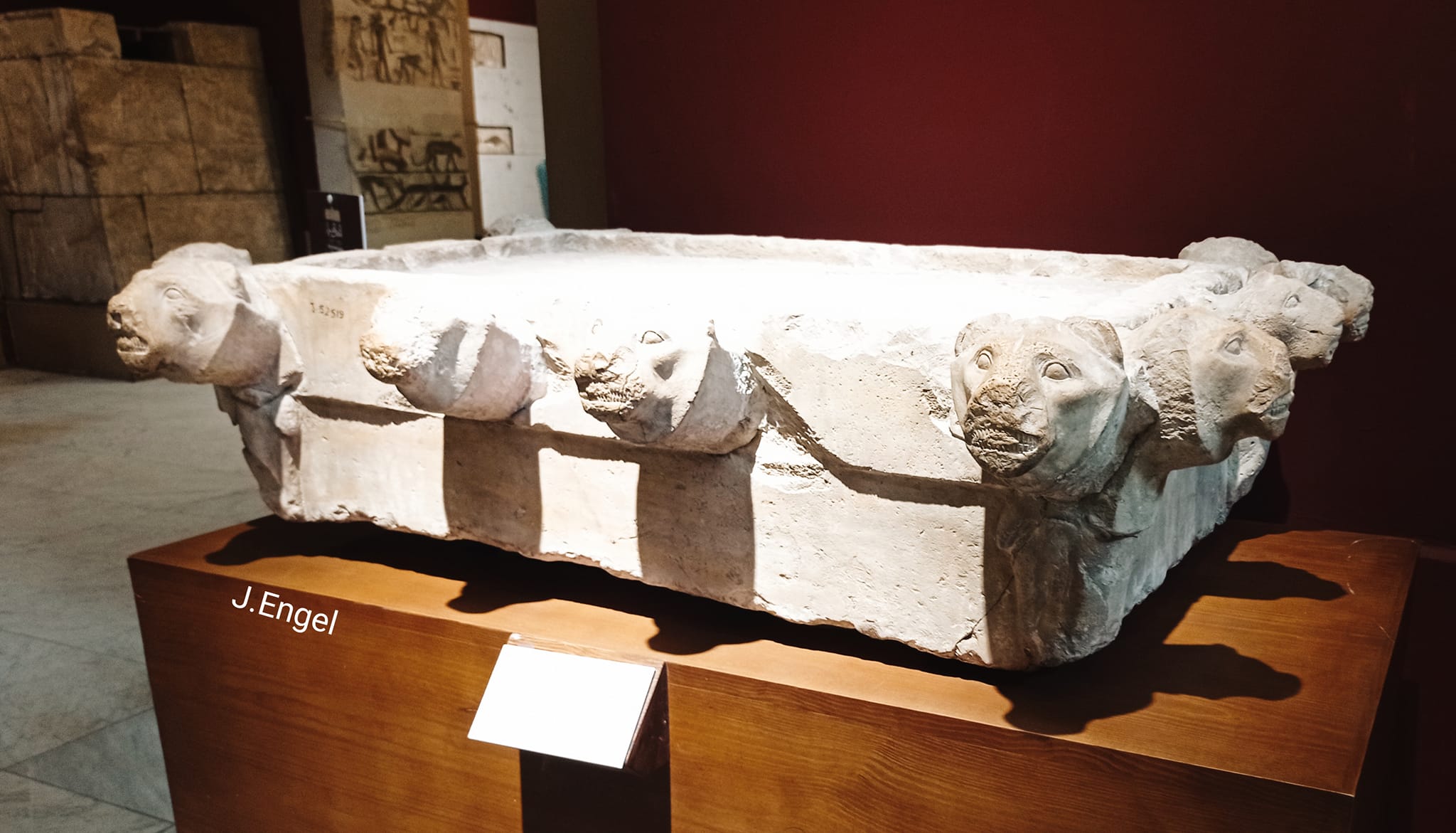
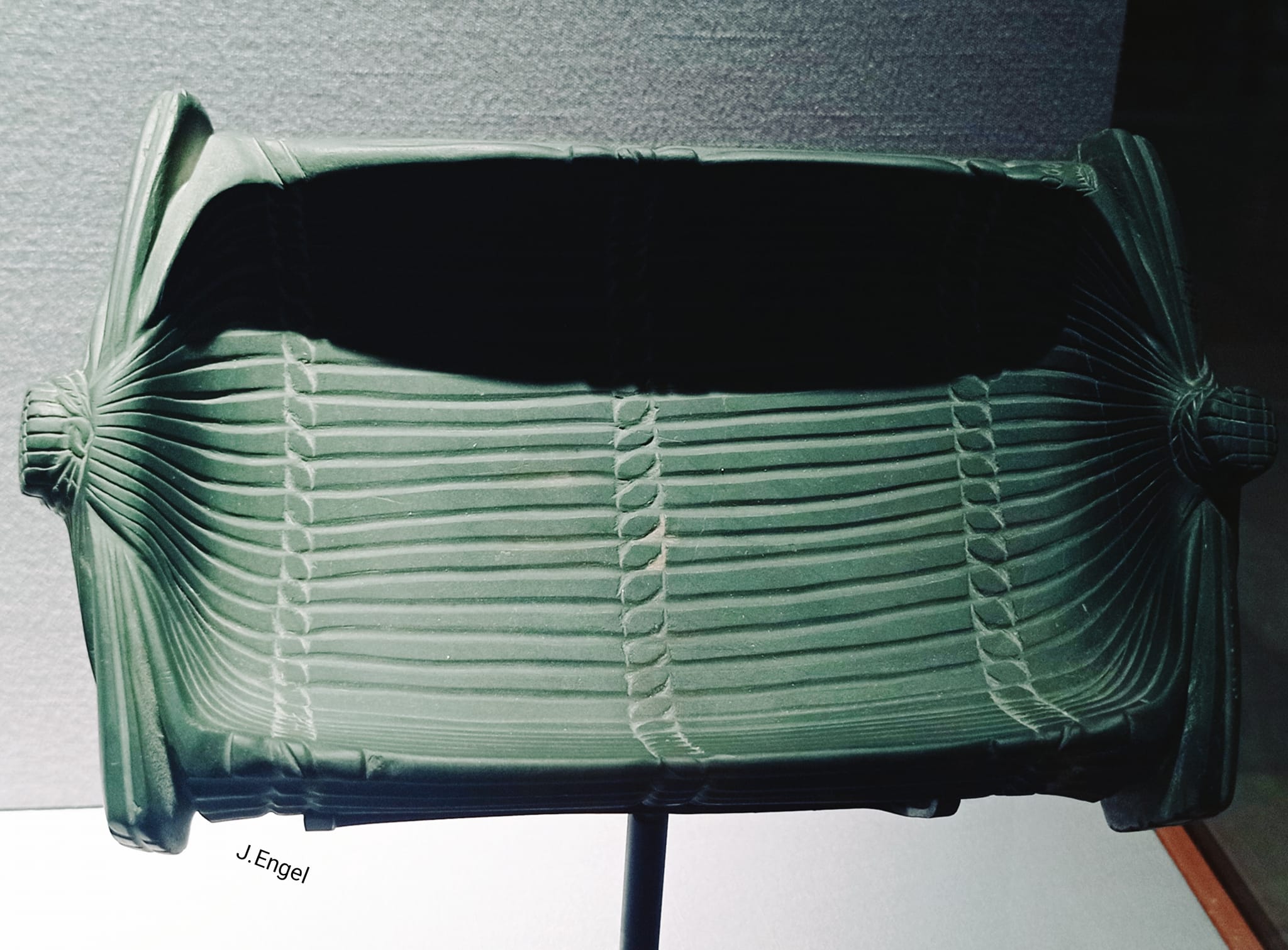
Imitation-basketry stone dish

By Jacqueline Engel

Fine stone vessels, carved to look like baskets made of reed or other plants, are typical of the Early Dynastic period.
Perishable objects were accurately copied in hard stone, producing vessels designed to be used for eternity in the afterlife.
Stone vessels are among the most common finds from Predynastic and Early Dynastic elite tombs (about 4000-2649 BC).

Showing no sign of daily use, they were made as burial goods to contain food or drink for the deceased to consume in the afterlife.
They were often given as special gifts to the king’s most valuable administrators, or commissioned by the wealthiest individuals.

2nd Dynasty, about 2750-2649 BC, Saqqara (Step Pyramid) schist, JE 71298

Egyptian Museum Caïro

Back to Jacqueline’s pictures

Pictures

Statue of King Pepi II

By Jacqueline Engel

This statue represents King Pepi II in an unusual pose for a king. He is naked and sitting in a squatting position. His right hand, now missing, was touching his lips, a sign of childhood. The text on the base gives the name of the king inscribed inside the royal cartouche.

6th Dynasty (King Pepi II Neferkare), about 2246-2152 BC, Saqqara (King Pepi II pyramid complex), alabaster, JE 50616

Egyptian Museum Caïro

Back to Jacqueline’s pictures

Pictures

Broad collar

By Jacqueline Engel

This spectacular collar, dated to the late 18th Dynasty (1390-1292 BC), comes from a royal workshop. The colored glass beads depict floral motifs.

Similar necklaces have been found in Tutankhamun’s tomb.

(Royal Museum of Art and History, Brussels)

Back to Jacqueline’s pictures