I FARAONI

ANEDJIB

In the middle of the 29th Century BCE, the apparent son of Den came to the throne of Egypt and his name was Anedjib. In hieroglyphs, his name was spelled: 𓎚 𓏋

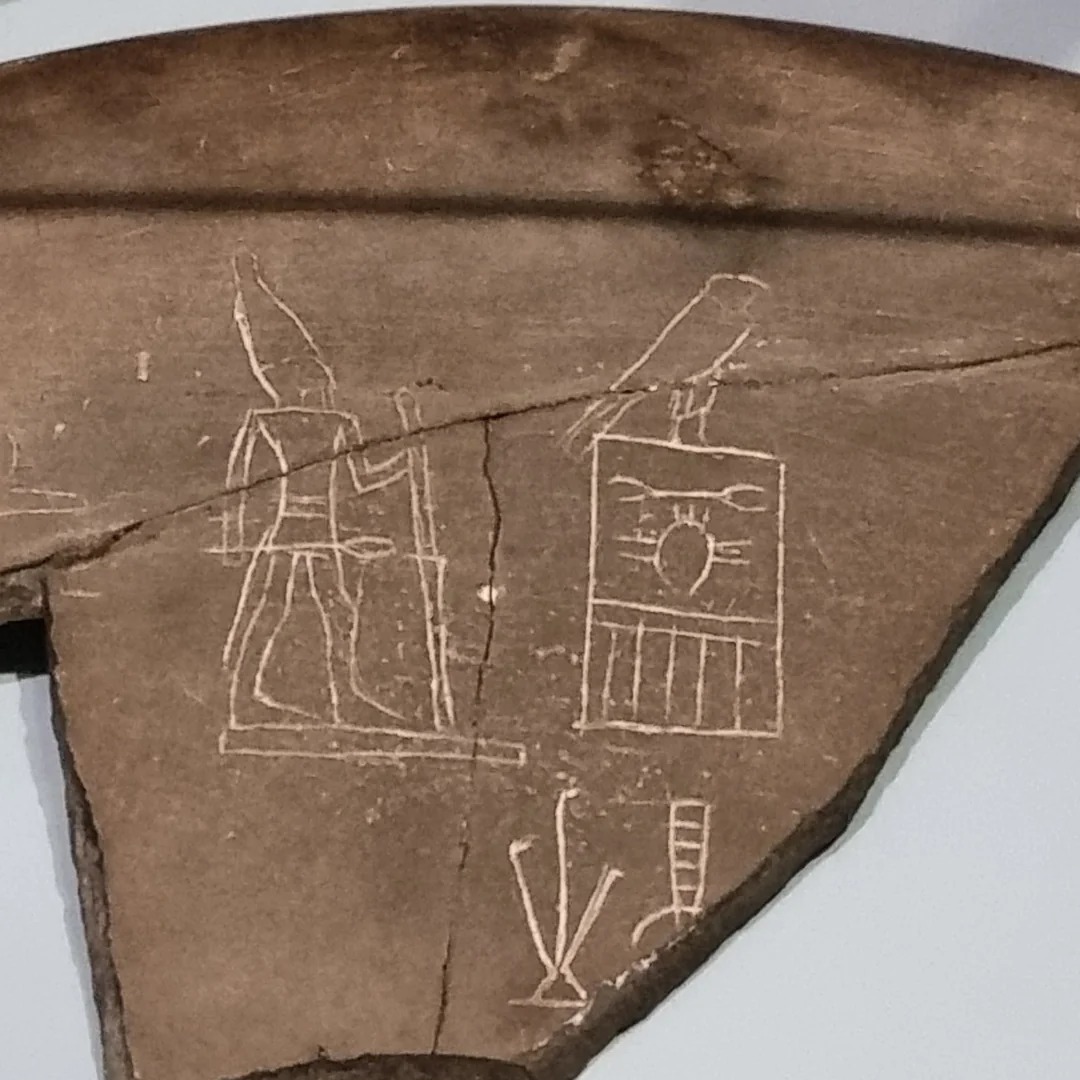
On the right, the name of Anedjib in the now-familiar serekh or palace facade and, on the left, an image of Anedjib likely holding a ceremonial mace. The photographer goes by the name of Udimu.
A destra, il nome di Anedjib nell’ormai familiare serekh o facciata di palazzo e, a sinistra, un’immagine di Anedjib che probabilmente impugna una mazza cerimoniale. Il fotografo si fa chiamare Udimu.

He was apparently the William Wallace or Mel Gibson of ancient Egypt as his name means “Brave of heart.” Once again, you can see that same heart in his name (ib) which, as you may remember (from my recent post on Aha and Benerib) was placed on the Scale of Ma’at in the Judgement Hall.

Anedjib’s throne name was “Merbiap” which means he also must have been a king in the Game of Thrones 🤣 as Merbiap is translated as “Beloved one of the iron throne.”

© David Robbins

During the 10-year reign of Anedjib, the artifact pictured was created in that middle of the 29th Century BCE. It is the most enigmatic such object that I can think of from ancient Egypt. In fact, it is called an “oopart” which is defined as an artifact technologically at odds with its determined age. Yet, its age is determined based on physical, chemical and geological evidence and, most importantly, was found in the tomb of Anedjib’s son named Sabu. The ornamental vessel was found in the burial chamber of the Mastaba of Sabu (Tomb 3111) at Saqqara by Egyptologist Walter Emery on the 10th of January 1936.

The Tri-Lobed Disc of Sabu is a round-bottomed bowl with three thinly-carved curved lobes. As you can see, the lobes are carved at 120 degrees around its periphery. And the shape and curve of those lobes suggest some sort of function. Akio Kato of Kanagawa University proposes that it was used in making beer while others propose that it was used in manufacturing natron.

Its medium is metasiltstone and its diameter is 60 cm or 23.5 inches. I could not determine its accession number but it is found in the Cairo Museum (formerly immediately adjacent to the two coffins of Ahmose-Merytamun). I believe it is still there but the coffins have been moved.

Anedjib’s Great Royal Wife was named Betrest.
Kemet Djedu

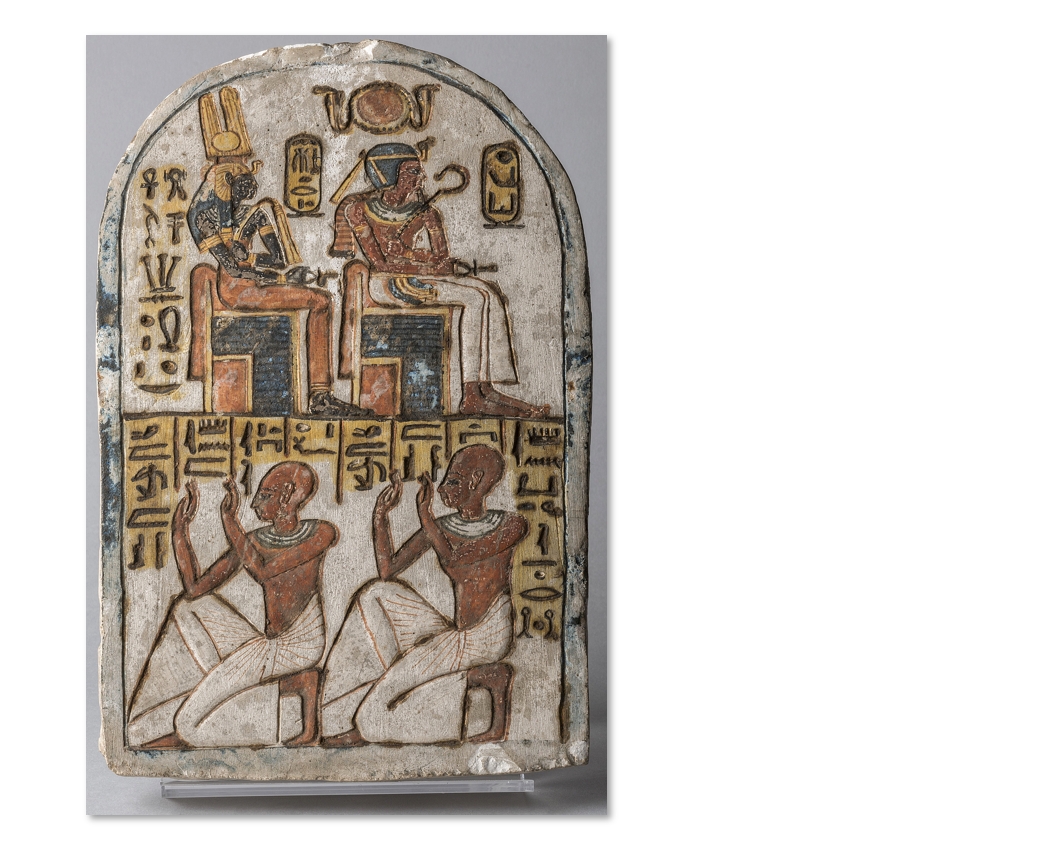
LA STELE DI TORINO 50034

VERSO

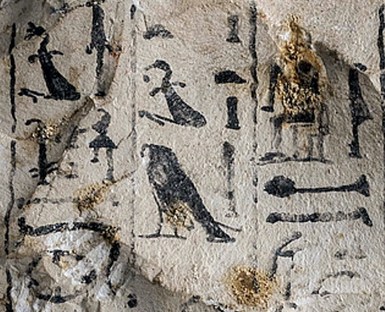
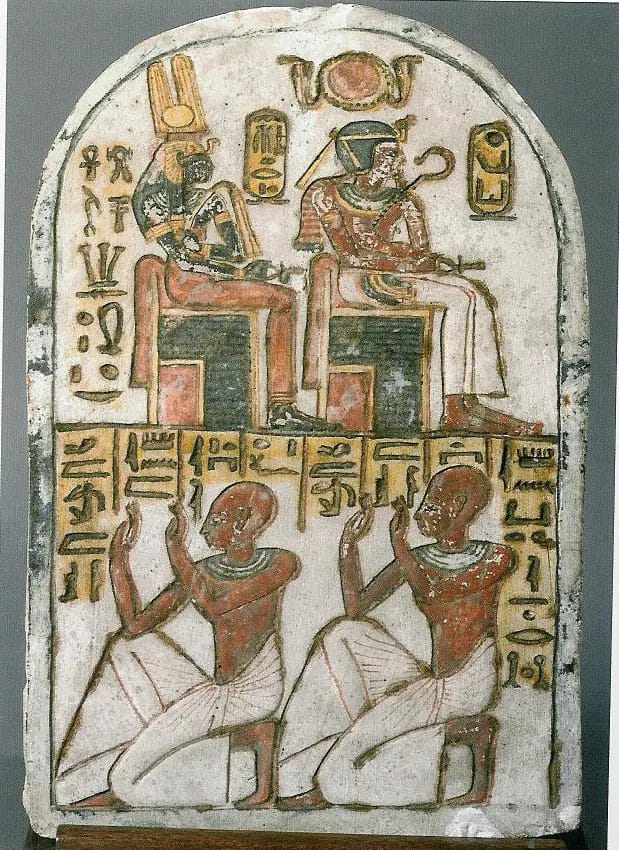
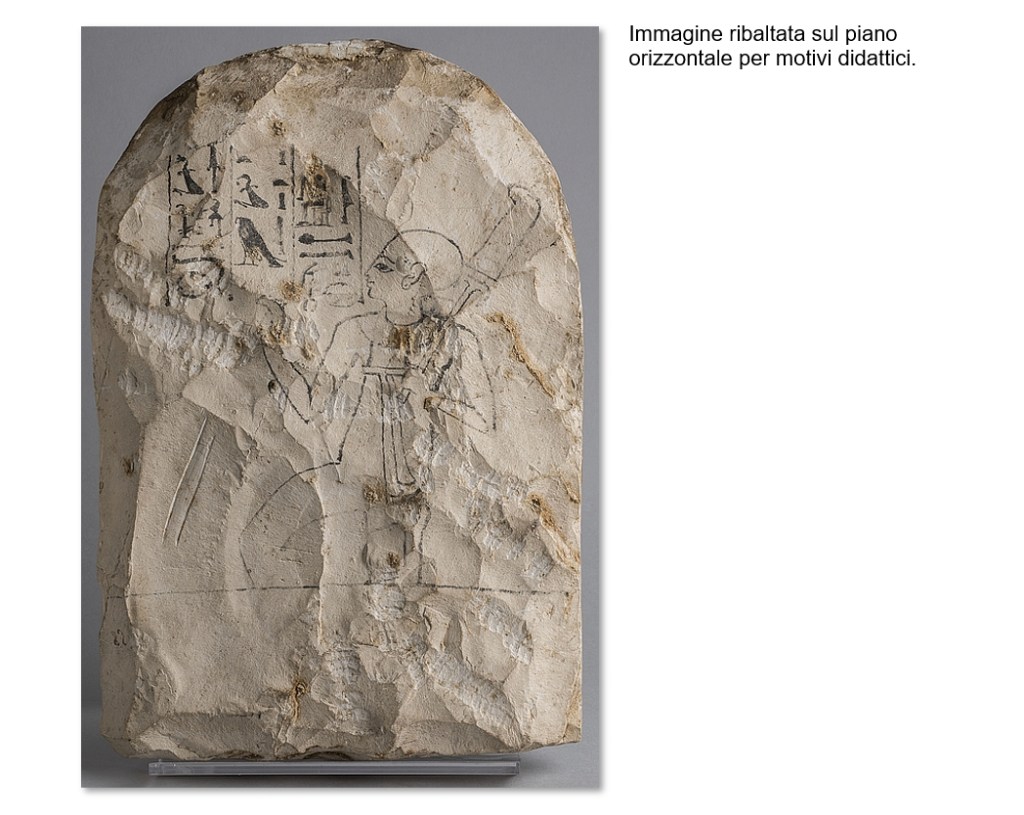
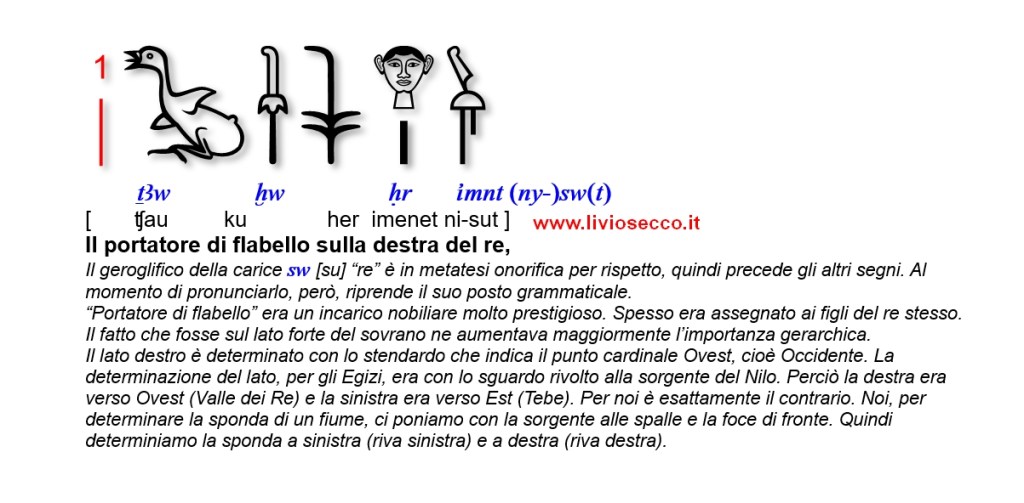
La stele 50034 custodita al Museo Egizio di Torino ed illustrata nella pagina dedicata alla regina Ahmose Nefertari QUI è, manco a dirlo, molto bella anche perché presenta ancora molti colori. L’originalità della stele è di avere pure il lato nascosto lavorato. Si tratta soltanto di uno schizzo che, però, rappresenta addirittura l’effige del visir con tanto di didascalia.

Visto che la stele è molto conosciuta per il suo recto, allora commentiamo filologicacamente il suo verso.

RECTO

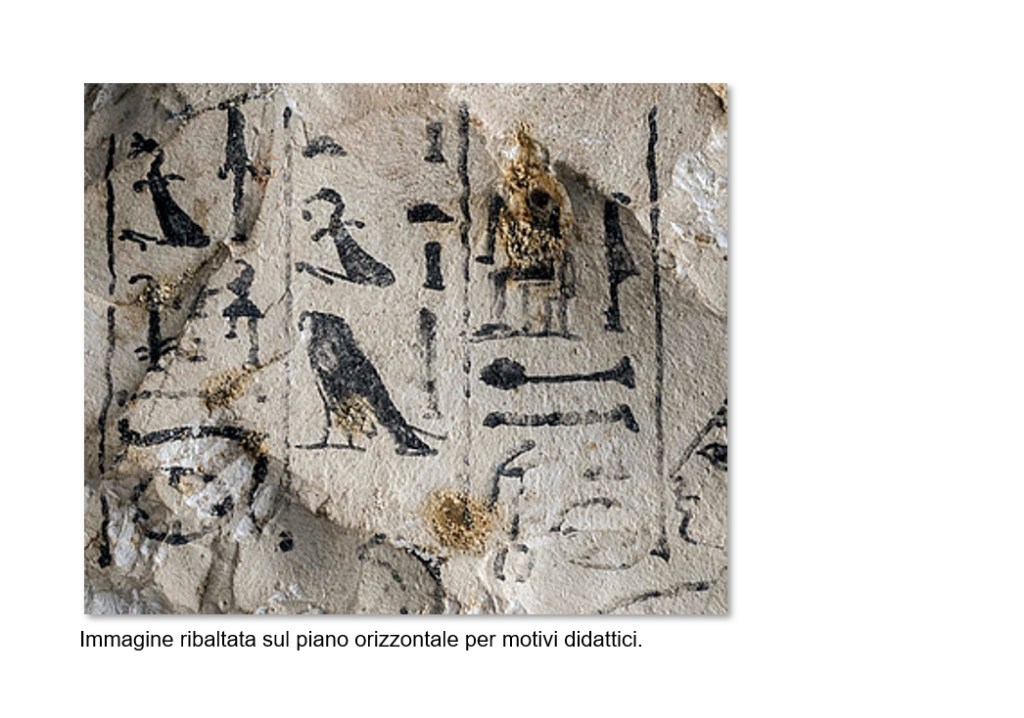
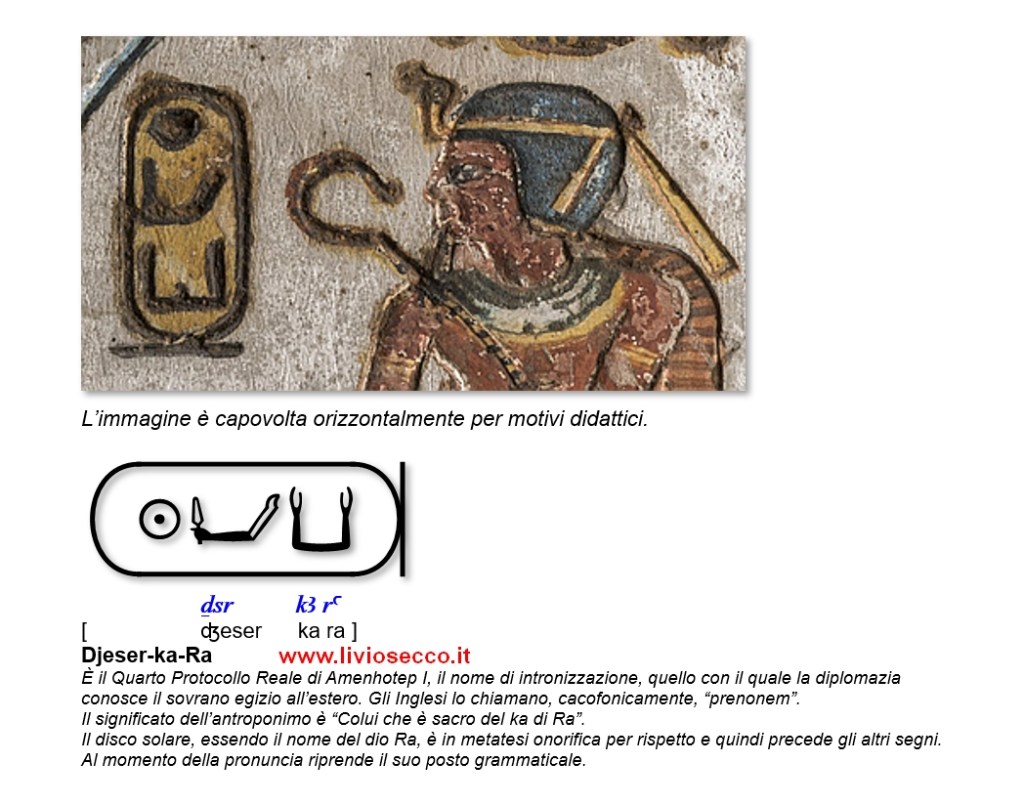
Come da convenzione internazionale (occidentale) i testi originali vanno tutti riportati per righe orizzontali da sinistra a destra. Ciò significa che i geroglifici possono subire uno spostamento relativo diverso pur essendo tutti precisamente riportati.

La stele ha una breve scheda sul sito del Museo Egizio, il suo numero di inventario precedente era C1452. La trovate QUI.

Come di consueto ho proposto anche la codifica IPA per permettere la lettura a chi non conosce i geroglifici. Nel caso invece foste interessati a studiarli potrete trovare a questi link uno strumentario completo:

Kemet Djedu

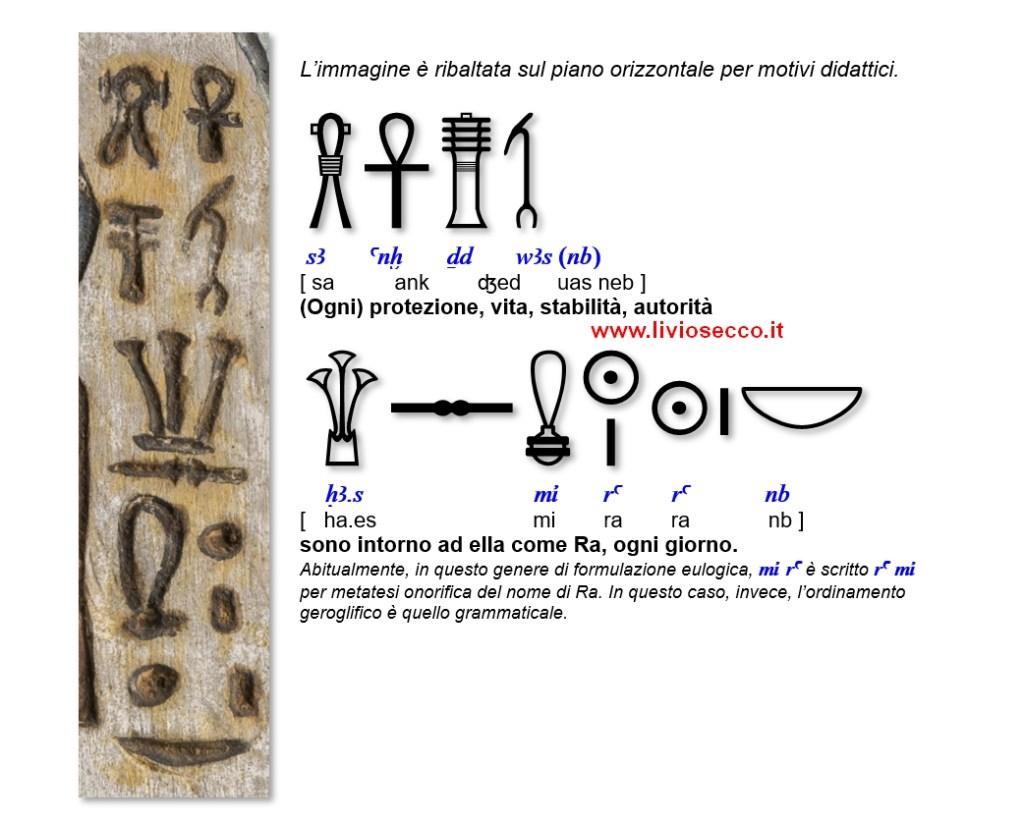
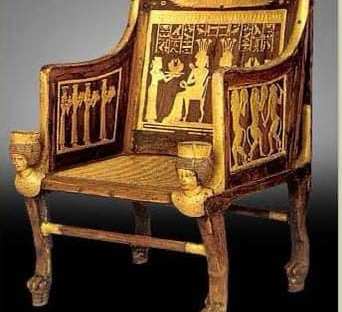
IL TRONO DI SAT-AMON

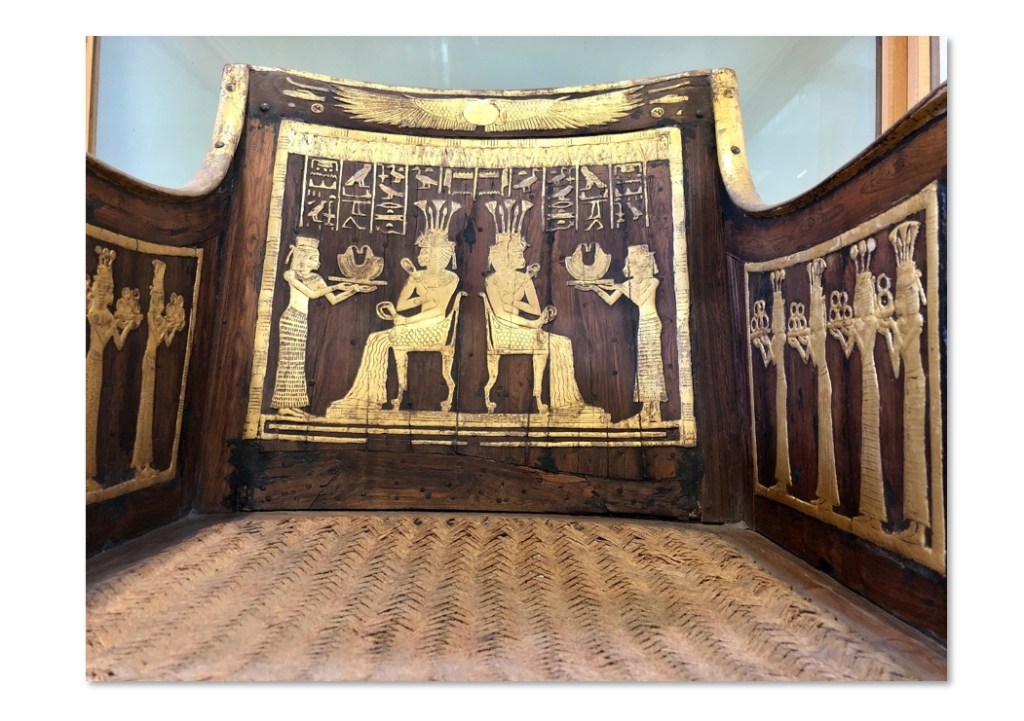
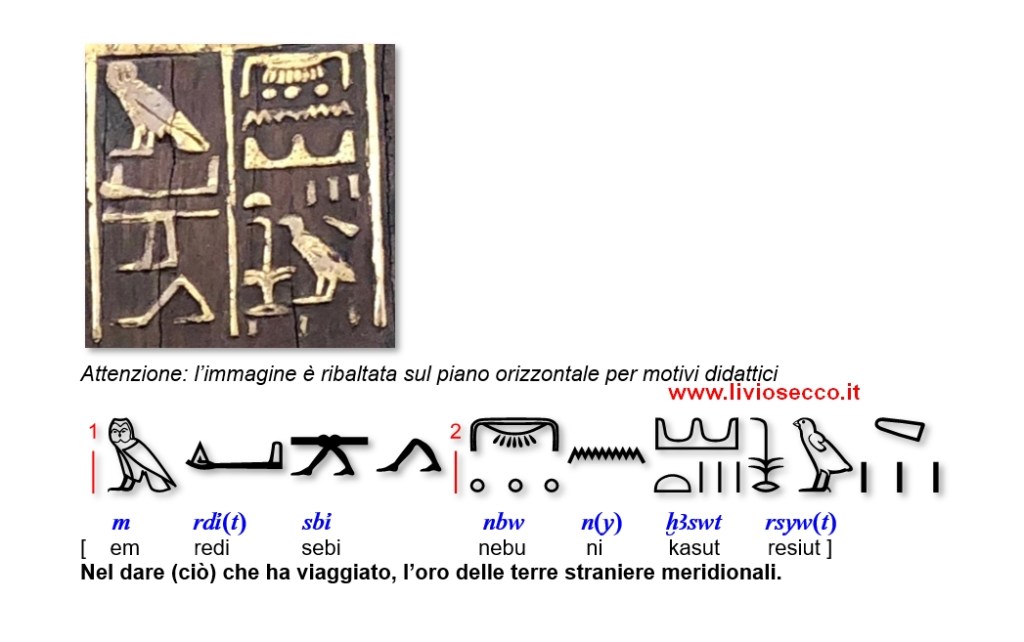
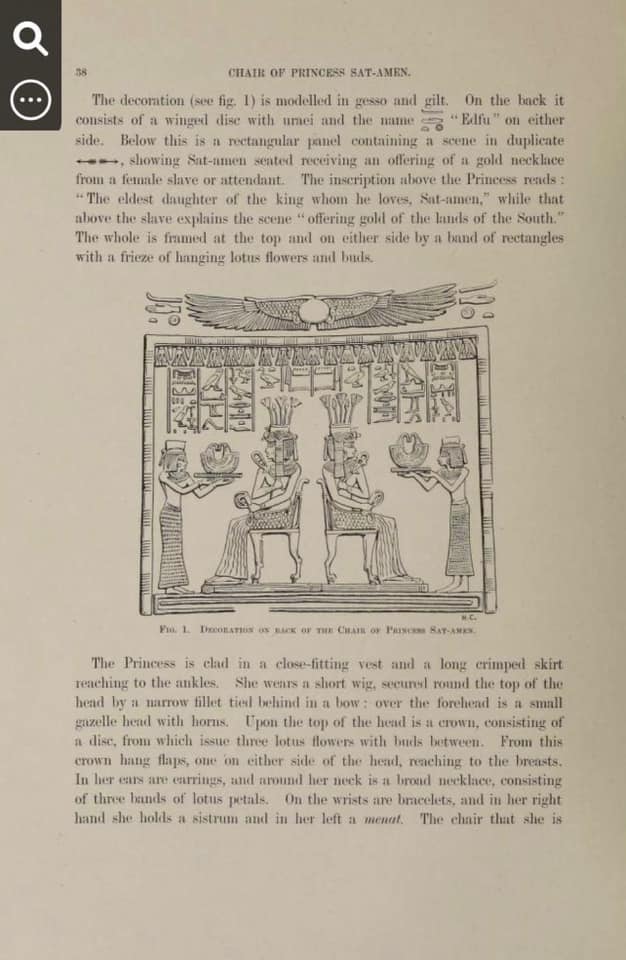
Il trono della principessa, e poi regina, Sat-Amon figlia primogenita di Amenhotep III e di Tiiy (illustrato QUI da Patrizia Burlini) mostra, oltre all’abilità artigianale nel produrlo, un’iscrizione sulla tabella che decora il lato interno dello schienale.

Su essa sono riportate due immagini che subito comprendiamo come speculari. La principessa è seduta mentre un’ancella le sta recando un collare d’oro posto su di un vassoio.

Anche le colonne di testo sono speculari e recitano l’identico messaggio. Poiché la raffigurazione di sinistra è meno danneggiata, analizziamo quella.

Come al solito ho aggiunto la pronuncia secondo la codifica IPA per far leggere i geroglifici anche a coloro che non li hanno (ancora) studiati.

La descrizione originale di Davis e Maspero
Kemet Djedu

RAMESSE III

Questo particolare appartiene al tempio di Medinet Abu, fatto erigere da Ramesse III.

Poiché l’immagine è favolosamente chiara e perfetta, non resta che farne una brevissima e facilissima esercitazione filologica.

Armatevi di pazienza ed interesse (ma so che di questo ne avete in abbondanza) e provata e leggere.

Pictures

Isis Amulet

Isis Amulet with Chain of Wendjebauendjed.

This amulet of General Wendjebauendjed is in the shape of a standing figure of Isis. She is shown here as a woman with two horns over her head flanking the solar disk.

The goddess Isis is wearing a tripartite wig with a protective uraeus, or rearing cobra, on the forehead. She is wearing a tight dress, a collar, and bracelets. It seems that she was holding the Shen sign.

Magic plays a central role in all the events involving this goddess: it is through magic that Osiris comes back to life, Horus is conceived and protected, and the deceased assisted in the afterlife. The magic of Isis was also invoked in many spells of protection and healing.

Many myths highlight her great magical ability and in one in particular – in which she learns the true name of the god Re – she consolidates her position as one of the most important deities in terms of magical knowledge and power.

In this myth, Isis creates a snake to bite Re, the sun god. Re is poisoned and can only recover from the bite by revealing his true name to the goddess: knowing the name of someone/something was tantamount to having great power over them…and that is exactly what Isis achieves! Re is healed and Isis strengthens her power.

Third Intermediate Period, 21st Dynasty, reign of Psusennes I, ca. 1047-1001 BC,
from tomb NRT III, Tanis.

Now in the Egyptian Museum, Cairo. JE 87716

I FARAONI

DEN

So far, we have covered the first five monarchs i.e.

𓇓 𓏏 𓆤 𓏏 (nesu-bity) and their queens i.e. 𓈞 𓏏 𓇓 𓅨 (hemet-nesu-weret) which I summarize below (where the regnal years are purely guesswork):

reg-yrs / length / dynasty / royalty

3072-3012 60 01-01 Narmer, Neithhotep?

3012-2980 32 01-02 Hor-Aha, Benerib, Khenthap

2948-2907 41 01-03 Djer,Nakhtneith

2907-2897 10 01-04 Djet, Merneith

2897-2887 10 01-05 Merneith (regent and probable monarch)

I acknowledge that I did not mention Neithhotep or Nakhtneith but that’s because I know absolutely nothing about them and, as indicated by the question mark, it’s apparently not even certain with Narmer’s consort.

© David Robbins

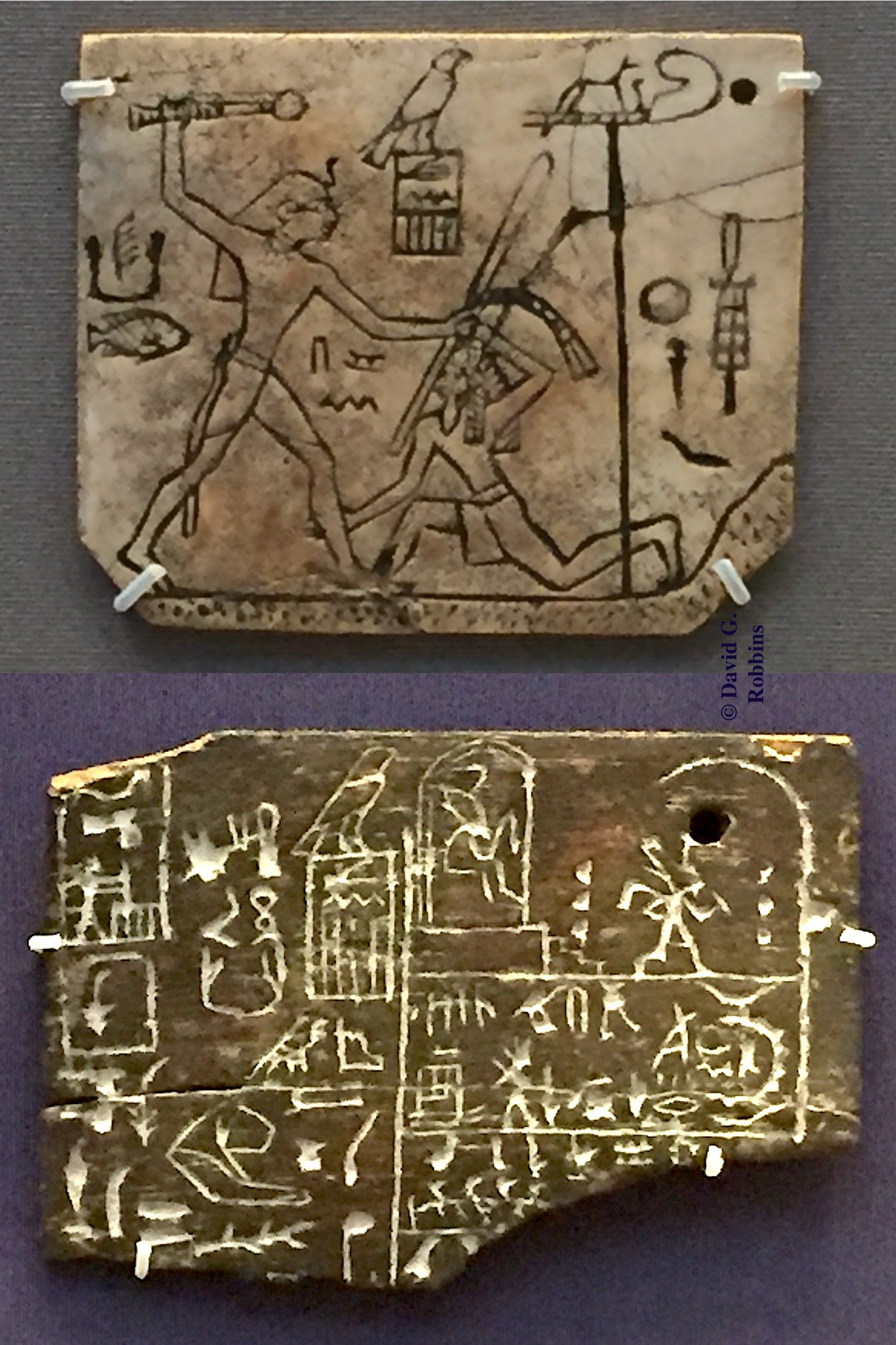
This now brings us fully into the 29th Century BCE with the 42-year reign of Den (technically 32 years since his mother was co-regent for the first 10). As you can see in the top image of my two-photo collage, Den imitates the same smiting motif as we saw in Narmer on his palette. I photographed both the ivory label of Den (top) and the Ebony Label of Den just moments apart as they are both in the same display case in the British Museum.

Just to the right of Den’s face (on the ivory label), you can see his serekh (𓊁 ) with his name in the top part as Den with the hand (𓂧/D) and the water ripple (𓈖/n). This is where the names of deities almost always appear … just to the right of the face. So when you go to Egypt, just have a chart on your smart phone and you can probably read the name of any deity on a wall or in a museum. Later, in Egyptian history though, the cartouche gets invented and royal names (birth names and throne names) are always then shown in cartouches. Deities, however, remain to the right of the face pretty consistently forever.

Both labels were found at Den’s tomb at Umm el-Qa’ab in the spoil heaps of Émile Amélineau meaning he didn’t find them or didn’t consider them important. Flinders Petrie saw such things of the highest importance and, of course, Petrie was right especially since this is possibly the earliest images (along with Narmer’s Palette) that we have of an Egyptian pharaoh.

The right hand side of the Ivory Label depicts the Standard of Wepwawet as you can see the jackal at the top of the standard. The hieroglyphs say, basically, “first occasion of smiting the East.” 𓐓 𓊗 𓌐𓋁

The Ebony Label on the bottom shows more hieroglyphs than I can possibly explain here but the most important part is that in the top right in which we see Den portrayed both enthroned under a canopy at left and performing in his heb sed on the right. The heb sed was a festival held typically in the 30th year of a pharaoh’s reign in order to “rejuvenate” him or show that the king was still capable of ruling. Thus, you see Den, to the right, running during his heb sed.

The Ivory Label is EA 55586 in the British Museum.

The Ebony Label is EA 32650 also in the British Museum.

I FARAONI

DJET AND MERNEITH

The 49-centuries-old Stela of Djet spelled 𓆓 now in the Louvre.
© Dave Robbins
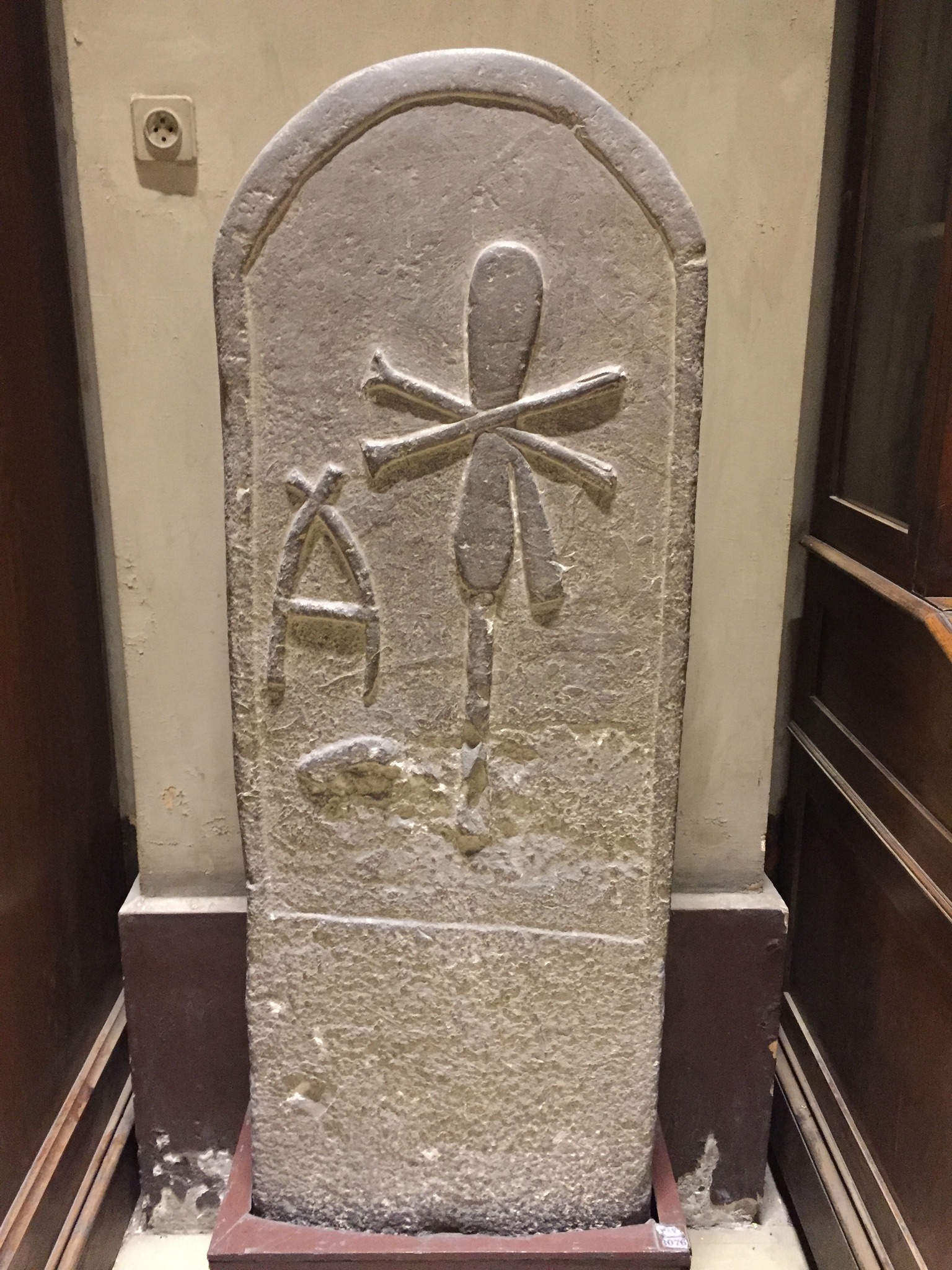
The 49-centuries old Stela of Merneith (spelled 𓌸 𓋎 or, in Gardiner numbers as U6 R27) now in the Cairo Museum. The stela was excavated by Flinders Petrie in Tomb Y at Umm el-Qa’ab in Abydos. © Dave Robbins

Each of these stelae are about 49 centuries old. Yet, through the efforts of Champollion and Young, we are able to actually know who it was for whom they were carved. They were the the husband and wife named Djet (𓆓) and Merneith (𓌸𓋎) who each served as king and Queen regent for what is thought to be 10 years each. The actual name for a stela in ancient Egypt was ‘wedj’ which was spelled in a variety of ways but, probably, most commonly as:𓎘 𓅱 𓉸

The stela for Djet was also found by Emile Amelineau in 1896. You may remember that he also found the Bier of Osiris (in my previous post) two years later. Despite his finds, Amelineau does not enjoy a very good reputation as his practices were highly criticized, deservedly so, by the great Flinders Petrie who did most of the follow-up work in what is now known as Tomb Z at Umm el-Qa’ab.

When Djet (pronounced [JET]) died, his son had yet to reach majority in order to succeed as the monarch. Thus, Merneith (meaning “Beloved of the goddess Neith”) followed as regent for 10 years and is often thought to be the first female pharaoh. Why is it thought that she was the first female pharaoh? Because, for one, she has her own funerary complex at Umm el-Qa’ab (Tomb Y) immediately adjacent to Djet’s (Tomb Z).

The Stela of Djet now resides in the Louvre (accession# E 11007) and the Stela of Merneith (JE 34450) is found in the Cairo Museum. My photos are from 2019 and 2018 respectively.

Be sure to check out a 3rd-party photo of the ivory comb of Djet in the comments in which is shown the earliest-known “Was Scepter” … actually a pair.

E' un male contro cui lotterò

ORTOPEDIA

Di Andrea Petta e Franca Napoli

FRATTURE

Abbiamo visto che la diagnostica delle fratture era già molto evoluta nell’Antico Egitto, con termini diagnostici già molto moderni. Ovviamente non potevano contare sulle attuali radiografie, ma l’uso di un termine onomatopeico per indicare la crepitazione ossea (il rumore percepibile muovendo una superficie ossea fratturata) ci suggerisce che fosse il sintomo principale – ed estremamente doloroso per il paziente! “anche se (il paziente) ne avrà grande paura” viene infatti menzionato nel Papiro Edwin Smith – utilizzato per diagnosticare una frattura.

E non era sicuramente un evento raro.

Studiando circa 6,000 corpi provenienti dalla regione di Assuan, Wood Jones trovò una percentuale molto alta di fratture – circa il 3% di tutte le mummie esaminate – soprattutto di radio ed ulna (31%), ma anche di clavicola (13%) e femore (10%). Elliot Smith, probabilmente il più grande esperto di mummie egizie del secolo scorso, attribuì questa elevatissima percentuale all’uso del bastone, sia in battaglia che nella vita quotidiana (!).

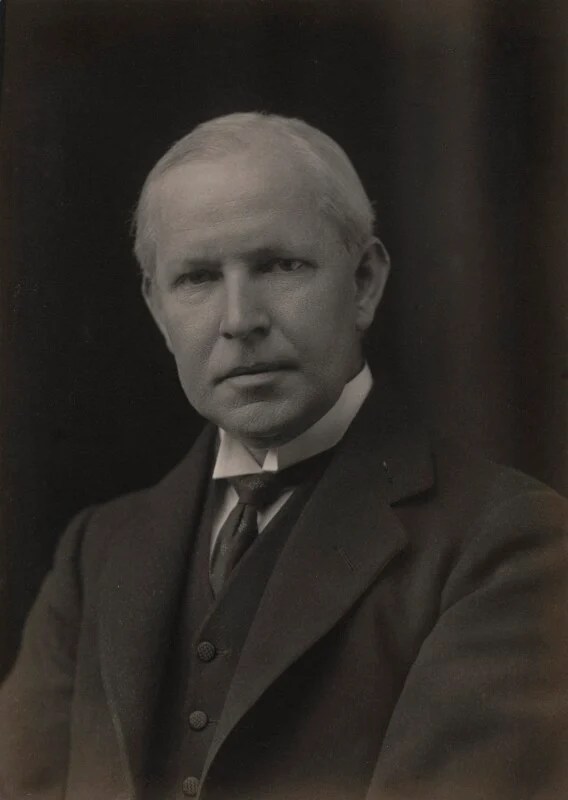
Sir Grafton Elliot Smith (1871–1937), il primo anatomista ad utilizzare tecniche radiografiche per studiare le mummie egizie. Sviluppò una sorta di venerazione per l’Antico Egitto, da cui (secondo la sua teoria dell’iperdiffusionismo) si sarebbero diffuse le principali innovazioni del mondo antico.

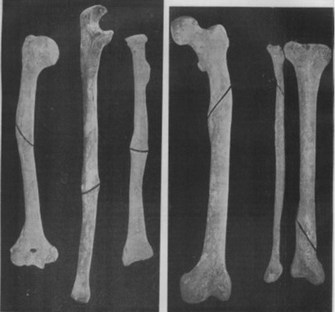
Straordinariamente, molte delle fratture riscontrate erano perfettamente saldate “tanto da distinguere a malapena le linee di frattura” (Nunn, 1995) grazie all’uso di tecniche di steccaggio che hanno poco da invidiare ai gessi moderni.

Fratture perfettamente ricomposte di omero, ulna, radio, femore, perone e tibia scoperte su mummie nubiane (sud della prima cataratta). Da: Jones FW. Some Lessons From Ancient Fractures. Br Med J. 1908 Aug 22;2(2486):455-8

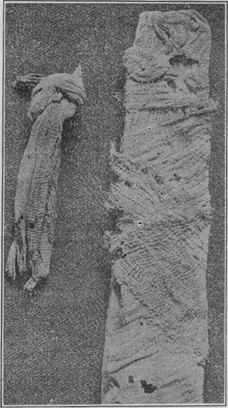
Sempre il solito Elliot Smith ha analizzato i ritrovamenti in una tomba di Naga ed Deir, risalente alla V Dinastia, dove sono state ritrovate due mummie con fratture di radio, ulna e femore ancora steccate. Le stecche in corteccia erano sagomate e non piallate per mantenerle concave ed aderire perfettamente all’arto, legate strettamente con più strati di bende di lino (sovrapposte ed incrociate) con l’ultimo strato legato con un nodo piano, ottimo per tenere ben stretta la fasciatura e contemporaneamente facile da sciogliere.

Steccaggio di radio ed ulna, Naga ed Deir. Da notare la forma concava delle stecche per aderire meglio all’arto

Steccaggio del femore, Naga ed Deir. Da notare il bendaggio molto stretto con le bende sovrapposte perpendicolarmente ed il nodo piano di chiusura.

In questo caso, purtroppo, il paziente non sopravvisse all’incidente che evidentemente aveva avuto, ma Elliot Smith notò nei suoi scritti che “…i medici egizi avevano adottato tecniche che servivano mirabilmente al loro scopo…

SLOGATURE

Il lavoro dell’ortopedico non si limitava alle sole fratture.

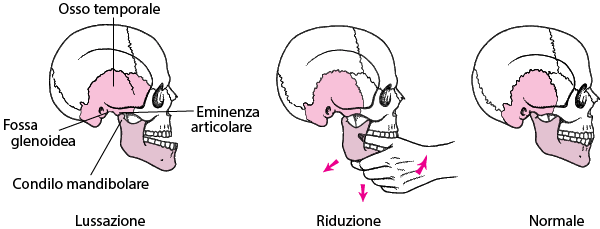
Nel papiro Edwin Smith viene descritta la riduzione di una dislocazione della mandibola (“…trovi la sua bocca aperta e la sua bocca non si può chiudere…”) e la manovra è descritta in maniera talmente perfetta (“…posizionerai le tue dita sui rami della mandibola dentro la bocca, con i pollici sotto il suo mento, e spingerai la parte posteriore verso il basso fino a quando non tornerà nella sua posizione corretta.”) da sembrare uscita da un libro moderno, se non fosse che oggi si usano i pollici per fare più forza internamente..

La moderna manovra di riduzione della lussazione della mandibola. Rispetto al Papiro Edwin Smith sono invertire le posizioni di pollice e delle altre dita, ma la manovra è identica.

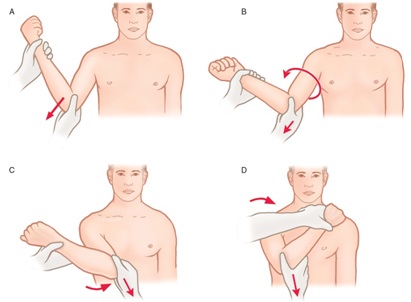
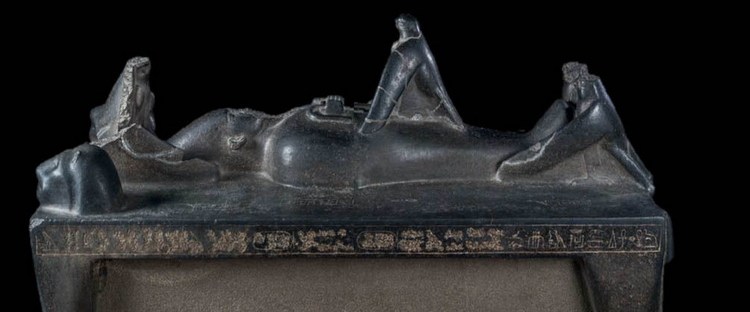
Dalla tomba di Ipwi (che abbiamo già incontrato nelle patologie oculari) ci è invece pervenuta un’immagine di quello che sembra la prima fase della manovra di Kocher per la riduzione della dislocazione della spalla (braccio ruotato verso l’esterno per allungare i muscoli pettorali prima di portare in avanti il gomito sul petto e ruotare l’avambraccio verso la spalla opposta per completare la riduzione).

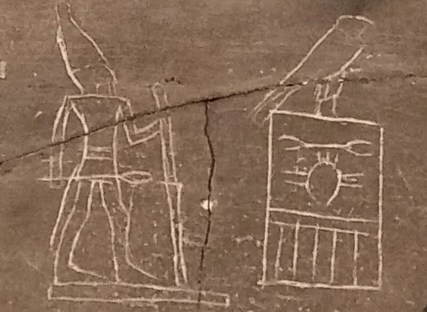
Il rilievo cosiddetto “del catafalco” dalla tomba di Ipwi ed il particolare ingrandito con quella che sembra a tutti gli effetti essere una manovra di riduzione della lussazione della spalla. Notare la somiglianza con le prime due fasi della manovra di Kocher.

Nonostante le (ovvie) discussioni sul fatto che si tratti effettivamente di una manovra ortopedica, i moderni ortopedici egizi ne sono così certi da averne fatto il logo della loro società scientifica. Un collegamento diretto tra il passato ed il presente.

Il logo della società scientifica che raduna gli ortopedici egiziani
I FARAONI

DJER

We now reach the end of the 30th Century BCE with the reign of King Djer who is thought to have reigned as many as 41 years. Unfortunately, I did not have very interesting photos of Djer (Oooh! Arrowheads! Wouldn’t you have been excited? 🤣 ) so, I will take a short break from my own collection of photos to show you my very favorite artifact that, sadly, I have yet to see with my own eyes. That’s because the Bier of Osiris, found in the Tomb of Djer at Umm el-Qa’ab in the low western desert of Abydos, has always been in a traveling exhibition for five or more years … even when I was last in the Egyptian Museum in November.

Shown in the accompanying photo shortly after it was found in the Tomb of Djer in Umm el-Qa’ab, the Bier of Osiris was excavated by Emile Amelineau, a French Egyptologist, in 1898.

From the New Kingdom onwards, the Tomb of Djer was regarded as the Tomb of Osiris and it was here that the famous five-day passion play of Osiris was re-enacted to commemorate the Myth of Osiris. How do we know this? The details of the passion play are recorded on the Dynasty 12 Stela of Ikhernofret now in the Neues Museum in Berlin. We call the passion play the Khoiak Festival but that’s a Coptic name. The ancient Egyptians called it kaherka or ( 𓂓 𓁷 𓏤 𓂓 𓎱 𓇳 ). As you can see, there is a heb sign (𓎱) shown to indicate that it was a festival. Some of the activities during the festival were shaping earth to look like the profile of Osiris. Seeds were sown in a ceramic Osiris Mold and then watered until germination.

But back to Djer! Remember? Dynasty I’s third king? 😀 According to Josef Wegner, his serekh name (meaning “Defender of Horus”) is pronounced “JAIR” as in chair, and his name is spelled as 𓇦 (M37 among Gardiner numbers). On the Abydos Kinglist in the Temple of Sety I, his name appears as his throne name or 𓇋 𓏏 𓍘 (Iteti). He is thought to be the son to Hor-Aha and Hor-Aha’s other wife named Khenthap. When his tomb was found, his mummified arm was found with four bracelets around his wrist (of which I will post a photo of in the comments along with a photo of his tomb … now back-filled).
I FARAONI

HOR-AHA

As you may remember, I started with the first king of Dynasty I and his name is Narmer. In his case, at least we had an image of him on his famous palette which, until 25 years ago, also contained the earliest-known hieroglyphs. Now, that oldest record of hieroglyphs has been superseded by even earlier hieroglyphs on tags found by Gunter Dryer in Umm el-Qa’ab in Abydos.

© Dave Robbins

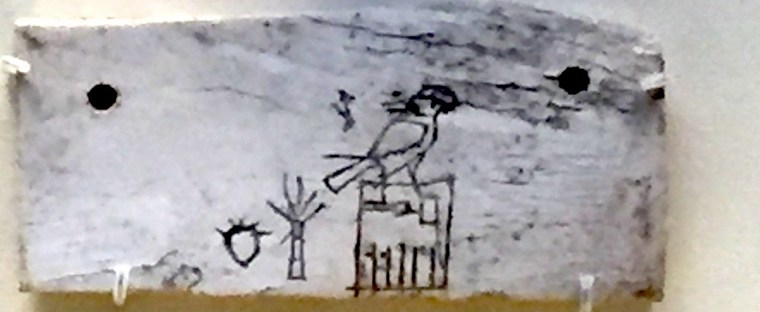
But pictured is yet other very ancient hieroglyphs … those of the 2nd king of Dynasty 1, Hor-Aha, and his wife, Benerib. The hieroglyphs were found on a fragment from a box made from hippopotamus ivory also found at Umm el-Qa’ab. Once again, we see a falcon standing above the serekh or palace facade used for the Horus or serekh name of the king, that being Hor-Aha, sometimes just referred to as “Aha” and spelled with the shield and mace (D34) shown as: 𓂚 (Admittedly, it’s not an exact match but it’s close and I’ll go along with it.)

To the left, we see the name of Benerib which means the queen was just called “Sweetheart!” 🤣 It’s true! The “ib” (𓄣) means heart … that being the same heart you see on the scale in the Judgment Hall and the “bnr” or “bener” (𓇟) means “sweet.”

The “Ivory Box fragment of Hor-Aha” is found in the British Museum and carries the accession number of EA 35513. My photo is from December 2017.